
News
News
Filter by
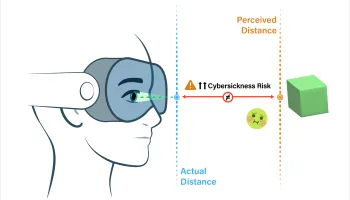
UMD Researchers Identify Brain Signals Linked to Cybersickness in Immersive Environments
Findings from a real-time brain wave study could help virtual and augmented reality designers detect and reduce dizziness, nausea and other symptoms.
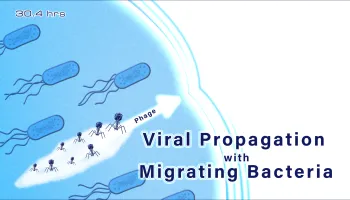
Scientists Discover Migration-Mediated Mechanism Enabling Bacteria-Virus Coexistence
A joint UMD-University of Exeter study shows how collective movement enables viruses to persist with migrating bacterial colonies while minimizing the risk of either complete viral takeover or bacterial escape.

'Small Startup with a Big Vision'
Phil Crosby (B.S. ’06, computer science; B.A. ’06, economics) made his lifelong tech startup dream a reality as co-founder of the mobile advertising platform Liftoff.

Biochemistry major Suchitra Arun spends her days decoding plant and human diseases and her nights leading a community of heavy metal music fans.

Making the Most of Low-Cost Air Sensors
Atmospheric and Oceanic Science Professor Ning Zeng improves commercially available atmospheric sensors to collect actionable, research-grade environmental data.
For Jacqueline Deprey, a personal loss and a passion for problem-solving inspired Perpetua, a digital toolkit designed to simplify estate settlement.

Pratyush Tiwary is a member of an ARPA-H consortium led by Georgetown and the Buck Institute that was awarded up to $51.7 million to study misfolding proteins implicated in neurodegenerative diseases and cancer.
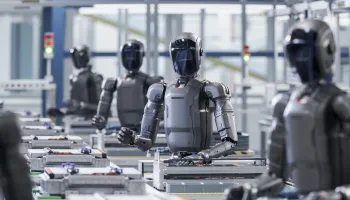
Teaching Robots to Follow the Motion
University of Maryland researchers developed an artificial intelligence model that learns how hands, tools and objects move from videos and then uses those patterns to help robots perform tasks.
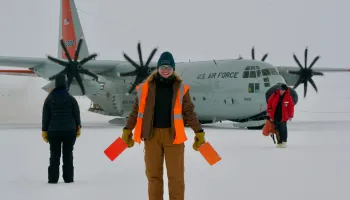
They helped design and build the IceCube Neutrino Observatory’s data storage, analysis and real-time alert systems, and they currently play a major role in operating the observatory and analyzing the data.

UMD Biological Sciences Ph.D. Student Wins 2026 Cherry Blossom Prediction Competition
The statistical modeling skills Wesley DeMontigny mastered while studying genomics gave him an upper hand.

The NIH-NSF and FDA projects aim to predict hospital readmissions in high-risk heart failure patients and establish reliable methods for evaluating the safety and performance of AI-enabled medical imaging systems.
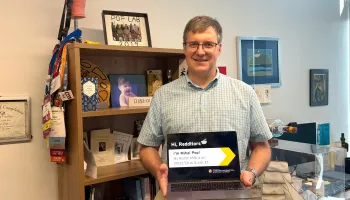
Computer Science Professor Mihai Pop Answers Questions About Mapping the Microbiome
The College of Computer, Mathematical, and Natural Sciences hosted a Reddit Ask-Me-Anything spotlighting research on decoding the microscopic world.