
News

News
Filter by

Always-On System Unmasks Covert Signals Across the Radio Spectrum
A University of Maryland study published earlier this year shows how connected networks can be vulnerable to covert radio transmissions that disappear before standard security systems register them.

John Biddle (Ph.D. ’13, physics) is developing smart sensing systems to ‘see’ inside packages, boxes and bags—and detect potential threats.

Cole Miller’s (B.S. ’24, mathematics) lifelong passion for mathematics and sports helped him score an ‘awesome’ job as a scouting assistant in the NFL.
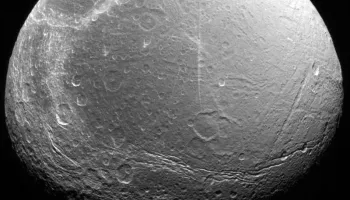
A UMD-led study found that catastrophic collisions between icy moons barely disturb the hidden oceans beneath their frozen surfaces, offering new insights into life beyond Earth.
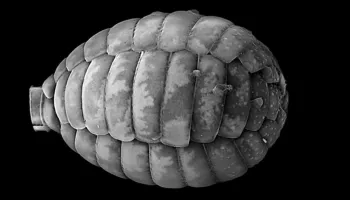
New UMD Biologist Studies How Organisms Steal Each Other’s DNA
Assistant Professor Julia Van Etten researches how organisms acquire genes from other species through a process called horizontal gene transfer.

Meet the Science Terps Marching in the Baltimore Ravens’ Band
Charlotte Norris and Andrea Zeppuhar take their musical talents to M&T Bank Stadium.
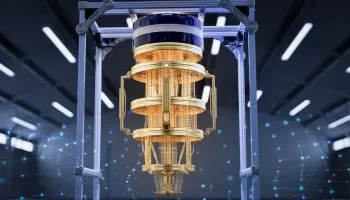
Study Sharpens the Search for Quantum Computing's ‘Magic’
A new study published in Physical Review Letters shows that some quantum states previously thought to provide the "magic" needed for quantum computation can actually be simulated efficiently by classical computers.

UMD Alum Julian Dumayas Fights HIV at NIH
As a recipient of the prestigious Intramural Research Training Award, Julian Dumayas (B.S. '26, biological sciences) researches new approaches to eliminating HIV from patients’ DNA.

UMD Scientists Receive $1.1M NASA Grant to Develop Life Detection Instrumentation
Their work could double the scientific output of future missions searching for life on Mars, Saturn’s moon Enceladus and beyond.

The minor offers students from all disciplines a formal way to build literacy in an ecosystem that helps define the state.

Targeted Ads Come with Unavoidable Privacy Trade-Offs, UMD Study Finds
New research co-authored by Computer Science Assistant Professor Gabe Kaptchuk shows there is a fundamental limit to that goal, and perfect privacy and useful targeted advertising simply cannot coexist.

Experiential Math Course Takes UMD Students to the Major Leagues
Mathematics Professor Yanir Rubinstein's MATH 440: “Geometry and Data Science of Sports Analytics” course trains students for real-world careers in professional sports.