
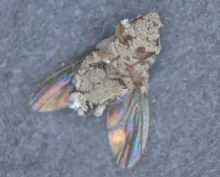
UMD entomologists have discovered that a single underlying trait—metabolic breadth, or the range of nutrients a fungus can use—links its ability to kill insects, partner with plants and thrive in different ecological roles. Rather than trading one lifestyle for another, some fungi become better at all of them.

Twenty-one tenured/tenure-track faculty members, 11 instructional faculty members and 12 research faculty members were promoted. An additional faculty member was named Distinguished University Professor.
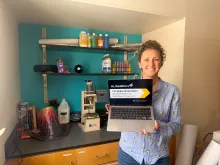
The College of Computer, Mathematical, and Natural Sciences hosted a Reddit Ask-Me-Anything spotlighting research on petrology.
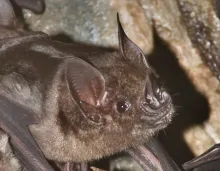
A UMD-led study provides new evidence that immunity is shaped not only by pathogens, but also by the pressures animals face to reproduce and survive.

He has been a computer science faculty member at UMD since 2002.

Peter Casasanto (B.S. ’02, biological sciences; B.A. ’02, criminology and criminal justice) taps into the power of AI to provide 24/7 support to patients and healthcare providers whenever and wherever they need it.
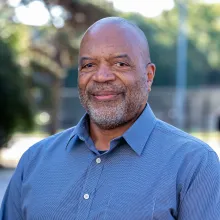
He has been a faculty member in the institute since 1982.
 Krandhasi Kodaiarasu
Graduate Assistant, CMNS Teaching & Learning Center
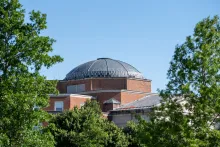
The program awarded nearly $15 million in grants, building on the success of its inaugural round.

The three-year award from the U.S. Department of Energy is a second renewal, bringing the total over nine years to $2.3M.