
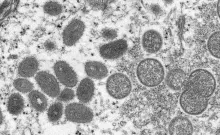
While monkeypox cases seem to be stabilizing, stronger and better-adapted variants may still evolve, according to new UMD research.
Didier Depireux’s unpredictable path from a Ph.D. in physics to a ‘breakthrough’ medical startup.

92 students explored user experience design in Break Through Tech’s Summer Guild.
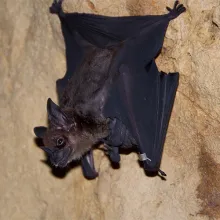
UMD biologist Gerald Wilkinson has been named a co-principal investigator of the IISAGE Biology Integration Institute.

Judy Herreid builds on a family tradition of supporting physics students in memory of her late husband Leon A. Herreid, a physicist and systems engineer at NASA Goddard.
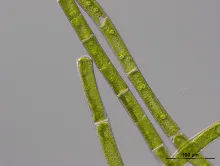
UMD scientist contributes to analysis of an enigmatic species of algae, helping to bridge the evolutionary gap between land and marine organisms.
 Lilian Wang
Biological Sciences and Psychology Dual Degree
Boyds, MD
Integrated Life Sciences (ILS)

The awards enabled students to conduct research, attend a scientific conference and work as an intern over the summer.
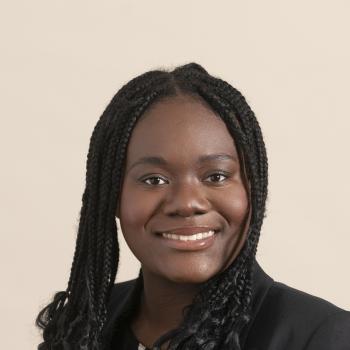 Peace Oladunni
Computer Science Major
Silver Spring, MD
ACES Honors Program
RESET Project Fellow
 Tracy Ly
Biological Sciences Major
Sociology Minor
Ellicott City, MD
Integrated Life Sciences
Pre-Med Track