
CMNS is a college where pioneers, scholars and innovators learn, collaborate and innovate to build a better future.
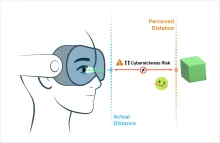
Findings from a real-time brain wave study could help virtual and augmented reality designers detect and reduce dizziness, nausea and other symptoms.

A joint UMD-University of Exeter study shows how collective movement enables viruses to persist with migrating bacterial colonies while minimizing the risk of either complete viral takeover or bacterial escape.

Phil Crosby (B.S. ’06, computer science; B.A. ’06, economics) made his lifelong tech startup dream a reality as co-founder of the mobile advertising platform Liftoff.

Biochemistry major Suchitra Arun spends her days decoding plant and human diseases and her nights leading a community of heavy metal music fans.

Atmospheric and Oceanic Science Professor Ning Zeng improves commercially available atmospheric sensors to collect actionable, research-grade environmental data.

For Jacqueline Deprey, a personal loss and a passion for problem-solving inspired Perpetua, a digital toolkit designed to simplify estate settlement.
 Ernest Zhang
Computer Science Major
Robotics and Autonomous Systems Minor
Pleasanton, CA
FIRE
 Laurent Montési
Interim Associate Dean, Faculty Affairs

Pratyush Tiwary is a member of an ARPA-H consortium led by Georgetown and the Buck Institute that was awarded up to $51.7 million to study misfolding proteins implicated in neurodegenerative diseases and cancer.