The space is an “otherworldly gift,” providing researchers with expertise and instrumentation to study biologically relevant molecules.
The Biomolecular NMR Facility is now open in the University of Maryland’s new Chemistry Building. The space enables researchers from on- and off-campus to characterize the structure and dynamics of a diverse range of molecules, with applications ranging from drug discovery to engineering. Relocating the facility was a complex operation that took more than a year to complete.
“It’s been quite a long process,” said Daoning Zhang, director of the Biomolecular NMR Facility.
Back in November 2024, the relocation team began their work, transporting three massive biomolecular NMR instruments from the Biomolecular Sciences Building to their home in the new Chemistry Building.
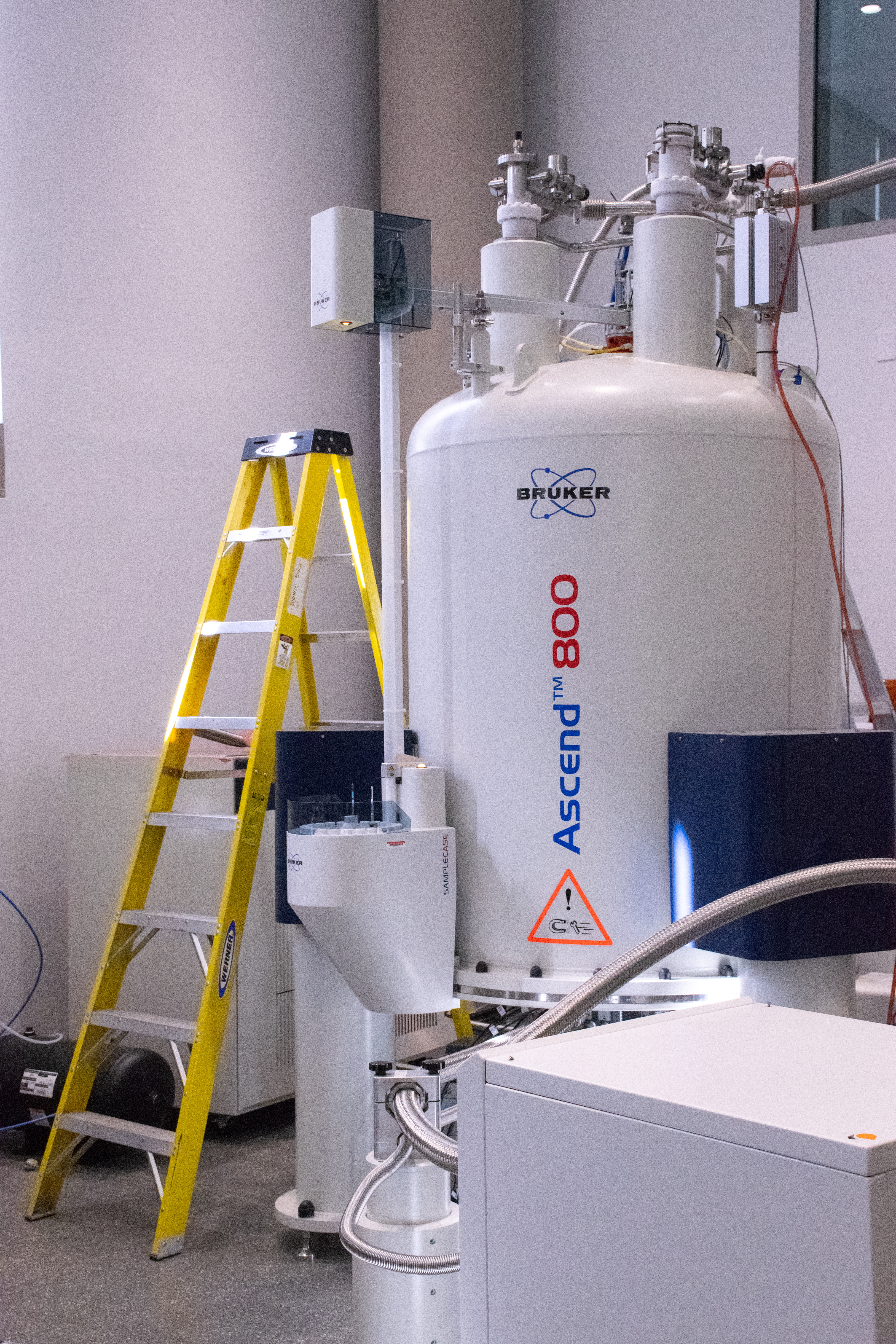
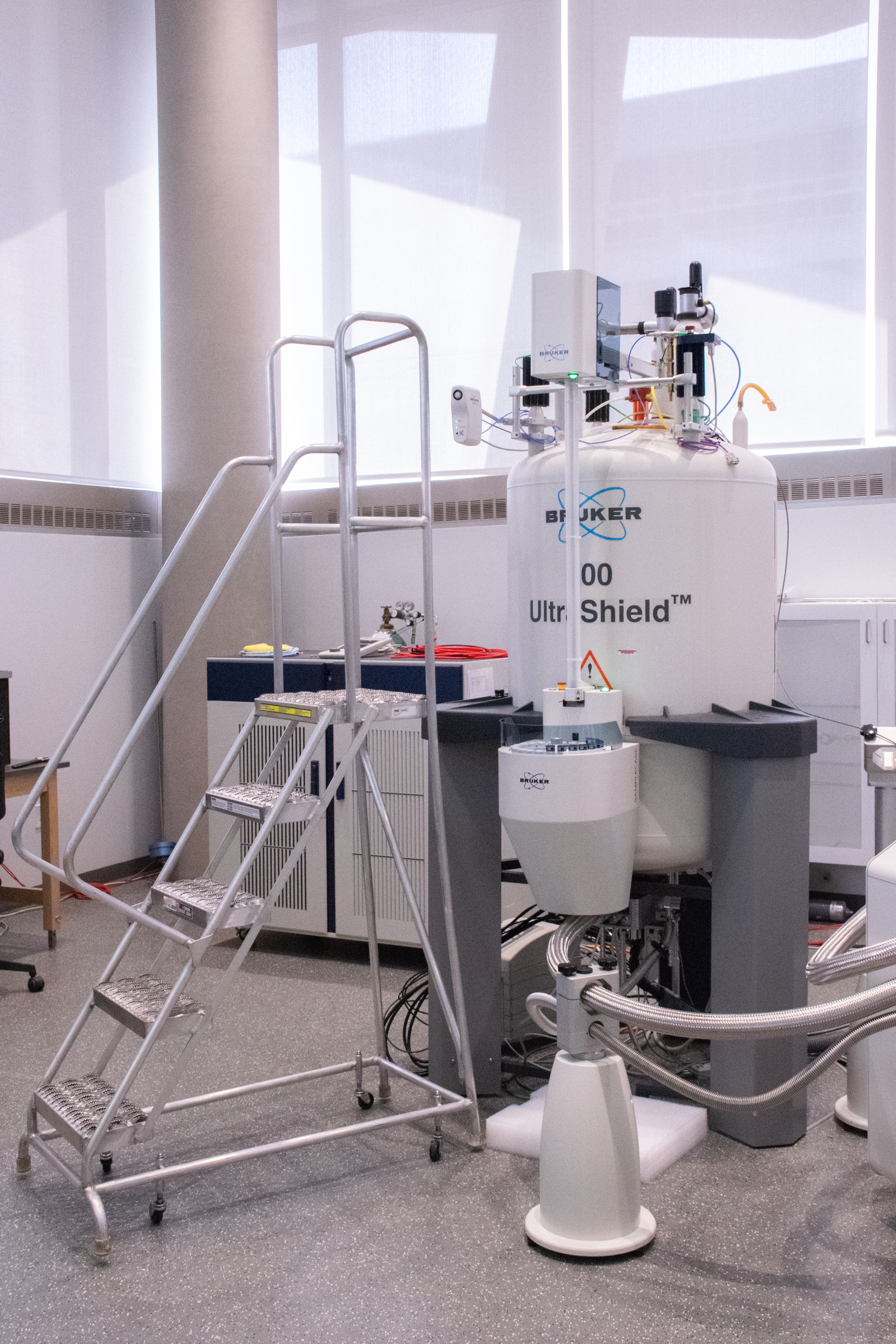
They started with a Bruker 800 MHz spectrometer—a device so large that they had to use a crane to lower it into its new room through a panoramic window. That move alone took nearly a year and was completed in September 2025. The facility’s other two instruments—both Bruker 600 MHz spectrometers—came later, beginning the move in October 2025 and finishing in February 2026.
What is biomolecular NMR?
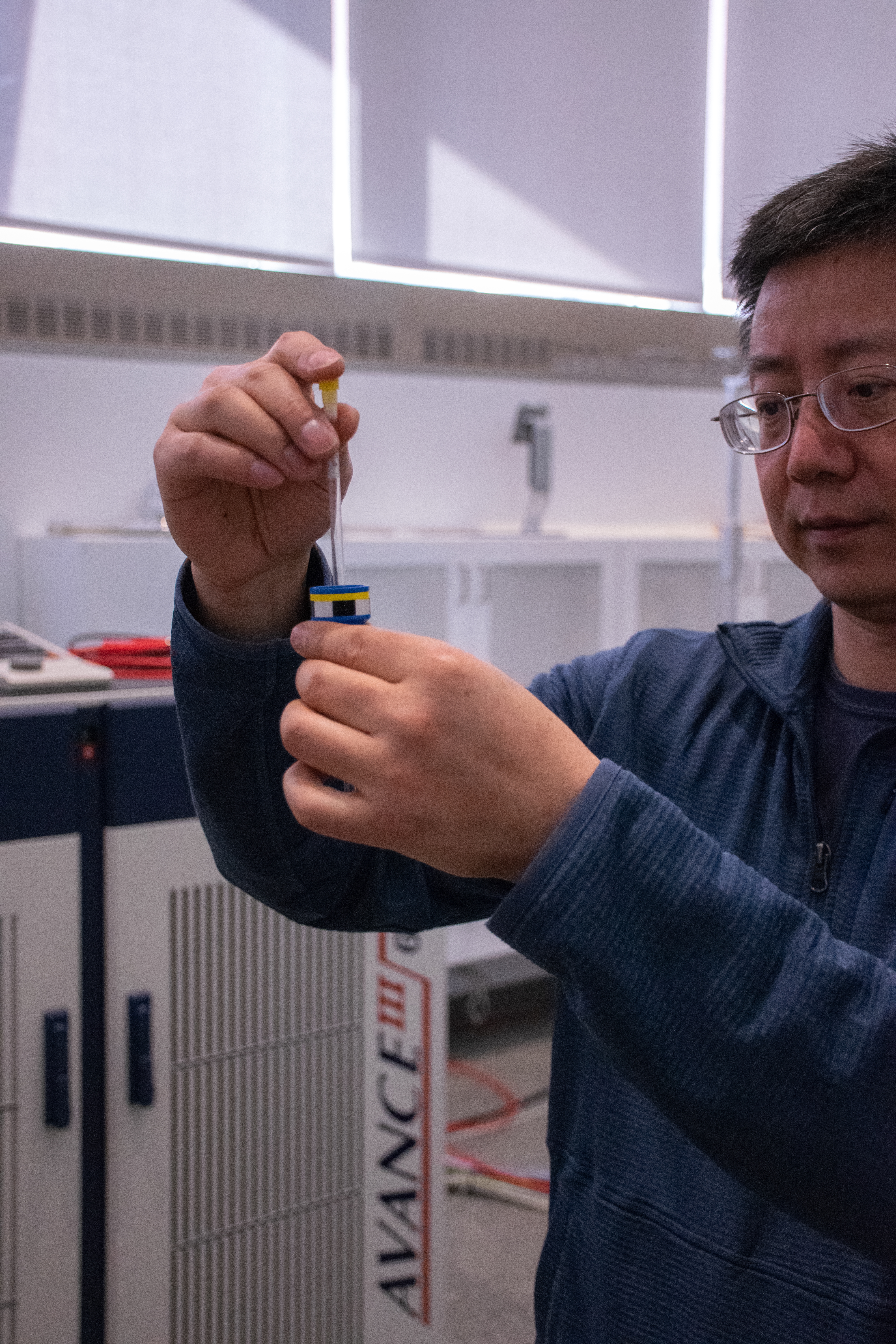
Biomolecular NMR instruments analyze liquid samples injected into a clear vial about the size of a tube of pen ink. The machines expose the samples to a powerful magnetic field. Certain atoms absorb that energy and release it at characteristic radio frequencies, revealing information about a molecule’s structure, shape, chemical properties, dynamics and biological information. These traits are useful to know in drug discovery, the chemical industry and other applications.
The spectrometers at UMD can analyze biologically relevant molecules such as proteins, DNA, RNA and polysaccharides. They can also accommodate synthetic materials, like those used in plastics and batteries.
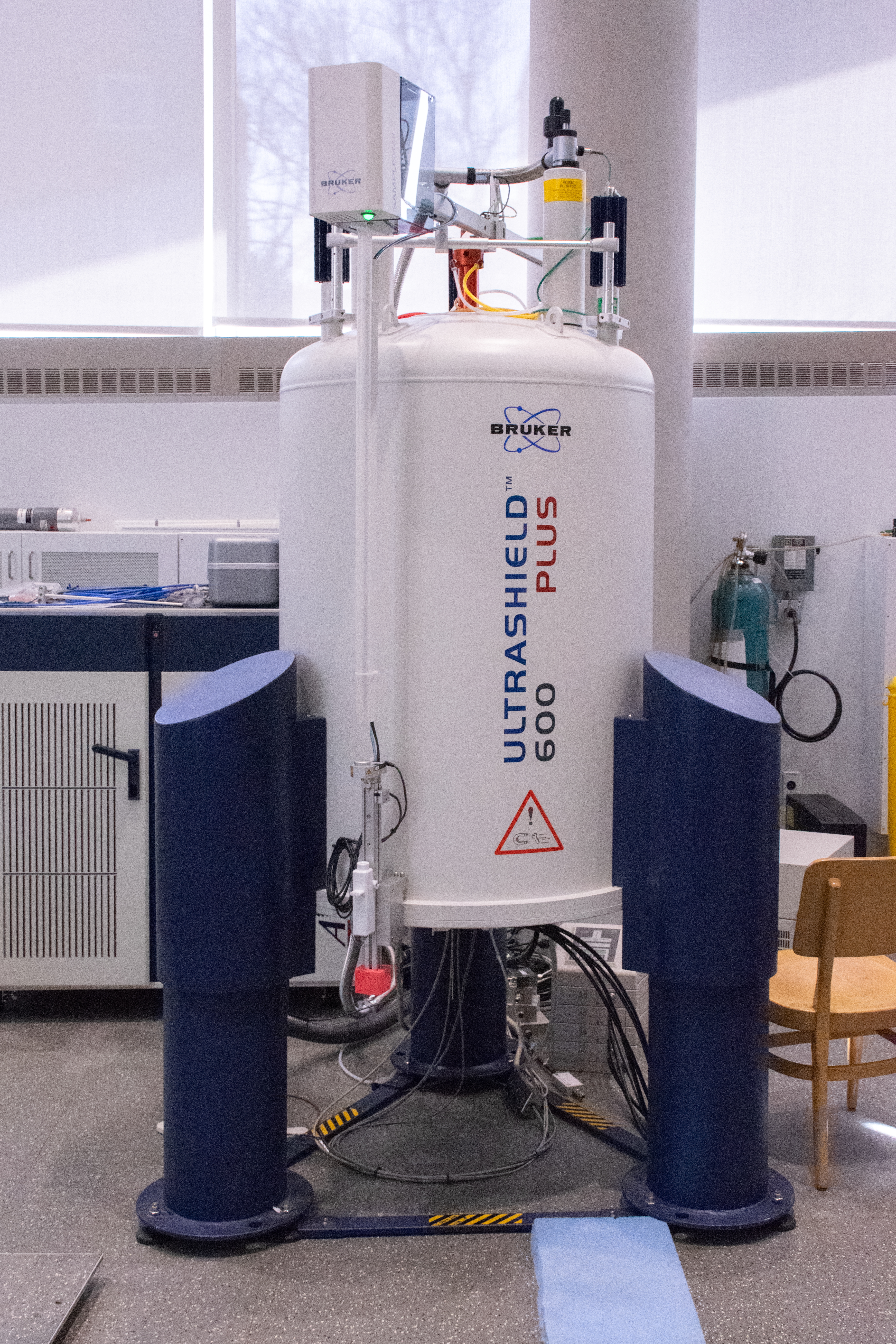
Researchers using UMD’s facility can customize the experimental setup to fit their needs. By applying a stronger magnetic field, the 800 MHz instrument offers greater sensitivity and spectral resolution compared with its 600 MHz counterparts. Additionally, the 800 MHz and one of the 600 MHz spectrometers can be equipped with cryoprobes, which cool certain elements of the device to temperatures at which molecular motion nearly ceases, making it easier to detect subtle signals.
“If you have a very diluted sample, it may be detected by the cryoprobe system but not by the room-temperature system,” Zhang explained. “Another way to put it is that if you have a diluted sample, if you run it on a room-temperature system, it could take 12 hours. But using a cryoprobe system, it may take just an hour.”
The new facility also supports high-temperature NMR with samples as hot as 105 degrees Celsius (221 degrees Fahrenheit). This is useful for analyzing materials that are difficult to dissolve at room temperature, such as plastics.
Using the new space, Cole Burrows, a third-year chemistry Ph.D. candidate, recently conducted high-temperature NMR on isotactic polypropylene—a versatile plastic used across industries ranging from food packaging to cars. The 800 MHz instrument has been critical for his dissertation research in Chemistry and Biochemistry Professor Lawrence Sita’s lab.
“With polymers being such a high molecular weight, it's really hard to get a good signal-to-noise ratio,” he said. “When we do it on a 400 MHz machine, for example, it's good, but when we do it on the 800 MHz, we can see specific resonances that we can't on other instruments.”
Having these state-of-the-art devices in the department establishes credibility during peer review and allows UMD researchers to compete with the world’s leading chemistry departments, Burrows said.
“Not a lot of people have access to an 800 MHz machine,” he said. “Having that at our disposal is an otherworldly gift.”
The perks of renovation
Now that it’s in full operation, Zhang hopes that the Biomolecular NMR Facility’s new location will attract new clientele and research.
“The previous building was a 10-minute walk from the department. That’s a big barrier for some researchers,” he said.
The hike “was definitely a pain,” Burrows said. Samples could be affected by heat, cold and precipitation during the trek. Plus, there was a chance that the vials could crack along the way—either from temperature changes or from being dropped.
“A lot of our stuff is really sensitive, and it's nice to know that your samples aren't going to get contaminated by something out of your control,” Burrows said.
The aesthetics of the new space are a welcome bonus.
“I’m in awe. It’s a wonderful open area—the old building was a dark room, and you couldn’t use the windows,” Burrows added. “Here, the light pierces through, so it doesn't feel like you're locked in a building.”
Who can use UMD’s Biomolecular NMR Facility?
In addition to members of the Department of Chemistry and Biochemistry, the Biomolecular NMR Facility currently supports UMD researchers from bioengineering, biology, cell biology and molecular genetics, chemical and biomolecular engineering, agriculture and natural resources, materials science and engineering, and mechanical engineering.
External researchers also use the instruments, including scientists from Johns Hopkins University and Georgetown University; government labs at the National Cancer Institute and the National Institute of Standards and Technology; and private companies, including those working in chemical production, pharmaceuticals, and ink manufacturing.
Zhang encourages scientists to contact him if they think their research could benefit from using the facility.
“I help researchers,” he said. “If they want to see if they can do an experiment here, I will help them to achieve that.”
Zhang’s accommodating nature is a boon for the facility and the department, Burrows said.
“Dr. Zhang is always available, very considerate and never makes you feel like a burden,” he said. “He’s a blessing for us.”