Fry has won international weather forecasting competitions and is one of the country's most promising young meteorologists.
Donovan Fry, an atmospheric and oceanic science major at the University of Maryland, was awarded a 2026 Ernest F. Hollings Undergraduate Scholarship—one of the premier honors for undergraduate students in the field.
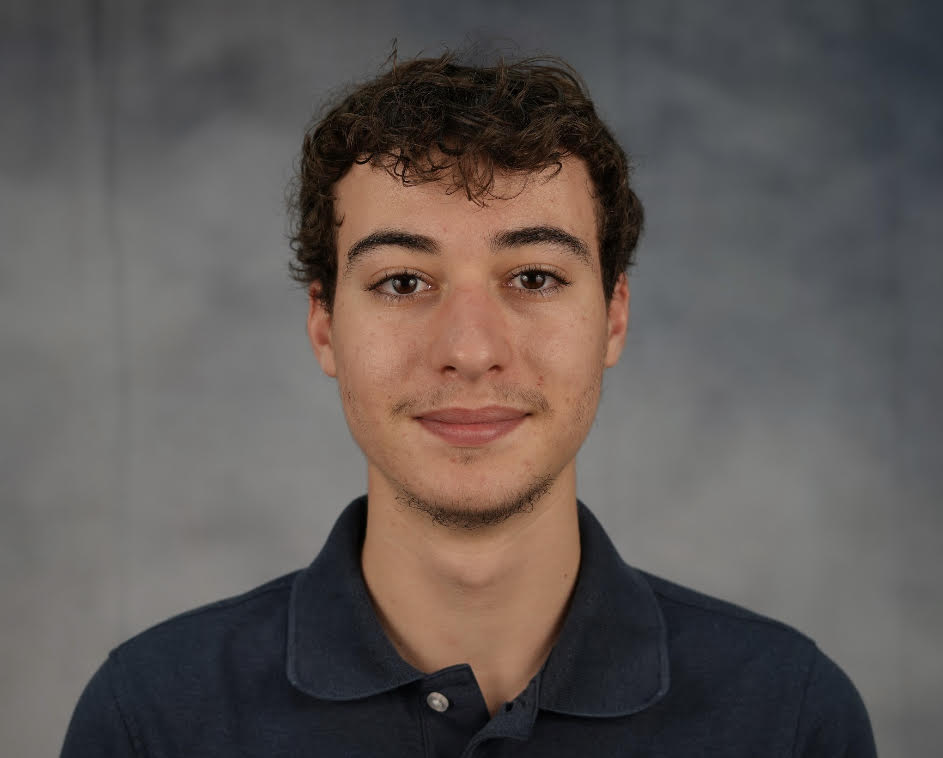
Fry will receive $19,000 of academic assistance and a paid summer internship with the National Oceanic and Atmospheric Administration (NOAA). He joins six other UMD students to receive the scholarship this year—the second highest ever. The class brings Maryland’s total number of Hollings Scholars since 2008 to 55.
“I’m so thrilled,” said Fry, who is also a Banneker/Key Scholar and in the University Honors program. “The chance to intern at a NOAA facility is a huge opportunity for me.”
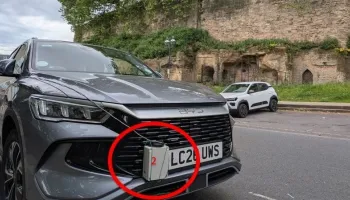
Fry has been interested in the weather for as long as he can remember. Growing up in Montgomery County, Maryland, he would sit on his porch watching winter blizzards and summer thunderstorms. These days, when his workload allows, he drives his car around the state chasing storms.
While most people use “talking about the weather” as a pejorative for meaningless small talk, Fry sees nothing mundane about it. He is enamored with the massive scale and significance of weather systems that can span thousands of miles; extend from the soil to nearly outer space; and affect every person, organism and industry within their reach.
“It's something that people take for granted. The atmospheric conditions for us to be able to exist on Earth—the fact that we're even living here—are such a perfect situation,” Fry said. “I just think the weather is something bigger than us.”
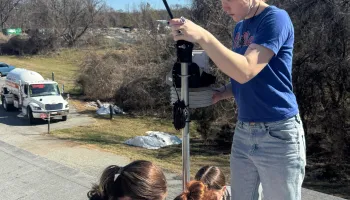
Fry is involved with myriad weather-related activities at College Park. In 2025, he was a Climate Resilience Network Intern with the Earth System Science Interdisciplinary Center. He helped to maintain and expand the Mesonet—a statewide network of weather sensors administered by the Department of Atmospheric and Oceanic Science that collects data on rainfall, soil moisture, soil temperature and other meteorological conditions.
Working under Mesonet Manager James Hyde, Fry maintained the network’s weather stations and assessed potential new sites. The job often required him to get his hands dirty, digging in the dirt and pouring concrete—a change of pace from his usual work analyzing computer models.
“Donovan expresses an interest and knowledge base that stands out above his peers,” Hyde said. “His inquisitive nature allows him to discover connections and patterns in meteorology way before his classes explain the phenomenon. I’m excited to see where the Hollings Scholarship takes him.”
Fry also writes for UMD Weather, a student-run organization that provides weather updates for the Maryland community. He spearheaded the group’s coverage of the snowcrete storm that brought UMD to a halt at the beginning of the spring 2026 semester.
Fry’s weather-forecasting skills have earned him national attention. For the past two years, he has competed in WxChallenge, a 10-week collegiate weather-forecasting competition that involves predicting temperature, wind speed and precipitation for cities across the country. The contest is open to undergraduate students, graduate students, faculty, staff and alumni and runs each semester. More than 1,000 people enter every year.
In the 2024-25 academic year, Fry won the award for the best freshman or sophomore in the competition and ranked 55th overall. This year, he was the top-performing undergraduate student and the eighth-ranked contestant overall.
After he graduates, Fry plans to work in weather forecasting in some capacity. He noted that almost every large organization, including energy companies, outdoor sports teams and airlines, needs forecasters. Even UMD contracts with Accuweather to push emergency alerts. Fry envisions a career at a private company or a government agency like the National Weather Service, predicting meteorological conditions for public safety and industry.
The Hollings Scholarship will be vital to reaching that goal, he said.
“Getting a government internship is super valuable right now, especially if I’m able to do it at a National Weather Service office where I can see the back end of how a forecasting team works,” he said. “I love forecasting—I do it all the time—but I still have tons to learn.”