The distinguished lifetime honor recognizes Sita’s innovative solutions to combat the world’s plastic pollution problem.
University of Maryland Chemistry and Biochemistry Professor Lawrence Sita was named a 2025 Fellow of the American Association for the Advancement of Science (AAAS)—one of the highest distinctions among the scientific community.
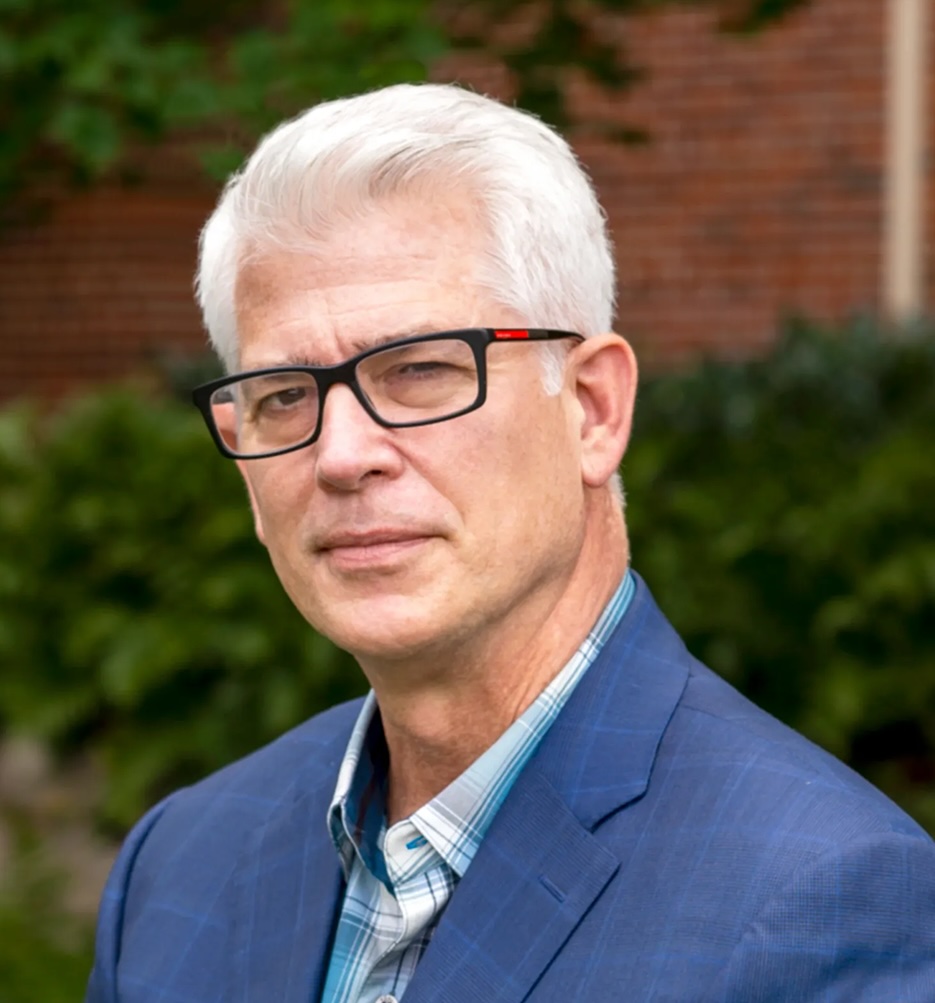
The fellowship recognizes Sita’s groundbreaking research to develop next-generation materials to combat the world’s plastic pollution problem. He joins a class of nearly 500 scientists, engineers and innovators who received the distinguished lifetime honor this year.
“Professor Sita's continued scientific excellence and entrepreneurship are an inspiration to all of us, and it gives me great pleasure to see his contributions acknowledged at the highest level by AAAS,” said Amitabh Varshney, dean of UMD’s College of Computer, Mathematical, and Natural Sciences.
Sita works on a class of chemicals called polyolefins, which make up about half of all plastics produced globally, including commonly used plastics such as polyethylene and polypropylene. Each year, humans produce 200 million tons of polyolefins—with a volume equal to a four-lane highway encircling the equator—and the demand is increasing. Most of these products are single-use because they can’t be recycled efficiently. Polyolefins also include lubricants, adhesives, disposable diapers and other commonly used products.
“It's not simply drinking straws. Polyolefins are the seen and unseen components that make technology and civilization work. You can't ban them out of existence,” Sita explained. “What we need is the next generation of polyolefins that can help remediate this plastic waste issue—that we can recycle to start regenerating extended life instead of a single use.”
To that end, Sita has spent 25 years developing a new way to produce polyolefins called multi-state living coordination polymerization. This method allows scientists to carefully control how monomers, the chemical building blocks of polyolefins, get linked into chains. It can yield a wider spectrum of products with a greater range of physical properties than conventional technologies.
The new polyolefins Sita and his group design and produce can potentially upcycle waste from legacy plastics to create new materials. Normally, recycling is challenging because certain types of plastics, like polystyrene and polyethylene, can’t be mixed. But with one new kind of polyolefin called a block copolymer, “you can make a new hybrid material,” Sita explained. “You can extend life.”
Sita’s methods have generated entirely new polyolefins with unprecedented material properties. By screening novel materials, Sita hopes to discover sustainable and commercially viable products that could eventually replace legacy plastics.
“Lawrence’s research uses his decades of accomplishments in the fundamental understanding of organometallic reaction mechanisms toward the goal of developing sustainable materials that will benefit society at large,” said Daniel Falvey, chair of UMD’s Department of Chemistry and Biochemistry. “The recognition by AAAS is well deserved.”
Since Sita joined UMD as an associate professor in 1999, his work has led to more than 25 patents. In 2008, he founded Precision Polyolefins LLC, which produces polyolefins at scale using multi-state living coordination polymerization. The company has collaborated with global industry partners to demonstrate that it can produce hundreds of kilograms of product at a pilot scale. One of its products—a lubricating oil—outperforms offerings from corporate powerhouses like ExxonMobil. They’ve even tested it in a NASCAR racing engine.
Sita is now doubling down on commercialization—and expanding beyond plastics. In 2024, he founded Vernix Health LLC, which produces nutrients found in human milk and in cow and sheep meat called branched-chain fatty acids (BCFAs). Studies in cellular and animal models suggest that BCFAs have human health benefits, including preventing cancer, reducing inflammation and protecting brain tissue. However, there are no natural sources for harvesting BCFAs in large quantities, and synthesizing them in the lab currently costs $4,500 to $9,000 per gram, Sita said. Vernix Health aims to produce them at a lower price point using a process called living telomerization—a novel analog of the method Sita developed to link together the building blocks of polyolefins.
“I’ve always had the entrepreneurial side in mind. I’d love to see the technology translate to products that benefit society,” Sita said. “I think it is a testimony to UMD that there is an entrepreneurial side that is promoted within the university—that there are broader impacts that faculty can engage in.”
Sita will leverage the platform of his AAAS Fellowship to push for societal change and to inspire his graduate students to do the same. And although transforming the entrenched plastic industry is daunting, it’s not impossible—and he won’t back down.
“You can change a system. We saw that with pull tabs on beer cans—we don't have pull tabs littering the streets anymore,” he said. “My mission is to help change perceptions and opinions as a scientist and a spokesperson for what we do as chemists and the chemical industry.”