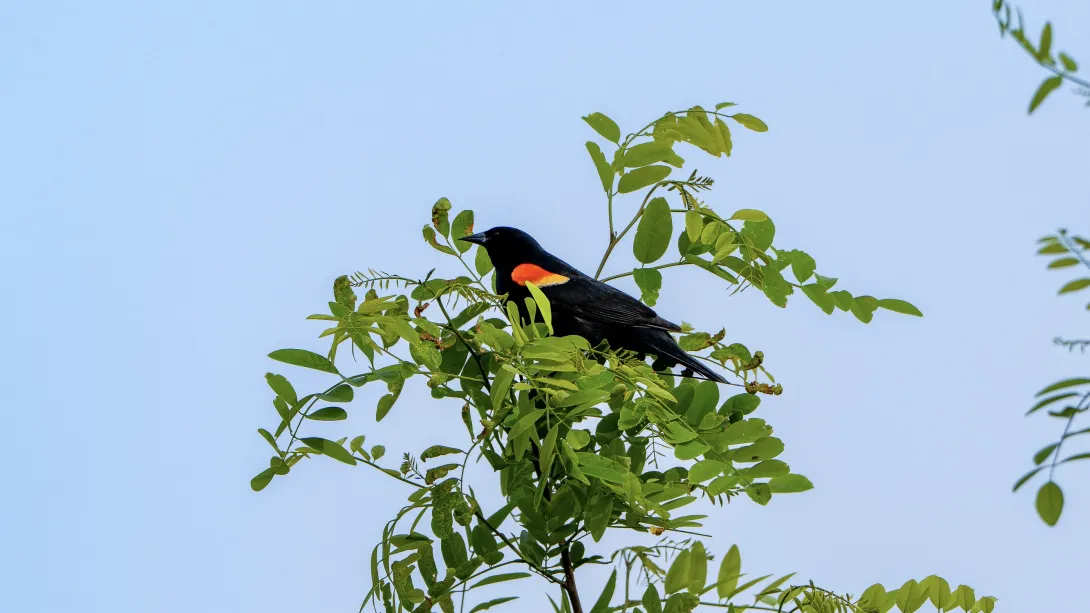
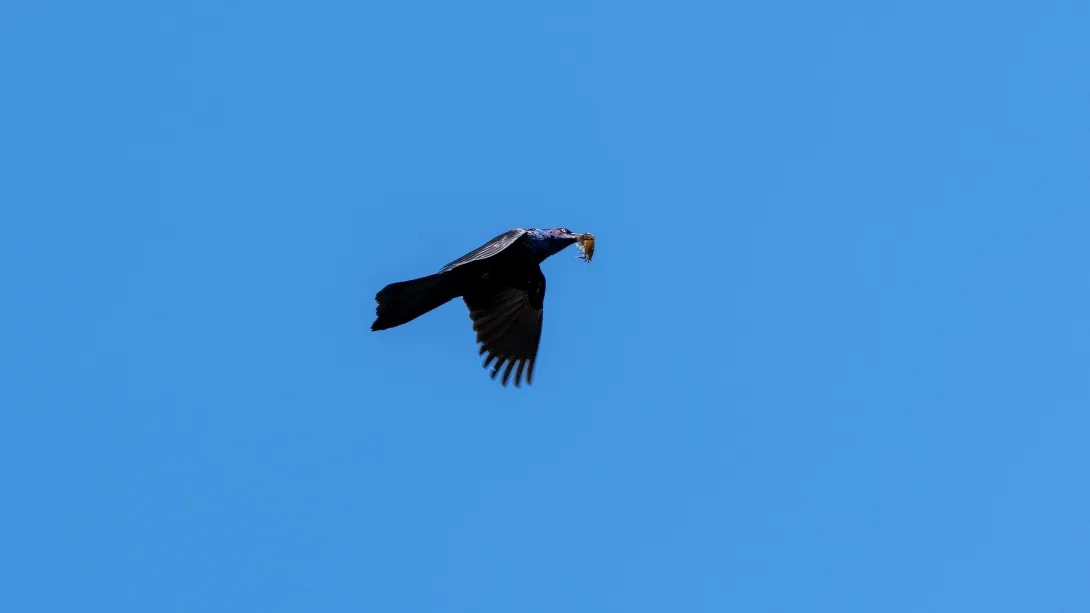
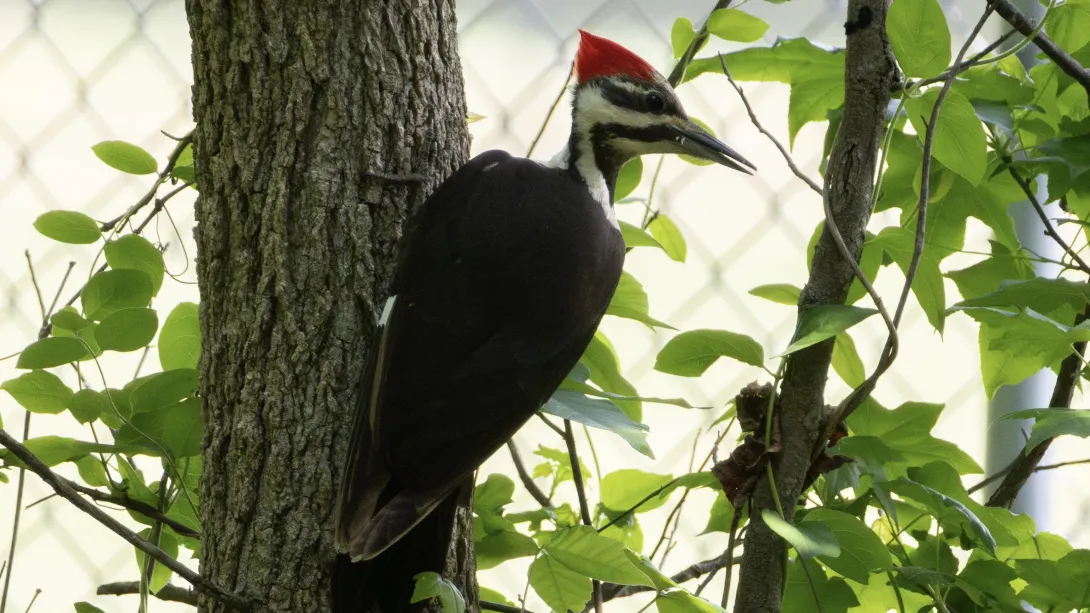
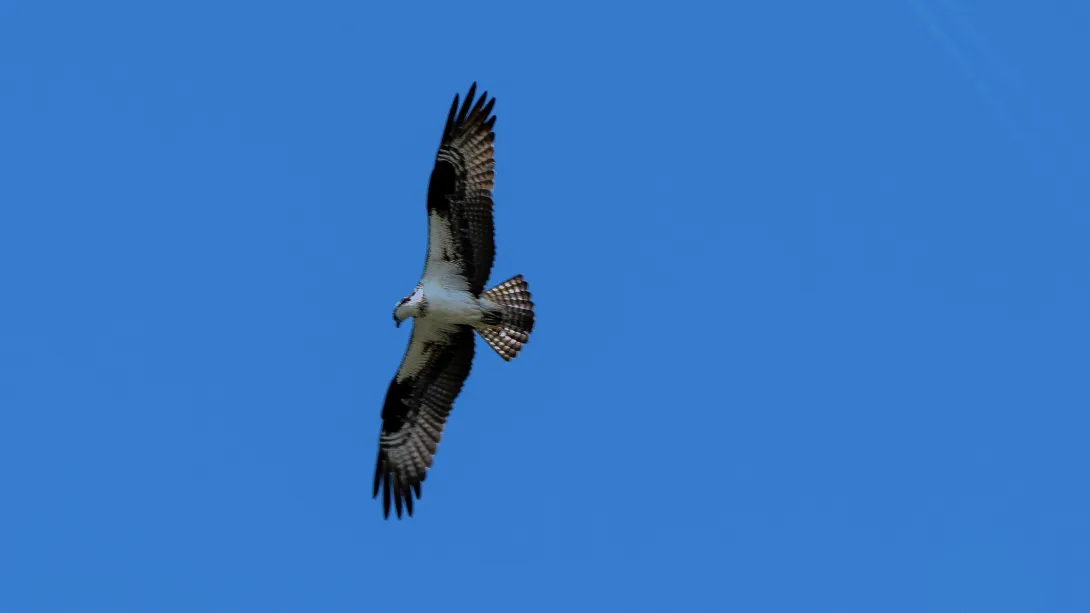
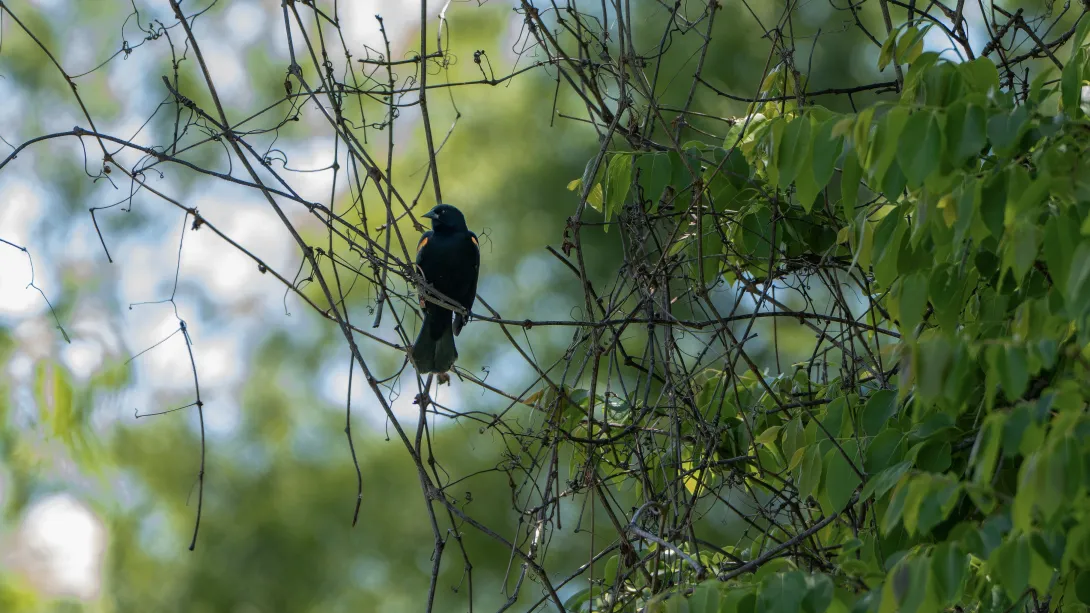
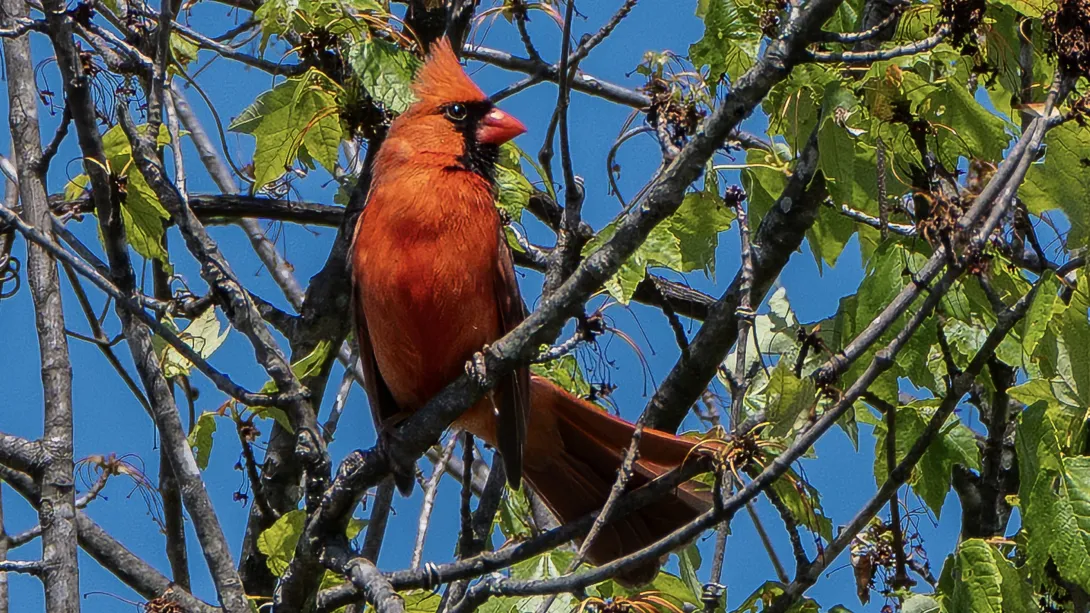
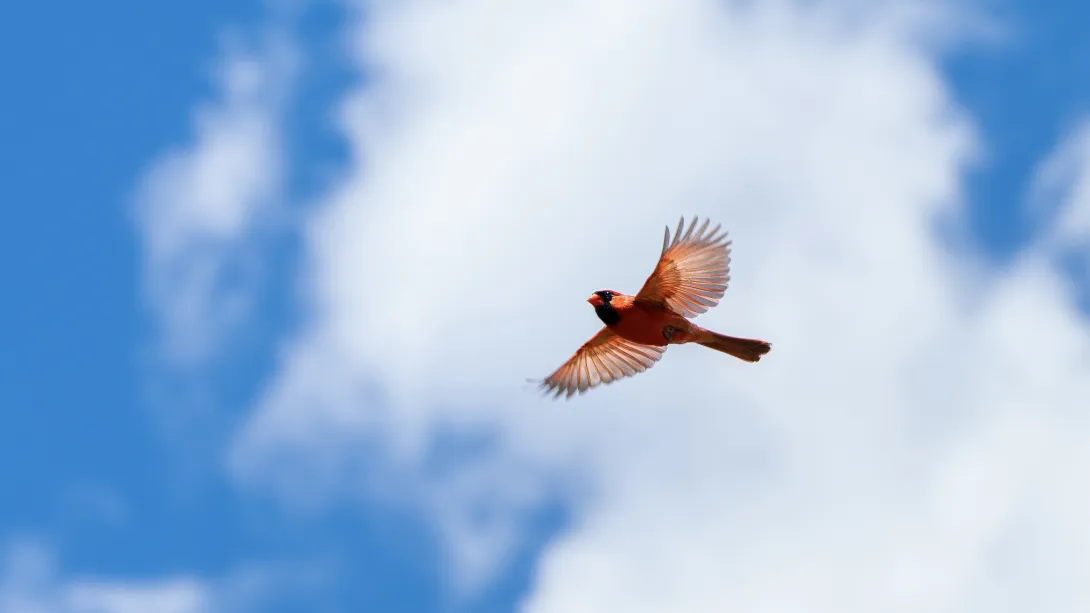
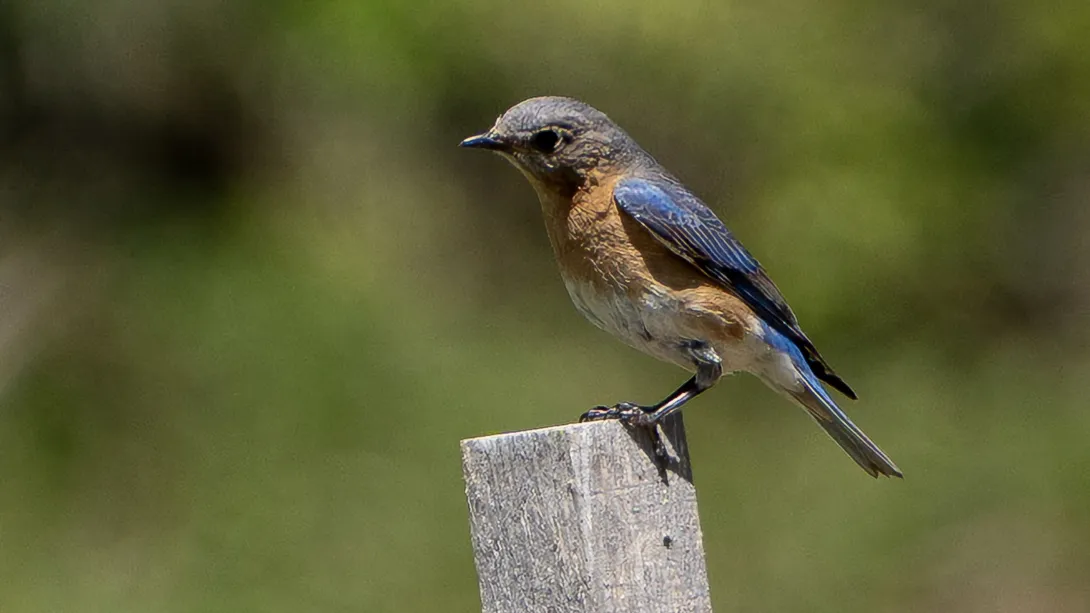
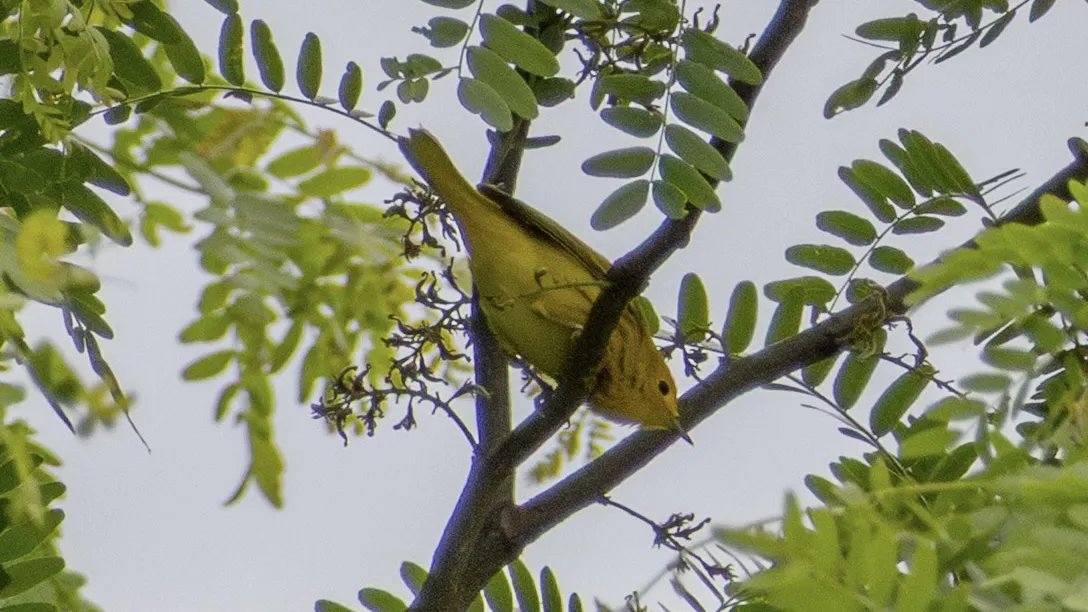
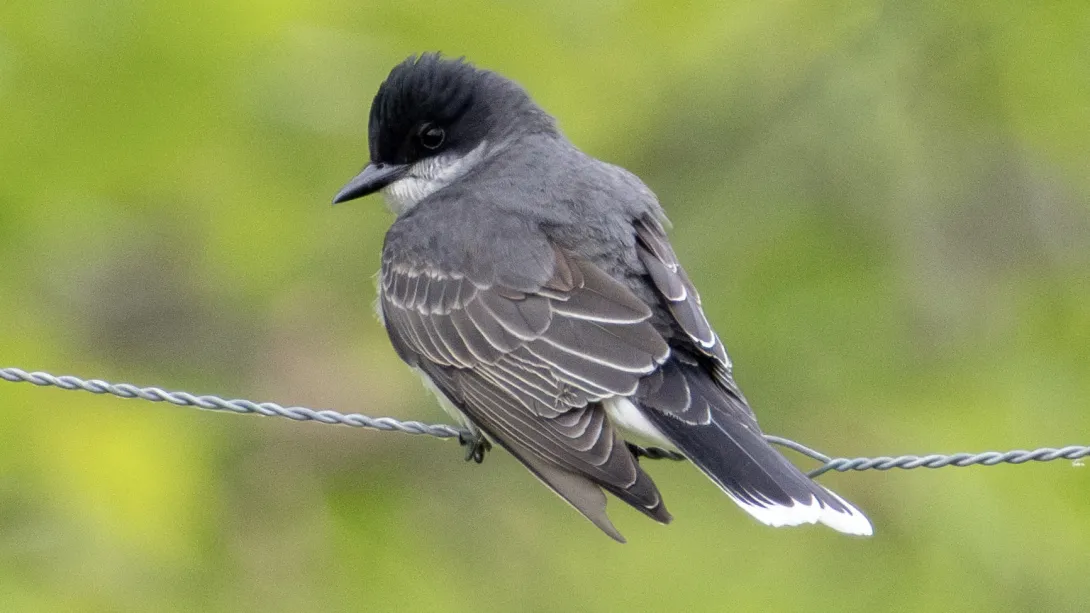
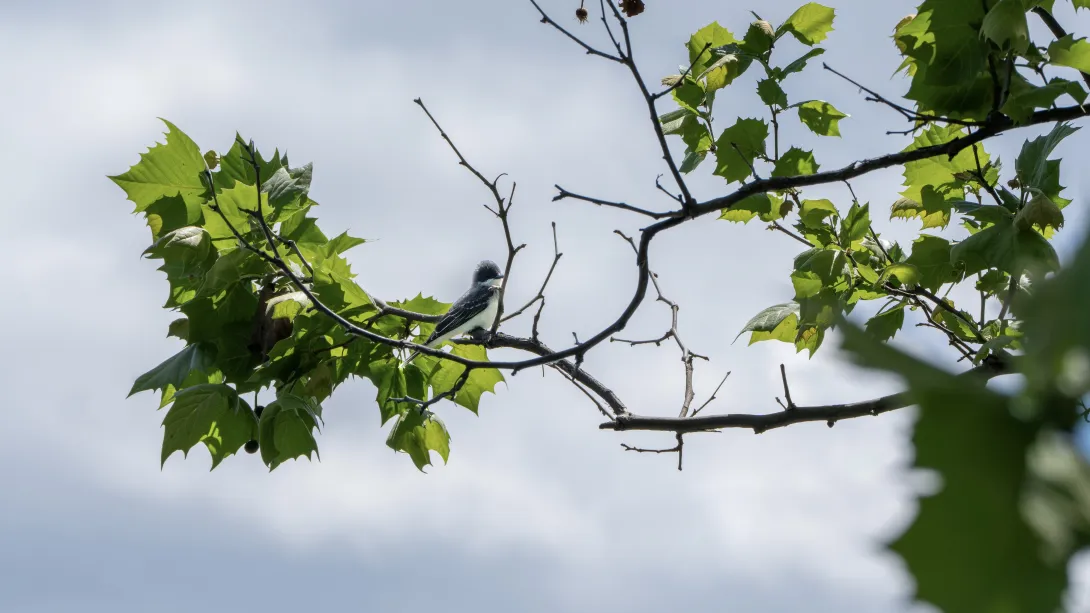
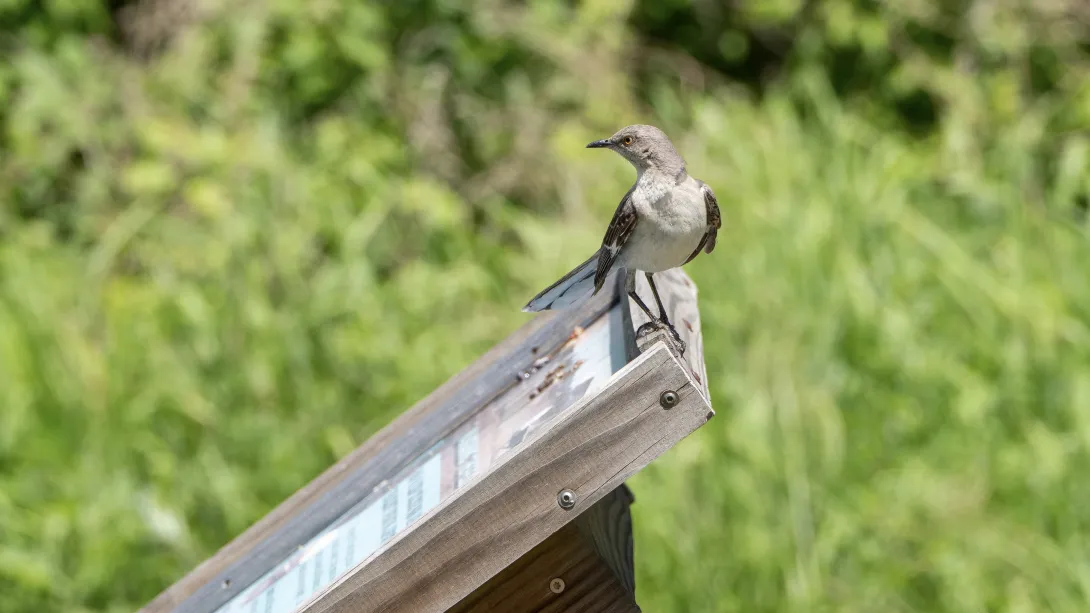
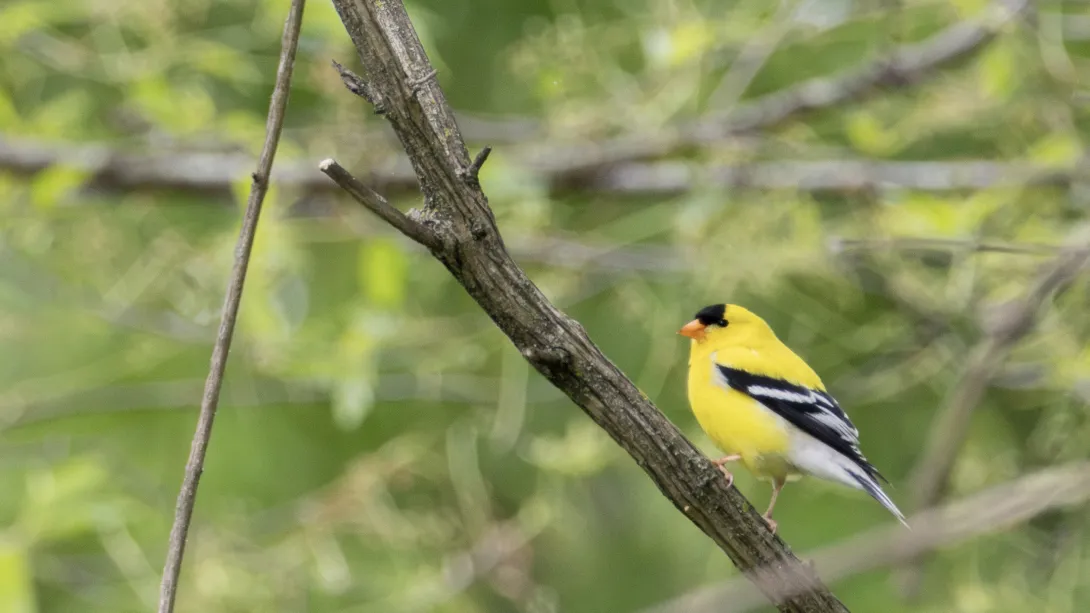
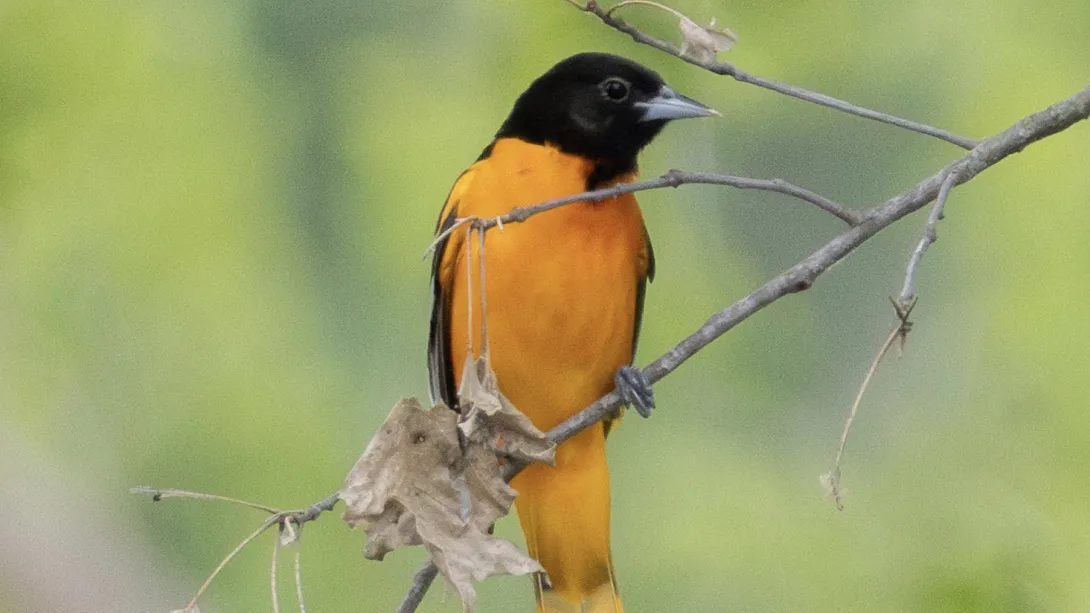
Recently dubbed the “hot-girl hobby of the year,” a new birding course at UMD filled up within minutes of enrollment opening.
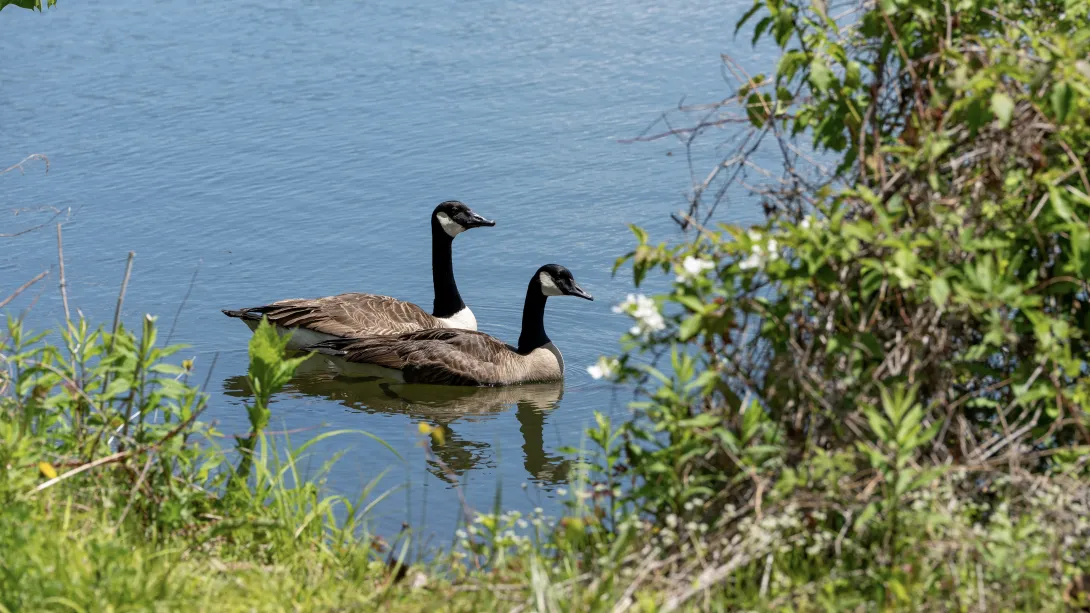
Dozens of families promenaded around Lake Artemesia in College Park on February 27. It was a mild 53 degrees Fahrenheit (12 degrees Celsius)—a respite from several frigid weeks of snowcrete—and Joshua Johnson, instructor of the student-initiated course (STIC), BSCI238A: “Ornithology,” saw a prime opportunity to get his class outside. The course teaches students about bird biology and challenges them to apply their learning during birding field trips.
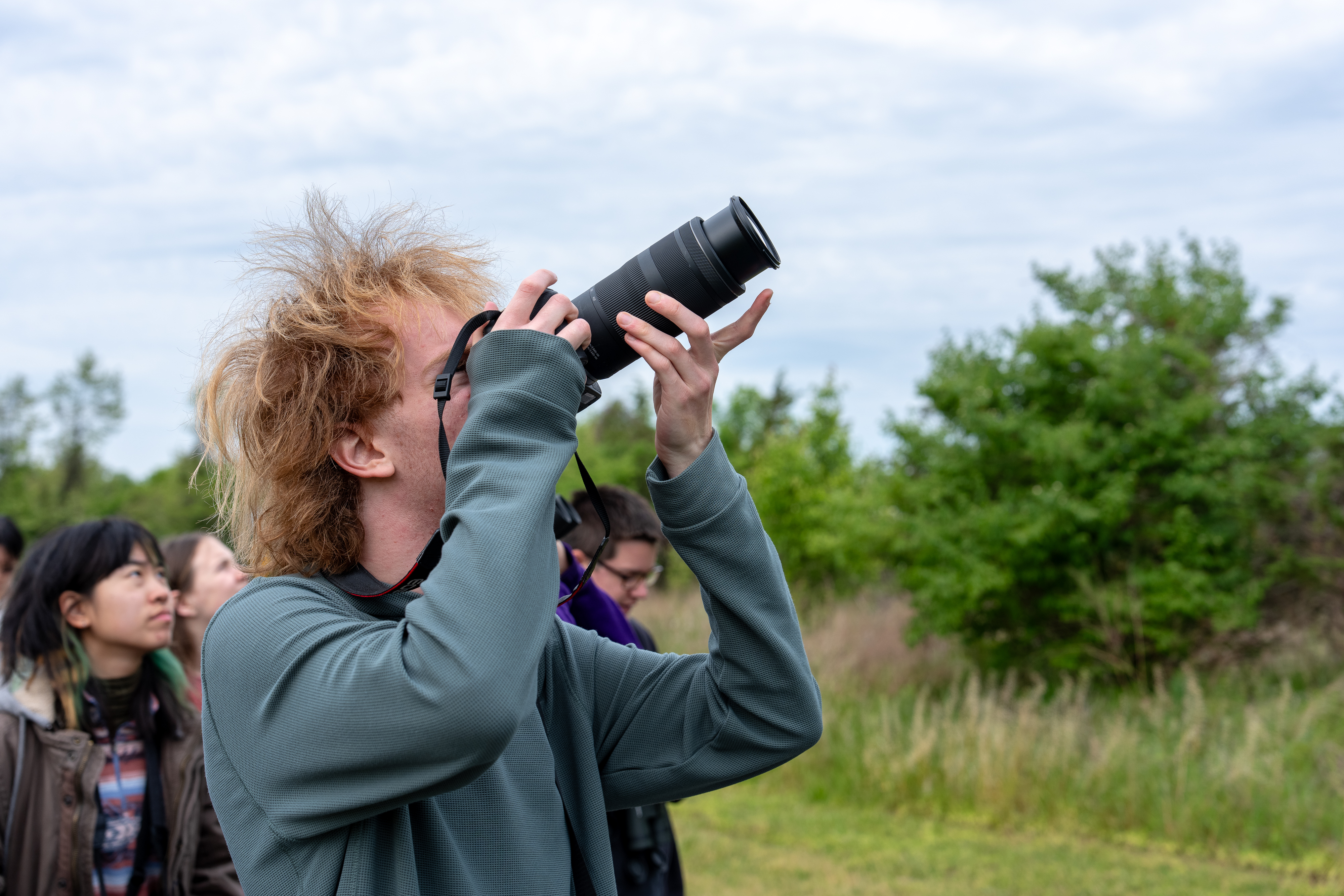
Weaving through walkers, joggers and bikers, nine University of Maryland students lugged a beach cart filled with binoculars a mile and a half from campus. Their eyes scanned the water’s surface and the trees’ tangled branches for signs of life.
The class beamed when they spotted a few ducks called redheads skimming across the lake—both brown females and cinnamon-colored males.
“This lake is so deep that it doesn’t freeze when the other water around here does, so the ducks like to come here when everything else is frozen,” said Johnson, a senior biological sciences major.
As the class marched down the paved path, they spotted a bird feather in the grass. They had just learned about feather anatomy during that morning’s lecture. Johnson knelt and moved it with a stick as the class debated whether it was a tail feather or a wing feather—until several screeching ring-billed gulls disrupted their discussion.
Observing birds in nature is a key objective of Johnson’s one-credit course. Advised by Entomology Professor Daniel Gruner, Johnson designed the syllabus to include primary literature and textbook readings, as well as field skills such as identifying birds. Students must take several independent birding trips and attend at least one class field trip. Nine of 22 chose their first opportunity at Lake Artemesia.
The chance to spend time outdoors appealed to Maxine Hsu, a senior biological sciences major. She began birding during the pandemic to stave off cabin fever from quarantine.
When she got to UMD, she joined the university’s chapter of the Audubon Society and served as the group’s secretary. The hobby has brought her more than she could have expected. She met her boyfriend while birding at UMD. He is now a medical student and often takes bird-watching walks in the park to decompress; Hsu imagines she’ll do the same once she’s in medical school.
“I thought it was an old person's hobby,” Hsu said with a chuckle. “But it turns out there are a lot of people like me at UMD who like birding.”
Other members of the Audubon Society are enrolled in the course, too—including its president, senior biological sciences major Jingkang Wu, who is now considering a future career in bird biology. Like Hsu, he knows a fair amount about birds already—but he still finds the course enlightening.
“Before, I was a bird hobbyist, but now I’m learning more facts about their biology, their organ systems and their anatomy,” Wu said.
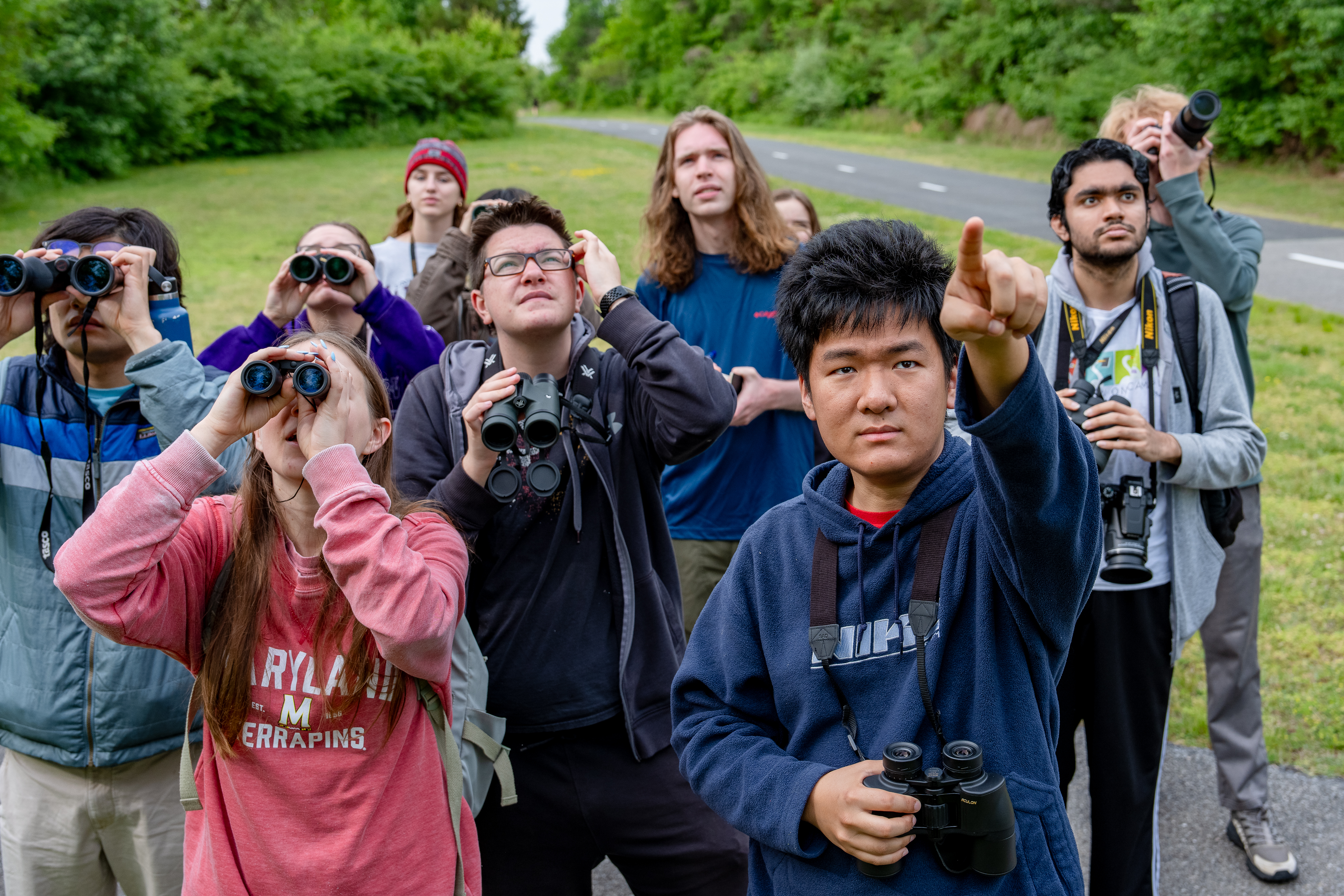
As for Johnson, he has “loved birds for a long time—longer than I can remember,” he said. “I have this photo of me annoying my classmate when I was 3 or 4 years old, just showing her birds in a bird book.”
Still, he’s learning more from the hours he spends each week researching for his lectures.
But the birding class isn’t only for experts. Johnson intentionally designed it to be accessible to students who know little about birding or biology. The recent field trip to Lake Artemesia included students from computer science, chemical engineering and even studio art, many of whom had little or no prior bird knowledge.
“We learn a lot every class, and it’s all very interesting,” said Candace Sun, a senior computer science major. “I didn’t really have any crazy biology background before this class, but it’s still accessible. [Johnson] explains things pretty clearly.”
The course was in high demand and filled up within minutes of opening enrollment.
“I learned about the class through a Reddit post,” said Jessica Chen, a senior chemical engineering major. “I searched for a bird class in the past, and I was a little bit disappointed that there weren’t any. I was really happy when I saw this one.”
The overwhelming interest coincides with a growing trend—more young people are flocking to birdwatching. Last September, Popsugar designated birding the “Hot-Girl Hobby of the Year.” Plus, phone apps are lowering the barrier to entry and elevating the activity’s appeal. Merlin Bird ID allows new birders to identify species based on audio recordings or photos from their mobile devices, while Birda advertises itself on Instagram as “like Pokémon Go, but for actual birds.”
Whatever background they come from, Johnson hopes all his students leave with a deeper connection to the wildlife around them. His main goal is that every student finishes the semester able to bird independently and with a strong biological context—even in new places and unfamiliar environments.
“I’m not going to be there their whole lives,” he said. “I want them to be able to go out and bird independently with confidence.”