Professor Sarah Penniston-Dorland has been named chair of the University of Maryland’s Department of Geological, Environmental, and Planetary Sciences for a five-year term, effective July 1, 2026. A Fellow of the Mineralogical Society of America, Penniston-Dorland joined the department in 2004 as a lecturer and was ultimately promoted to professor in 2020.
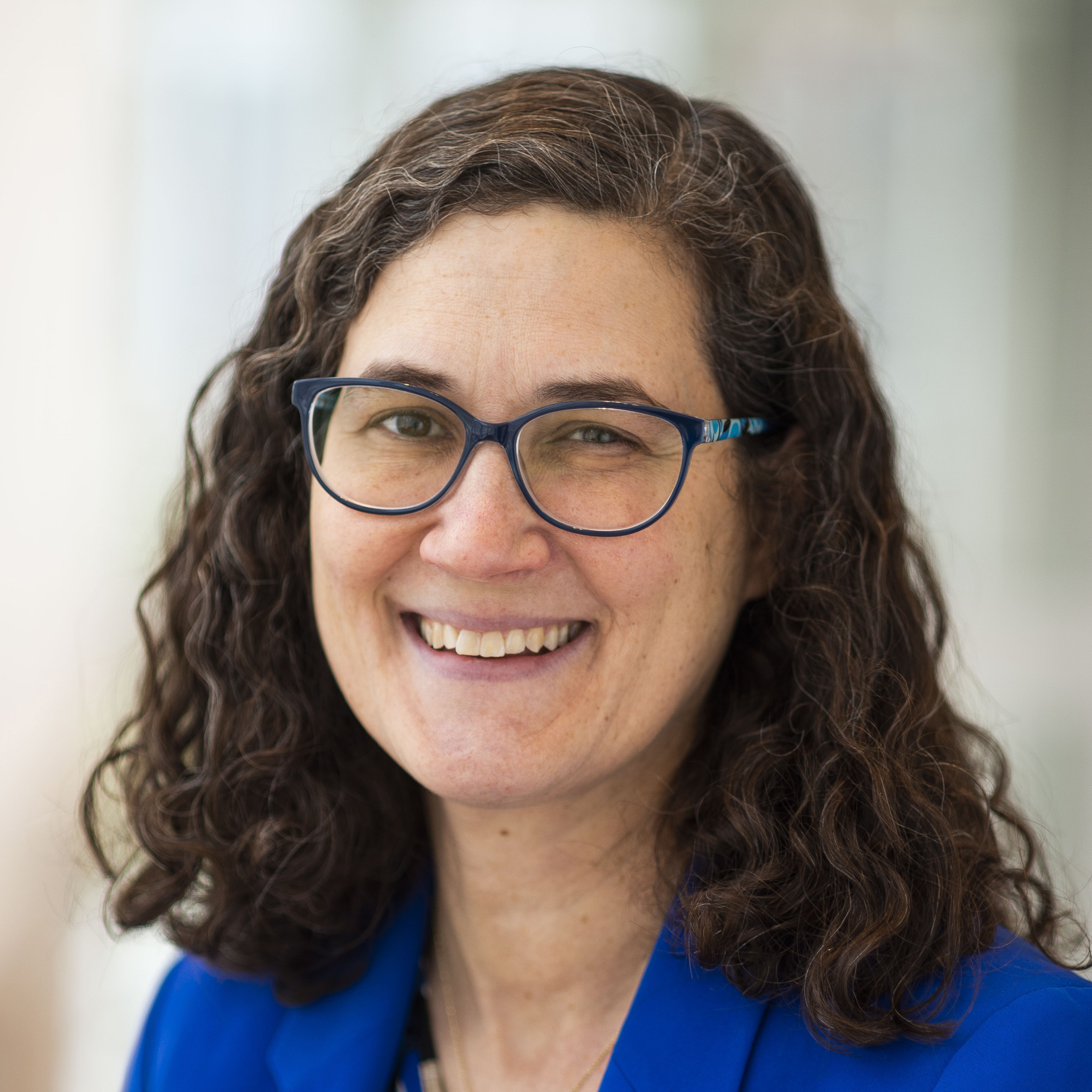
“Sarah Penniston-Dorland's scholarly achievements, dedication to student and faculty success, and broad service to the university and the geosciences community have prepared her well to lead the Department of Geological, Environmental, and Planetary Sciences,” said Amitabh Varshney, dean of UMD’s College of Computer, Mathematical, and Natural Sciences (CMNS).
The department has 16 tenured/tenure-track faculty members, 17 professional-track faculty members, four staff members, 79 undergraduate and graduate students, average research funding of more than $4 million annually and the support of 10 philanthropic funds.
“The department has been a welcoming home for me for my entire career,” Penniston-Dorland said. “I am excited to work with the departmental community and with CMNS and UMD more broadly to lead us into the future, expand our impact and grow into the potential of our new name.”
The department, created in 1973, updated its name earlier this year to more accurately reflect the interdisciplinary nature of its faculty expertise and academic programming, which span the geological, planetary and environmental sciences. Today, faculty members and students in the department conduct research in three main areas: solid Earth, surficial processes and environments, and our solar system and its planets.
“Our recent department name change reflects the diversity and impact of what we do,” Penniston-Dorland explained. “The research and training in our department address some of the most pressing issues facing humanity, including critical minerals and the environment. Our work in planetary science helps us understand our place in the universe.”
The department offers B.S., M.S. and Ph.D. degrees in geology. Undergraduates who major in geology can choose the professional, Earth and environmental sciences, or geophysics track. The department also offers minors in Earth history, Earth materials properties, geochemistry, geophysics, hydrology, paleobiology (joint with the Department of Entomology), planetary sciences (joint with the Department of Astronomy) and surficial geology.
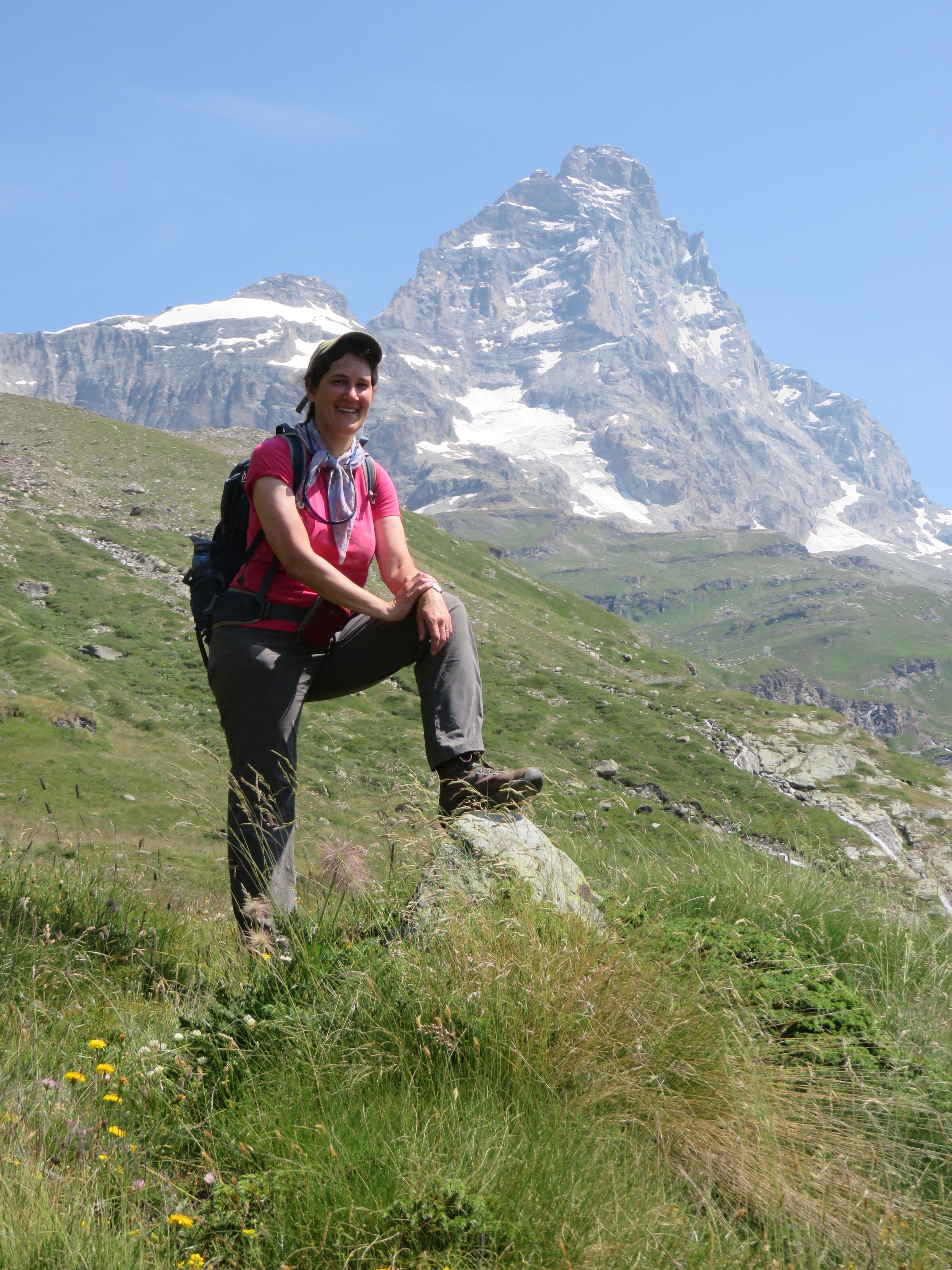
During her career, Penniston-Dorland has mentored over 40 undergraduate, master’s and doctoral students and postdoctoral fellows. She is best known for her research into metamorphic rocks exhumed from within subduction zones—tectonic plate boundaries where two plates collide and one is forced beneath the other and driven down into the Earth's mantle. Penniston-Dorland collects samples around the world and analyzes them in the lab using analytical tools such as an electron microprobe and mass spectrometry.
She also advocates for the study of rocks exhumed from fossil subduction systems within the scientific community that studies active subduction zones. She created an organization called ExTerra: Understanding Subduction Through the Study of Exhumed Terranes, which held several National Science Foundation (NSF)-funded workshops and created a five-year international field institute program to train graduate students and post-docs in the study of exhumed rocks from subduction terranes in the Western Alps.
Penniston-Dorland was elected to several leadership roles in the Mineralogical Society of America, including councilor, vice president and president; she currently serves as past president. She was a lead organizer and principal investigator for the NSF-funded Early Career Geoscience Faculty Workshop (2014-20). Penniston-Dorland also serves on the advisory board of the Journal of Petrology and as an associate editor of the Journal of Metamorphic Geology.
She served as the department’s director of graduate studies (2017-22); as the CMNS ADVANCE Professor, supporting the recruitment, retention, advancement and professional growth of a thriving faculty (2022-24); and on the campus professional-track faculty promotion review committee (2017).
Penniston-Dorland earned her Ph.D. in 2005 and a master’s in 1999 in earth and planetary sciences from Johns Hopkins University; a master’s in geological sciences in 1997 from the University of Texas, Austin; a master’s of education in 1990 from Harvard University; and her bachelor’s degree in 1986 in history and science from Harvard College.
She will take the reins from James Farquhar, who served as chair for five years. During Farquhar’s term—which included the department’s 50th anniversary celebration and name change—Cecilia Sanders and Mike Zhu joined the faculty, and Michael Brown and Alan Jay Kaufman were promoted to Distinguished University Professor. In addition, William Smith (B.S. ’81, geology) established an endowment to provide the department with programmatic support, and the department strengthened its connections with other environmental units at UMD through an institutional grand challenges grant that launched the Climate Resilience Network.