UMD Biology Professor Emeritus Arthur N. Popper calls for studies of non-mammalian marine species affected by the sounds of deep-sea mining.
You may have heard that noise from human activity in the ocean can harm large marine mammals such as dolphins and whales. But the bangs and booms from commercial shipping, offshore energy exploration and production, pleasure boats and, more recently, deep-sea mining can affect fish and invertebrates, too.

UMD Biology Professor Emeritus Arthur N. Popper, an award-winning expert on bioacoustics, has spent decades sounding off on behalf of fish and, more recently, their spineless cousins, trying to draw attention (and funding) to understand how human industry at sea (and in other water bodies) disturbs their auditory world. His new paper, published in The Journal of the Acoustical Society of America on April 24, 2026, reviews the evidence that deep-sea mining, like other industrial activities, puts fish and invertebrates at risk. He and the paper’s co-author, Frank Thomsen of the Danish Hydraulic Institute, call for urgent action to study and protect them.
“These animals make up a big percent of our aquatic fauna and are among the most important on Earth to us—20% of people depend entirely on them for food,” Popper said. “They’re crucial to the food web and ecosystem function, yet in discussions of noise pollution, scientists and policymakers pay little attention to them. We’re just not investing enough in keeping them from harm.”
Industrial strength noise
As humans have sought to harness the resources of the world’s aquatic environments, our oceans have become increasingly noisy places. Naval operations, shipping, oil and gas exploration, dredging, offshore wind and other construction already raise noise levels. Now, global interest in deep-sea mining to extract critical minerals like nickel and cobalt from the seafloor threatens to add to the din. Such mining requires a processing vessel or platform at the sea surface connected to mineral collectors at the seabed, with associated noise sometimes extending several tens of kilometers from the source.
For fish and invertebrates, “the undersea world is filled with natural sounds, but human-made noise can drown them out,” Popper said.
From the rumbles of ships, the blasts from air guns conducting seismic surveys and the booms from pile driving, excess noise can change how animals behave, interrupting fundamental activities like feeding, breeding and communication, according to Popper. For example, if a female fish can’t hear a male’s mating call because of ships overhead, “that mating won’t occur,” he said. “With enough missed reproductive acts, there can be serious population-level consequences.”
In addition, Popper noted that noise from human activity has been shown to reduce foraging efficiency, trigger startle responses and disrupt antipredator behavior in fish, with potentially life-shortening effects including internal damage and stress.
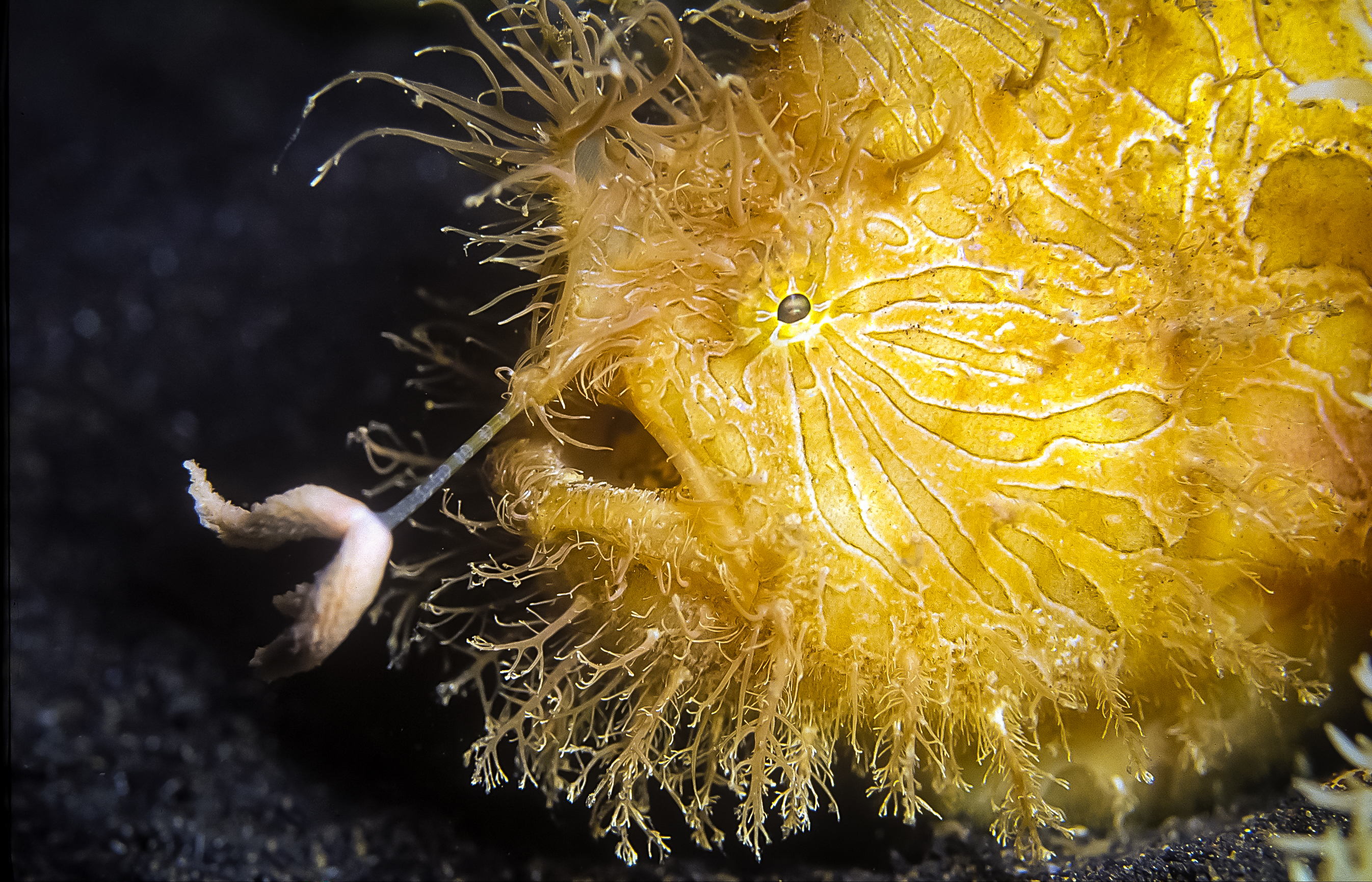
For small fish and stationery or bottom-dwelling species, including deep-sea species, the outcomes can be especially severe.
“Not all animals can just pack up and leave,” Popper said.
He compares their experience to that of a person living near a new eight-lane highway, where the road noise, honking and vibrations affect sleep and study habits and might even discourage at-home socializing.
“The difference is that we put up barriers along highways to block the noise for people; we don’t do that for marine animals,” Popper said.
“Like studying something on the moon”
Driven in large part by public concern for marine mammals, some industries have sought ways to reduce their sound footprint in the sea, from slowing ships to using quieting technologies on equipment like air guns and pile drivers. But assessing the impact of these measures on sea life has been challenging.
“Studying deep-sea species is especially difficult—if you bring them to the surface, often they’ll die,” Popper said. “But doing studies in their environment is like trying to study something on the moon.”
Meanwhile, there is still much to learn about aquatic animals’ auditory experience.
“We know they use sound in many ways and have specialized hearing structures, and we know they detect particle motion—the physical movement of water particles—and also sense vibrations traveling through the substrate,” Popper said. “But understanding how different sounds affect them is extremely challenging.”
Popper believes scientists, policymakers and representatives from growing industries like deep-sea mining must be made aware of that deep-sea noise can damage fish and invertebrates so they can consider these aquatic animals in their planning operations.
“Awareness is crucial,” he said, “but then we need to fill major data gaps in understanding hearing, behavior and exposure pathways for at least a select group of these species,” he said. “Also missing are basic studies of ambient deep-sea acoustic environments and of the acoustic output of deep-sea mining equipment during actual operations.”
And noise isn’t the only consideration.
“In the real world, animals are responding not just to sound, but also to light, chemicals, seafloor disturbances, temperature and other stimuli,” he said. “These interactions are immensely complex, and we don’t understand them well. But if we are going to reduce the negative impact of sound from deep-sea mining, we also need to see sound as part of a multi-stressor package.”
Despite the many obstacles to answering these questions, Popper remains optimistic that interest is growing in the right direction. An international conference on the effects of noise on aquatic life, which he and a colleague hatched in 2007 and now is held every three years, had its highest attendance so far in 2025, and the number of scientific papers focused on invertebrates and fish in general has been steadily climbing.
As for making a dent in the seismic problem of ocean noise pollution, Popper admits it will be a stepwise process.
“For now, I’d simply like to get fish and inverts to the forefront of the conversation in advance of deep-sea mining expansion,” he said. “If we can raise awareness about deep-sea mining as an emerging threat and get the right people to start asking the right questions, we move one step closer to discussing solutions.”