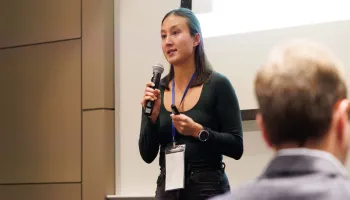
Projects developed by staff members and graduate students in the College of Computer, Mathematical, and Natural Sciences received funding to create positive social change.
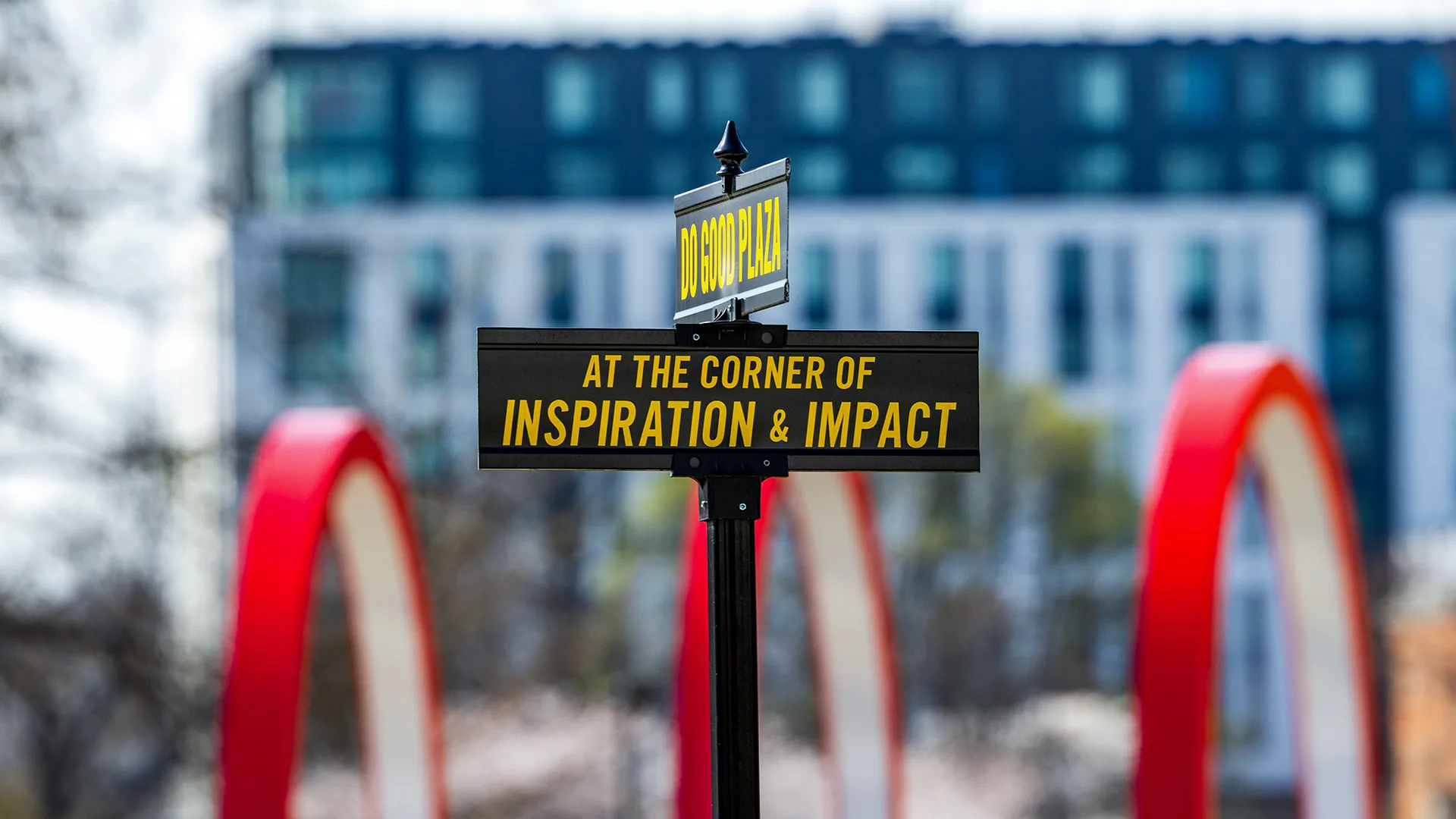
Projects to prepare community college students for STEM pathways, expand access to computer science education for Latine communities and increase awareness about insects as a sustainable food source are among 18 that will split $245,000 from the University of Maryland’s Do Good Campus Fund.
Now in its third year, the grant awards aim to spark innovative ideas that reimagine learning and strengthen efforts to serve humanity, offering students transformative experiences inside and beyond the classroom. This spring, the Do Good Campus Strategic Leadership Council, in collaboration with Provost and Senior Vice President Jennifer King Rice and the Do Good Institute, awarded the grants to faculty, staff and student groups across nearly every school and college. Arts for All, the presidential campus-wide initiative, contributed $35,000 in arts-related grants, an amount matched by the Do Good Institute.
Over the fund's first two years, grantees have engaged more than 5,000 students in hands-on, experiential learning that connects classroom knowledge with real-world impact, and this year's cohort is poised to go even further. Grantees will use their award to scale their impact according to the Do Good learning principles: experiential, inclusive, innovative, social impact-oriented and in service of humanity.
UMD's College of Computer, Mathematical, and Natural Sciences received three of the 18 grants for the following projects:
GRAD-MAP: A Unique Model for Graduate Student-Led Mentoring in Astronomy and Physics ($6,000)
Awardee: Astronomy graduate student Yash Gursahani
This project prepares community college students for STEM pathways by providing accessible research opportunities and training in Python programming, helping close learning gaps and supporting the next generation of scientists at under-resourced institutions. Funding will allow the project to open-source its instructional materials, including lectures and exercises, and present the program at professional conferences to inspire similar initiatives at other universities.
Tech Sin Fronteras: Latine Youth Tech Access & Family Empowerment at Prince George's County Public Libraries ($18,000)
Awardee: Computing Catalyst Program Manager for K-12 Outreach Camila Ozores Silva
This project expands access to computer science education for Latine communities in Prince George's County through bilingual, community-based programming. By adapting UMD's Computing Catalyst curriculum, it aims to increase representation in computing and create a culturally responsive pathway to higher education, supported by undergraduate student ambassadors. Funding will support training and coordination, curriculum development and family engagement activities.
Insects as Food: Increasing Access to Sustainable, Nutritive Food Through Experiential Learning ($8,000)
Awardee: Entomology graduate student Helen Craig
This project explores insects as a sustainable food source by increasing awareness, access and acceptance among UMD students. Through partnerships with Dining Services and existing nutrition courses, it uses experiential learning to challenge societal perceptions and highlight the environmental and nutritional benefits of entomophagy (the practice of eating insects as food). Funding will support educational content creation, project coordination and outreach.