Sharp, fleeting temperature boundaries on the ocean’s surface transform the atmosphere in ways not yet captured by climate and weather models.
The temperature of the ocean can change by several degrees Celsius over a distance as short as a soccer field. And according to a new study led by University of Maryland scientists, those tiny temperature fronts can reshape the wind and air above them.
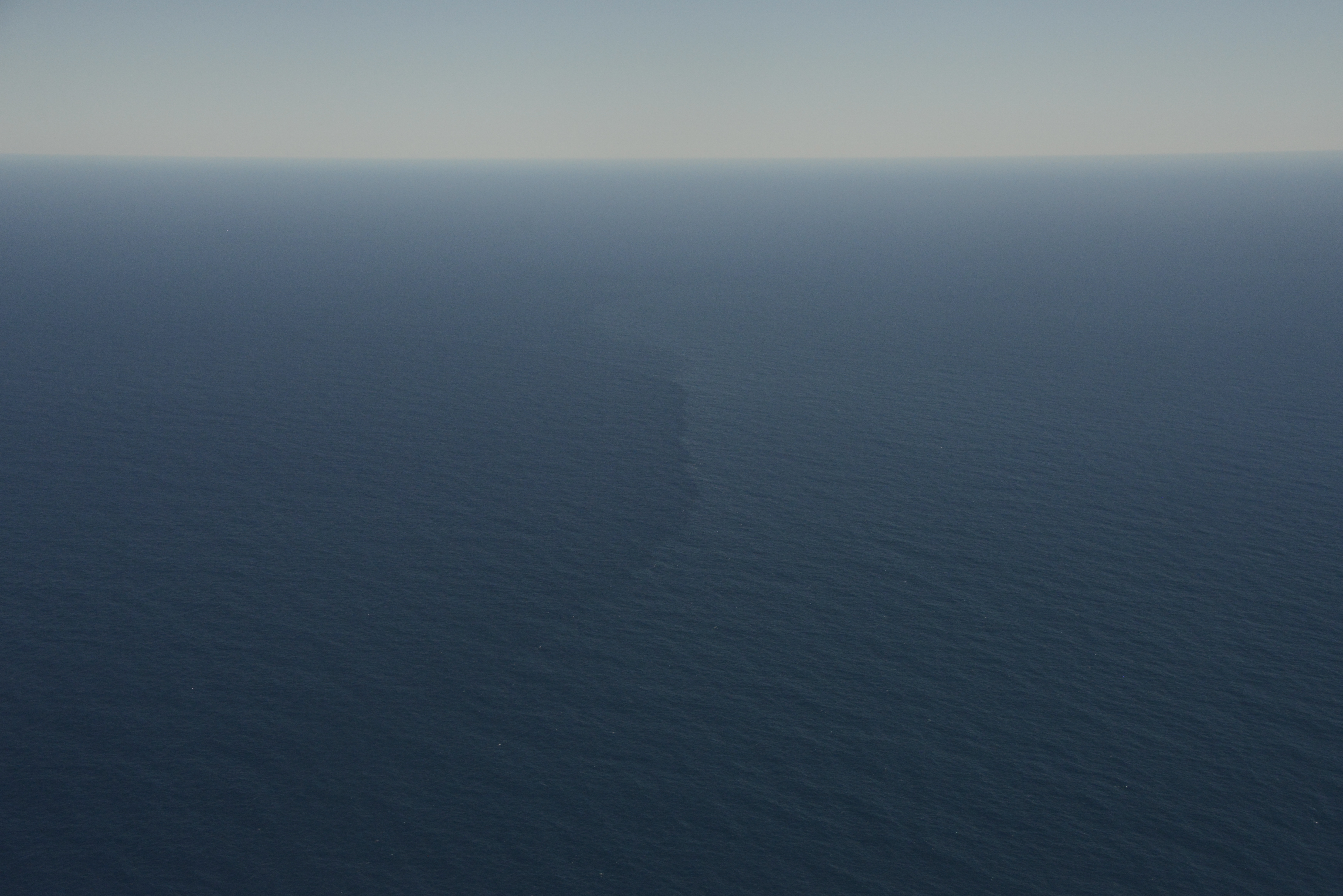
The research, published July 20, 2026, in the journal Proceedings of the National Academy of Sciences, provides the first observations of such small-scale interactions between the atmosphere and the ocean, which the paper’s authors argue could be important for fine-tuning weather forecasting and climate models.
“What we have done is proven that there is tight coupling between the ocean and atmosphere, even at these very small scales not represented by climate and most weather models,” said study co-author and UMD Atmospheric and Oceanic Science (AOSC) Associate Professor Jacob Wenegrat. “I think there are reasons to expect that some of these very fine-scale interactions may have an upscale impact to affect larger-scale weather patterns.”
This study focused on fronts and eddies spanning 0.1-10 kilometers—so-called sub-mesoscale processes that are ubiquitous in the world’s oceans. The importance of sub-mesoscale processes has only been known for a few decades. They’re challenging to study because they evolve rapidly and are too small for many satellites to resolve. Computer modeling studies suggest that these small ocean circulation patterns can affect the atmosphere, weather and precipitation, as larger ocean processes do. But observations and data confirming that effect have been impossible to gather—until now.
In this paper, the researchers studied sub-mesoscale temperature gradients in an area of the Pacific Ocean off the coast of California. Here, strong winds blow warm surface water offshore, and deep, cold water rises to replace it, creating sharp boundaries between warm and cold areas. Over four weeks from October to November 2022, the authors piloted a ship across one such sub-mesoscale ocean temperature front 63 times.
Each time they crossed the temperature front, sensors on the ship measured wind speed, air temperature, humidity and solar radiation. The vessel also towed an underwater sensor that measured water temperature in the upper 100 meters of the ocean. The team on board deployed sensors measuring temperature, wind and humidity 200 meters into the air using weather balloons, and they used specialized ship- and aircraft-based instruments to collect additional wind measurements.
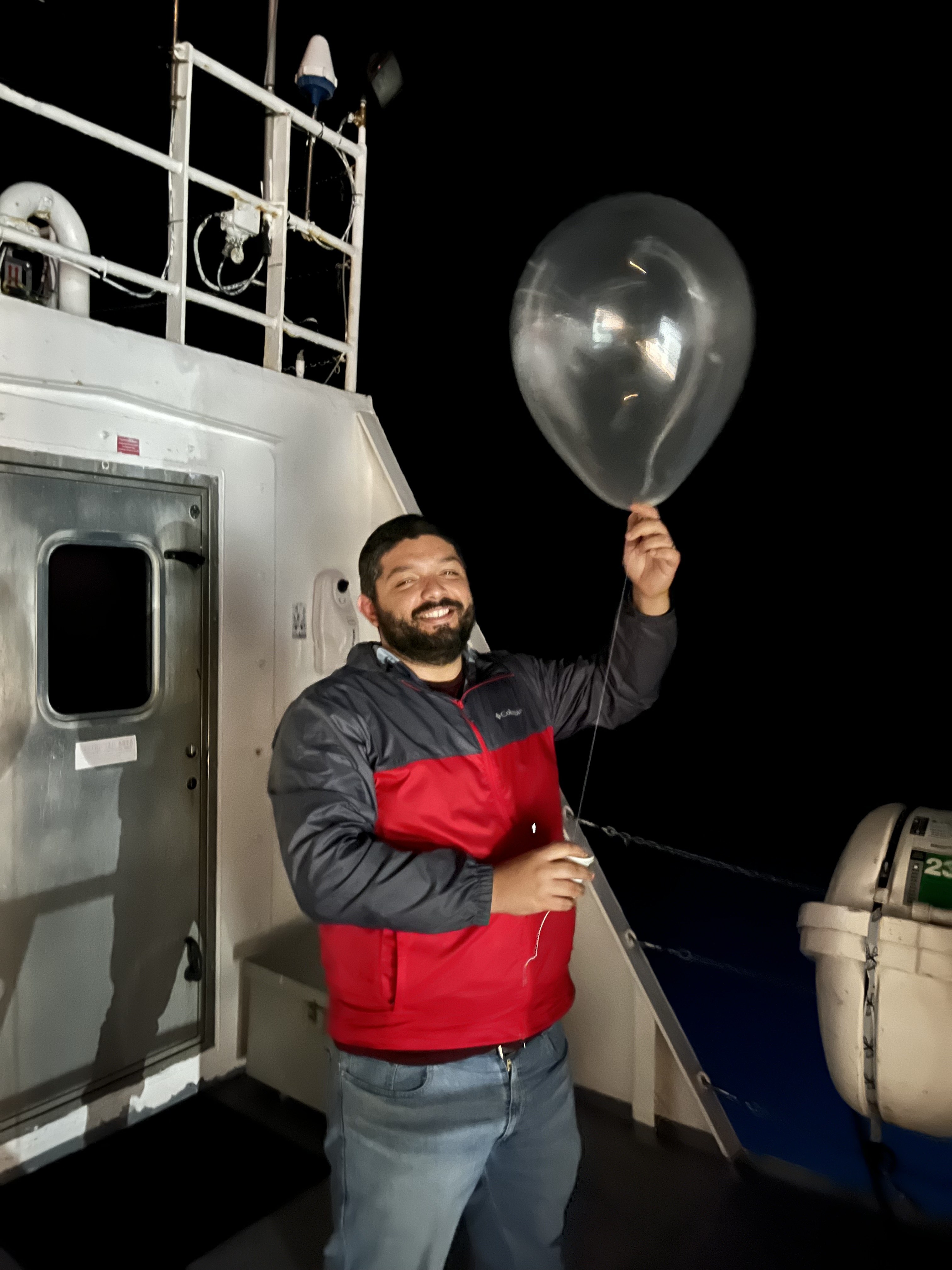
Wenegrat noted that the “unique opportunity” to aim an arsenal of instruments at the same patch of ocean was critical to this paper. It was made possible as part of the Sub-Mesoscale Ocean Dynamics Experiment (S-MODE)—a multi-institutional NASA-funded project that used new remote sensing techniques and a combination of measurements from aircraft, ships and autonomous sensors to understand sub-mesoscale dynamics.
“Even if one part of the experiment had been absent, then we would not have been able to build this picture of how the ocean and atmosphere interact,” Wenegrat said.
The team discovered that warm ocean water warms the air above it, causing atmospheric turbulence. That drags fast-moving, high-altitude air down toward the ocean, speeding up the wind near the surface and slowing it down higher in the atmosphere. Previously published computer models predicted this pattern, but Wenegrat was surprised that the atmosphere’s response was so pronounced—just about as strong as the models predicted—given the volatility of the natural world.
The study’s lead author, Igor Uchoa, an atmospheric and oceanic science Ph.D. student at UMD who was on the boat collecting the data, said the interaction between the atmosphere and ocean was evident after their first crossing of the temperature front. The sea surface temperatures and wind profiles were correlated to a degree that was obvious at first glance. The trend remained strong even when they averaged their data across all 63 samples. For each degree Celsius increase in sea surface temperature, surface wind speed increased by 0.23 meters per second.
“That took away any doubts that the mechanisms are active on these small scales,” Uchoa said.
The study points out that sub-mesoscale processes are currently absent or misrepresented in weather and climate models, but given these findings, the authors suspect that there is good reason to include them. The study shows that these tiny eddies and fronts change the layer of air in direct contact with the ocean. That so-called boundary layer exchanges heat and moisture with the ocean, which has implications for climate change and weather. And although each small temperature front has a minuscule impact on the global climate, their totality across a larger swath of ocean could add up to a meaningful large-scale effect.
“If you get these details wrong, then the amount of heat that leaves the ocean to the atmosphere or vice versa could be wrong,” Wenegrat said. “That's the sort of thing that very quickly can scale up to affect projections of future temperatures.”
###
The paper, “Observed rapid adjustment of the atmospheric boundary layer to submesoscale sea surface temperature fronts,” was published in Proceedings of the National Academy of Sciences on July 20, 2026.
This work was supported by NASA (Research Announcements NNH17ZDA001N-EVS3, NNH20ZDA001NPO; Award Nos. NNH17ZDA001N-EVS3, 80NSSC24K0412, 80NSSC24K0412, 80NSSC19K1688, 80NSSC19K1011, 80NSSC19K1256) and the U.S. National Science Foundation (Award No. OCE2219752). This article does not necessarily reflect the views of these organizations.