University of Maryland junior Lauren DePaola hopes to turn her mathematics education into a career as an environmental data scientist.
For mathematics major Lauren DePaola, quantitative skills are tools to help the planet.
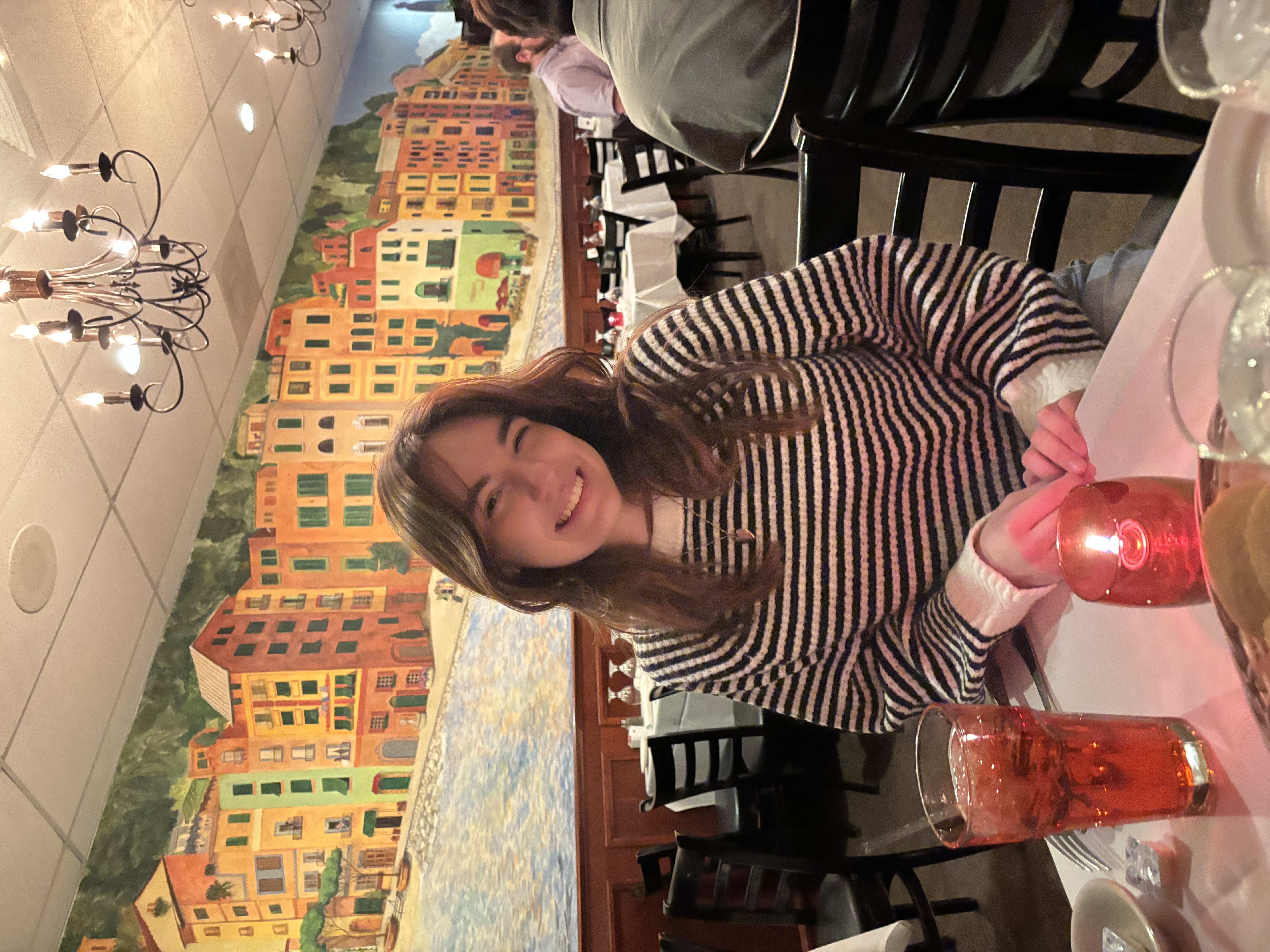
The University of Maryland junior has always loved math and nature. In college, she wanted to combine those interests. Now, she uses her quantitative skills for research on large-scale weather patterns, and she is setting her sights on a career in environmental data science.
“When I got to UMD, I wasn’t 100% sure what I wanted to do,” DePaola said. “But when I realized I could use math to make a difference in the environment, I thought—why not?”
DePaola’s love for nature began as a Girl Scout growing up in Tampa, Fla., where she spent weekends camping and playing outside. She excelled at mathematics and completed her elementary school math worksheets so quickly that her teachers ran out of assignments to give her. In middle school, DePaola enrolled in an advanced math program and never looked back.
“I always liked the challenge of logical thinking in math rather than simply memorizing things,” DePaola said.
At Maryland, DePaola realized she could apply her math skills in an environmental context after taking UNIV 110: “Grand Challenges of Our Time” with UMD President Darryll J. Pines as a freshman. After hearing guest lectures from several environmental scientists, DePaola realized math could provide a pathway into that kind of work. That led her to research in the Department of Atmospheric and Oceanic Science (AOSC), where she advances the math behind weather models.
Working with AOSC Assistant Professor Maria Molina, DePaola researches weather regimes—large-scale atmospheric conditions that affect on-the-ground weather. DePaola works on a computer model that categorizes these systems, tweaking the behind-the-scenes mathematics to improve weather predictions.
“Having a math background definitely helps for the research I’m doing because Professor Molina uses a lot of data science and machine learning. My background helps me understand what’s going on behind the code,” DePaola said.
DePaola is also passionate about broadening access to environmental and mathematical education. She volunteers with UMD’s Office of Sustainability on Maryland Day, educating campus visitors on environmental topics ranging from recycling and composting to nature education and biomimicry.
She also works at Mathnasium, a math tutoring program for K-12 students. Each session, she helps four students complete worksheets that reinforce what they’re learning at school.
“I really like that job,” DePaola said. “Helping students like math a little bit more is nice, and getting to see the ‘aha!’ moments where something didn’t make sense before but makes sense now is a really cool feeling.”
DePaola's dedication to accessible learning extends to her extracurricular activities. She has danced ballet since she was 3 years old and is now president of Ballet Company M—UMD’s only ballet club. The group stages a Nutcracker performance each fall and a showcase each spring. Through their performances, DePaola hopes to broaden access to ballet for spectators and performers.
“We just want to make ballet and dance more accessible to everyone,” DePaola said. “People get scared of ballet because they think it’s so proper—but we want to have fun with it.”
For DePaola, learning to make dance accessible has helped her do the same for math and environmental education. It also taught her the value of hard work and persistence—invaluable skills for cracking tough mathematical problems.
“Dance has really impacted my work ethic,” DePaola said. “You train so hard, you practice so much and you have to fail a bunch of times to perform how you want to. I think that always translates really well into school.”
DePaola hopes that work ethic will help land her a role as an environmental data scientist in the future. Currently exploring graduate school and math-centric careers in atmospheric science and environmental health, DePaola believes that whatever direction she chooses, her math education will take her far.
“A lot of graduate school requirements include calculus and statistics, and I wouldn’t have completed those if I wasn’t majoring in math,” DePaola said. “I’ll be really interested to see how transferable my math background will be to an environmental career in the future.”