For UMD junior Jacob Goldman, science and music are in educational harmony.
Earning two college degrees is not for everyone. But Jacob Goldman is equally passionate about science and music, so when it came time to apply to colleges, he looked for a place where he could pursue both.
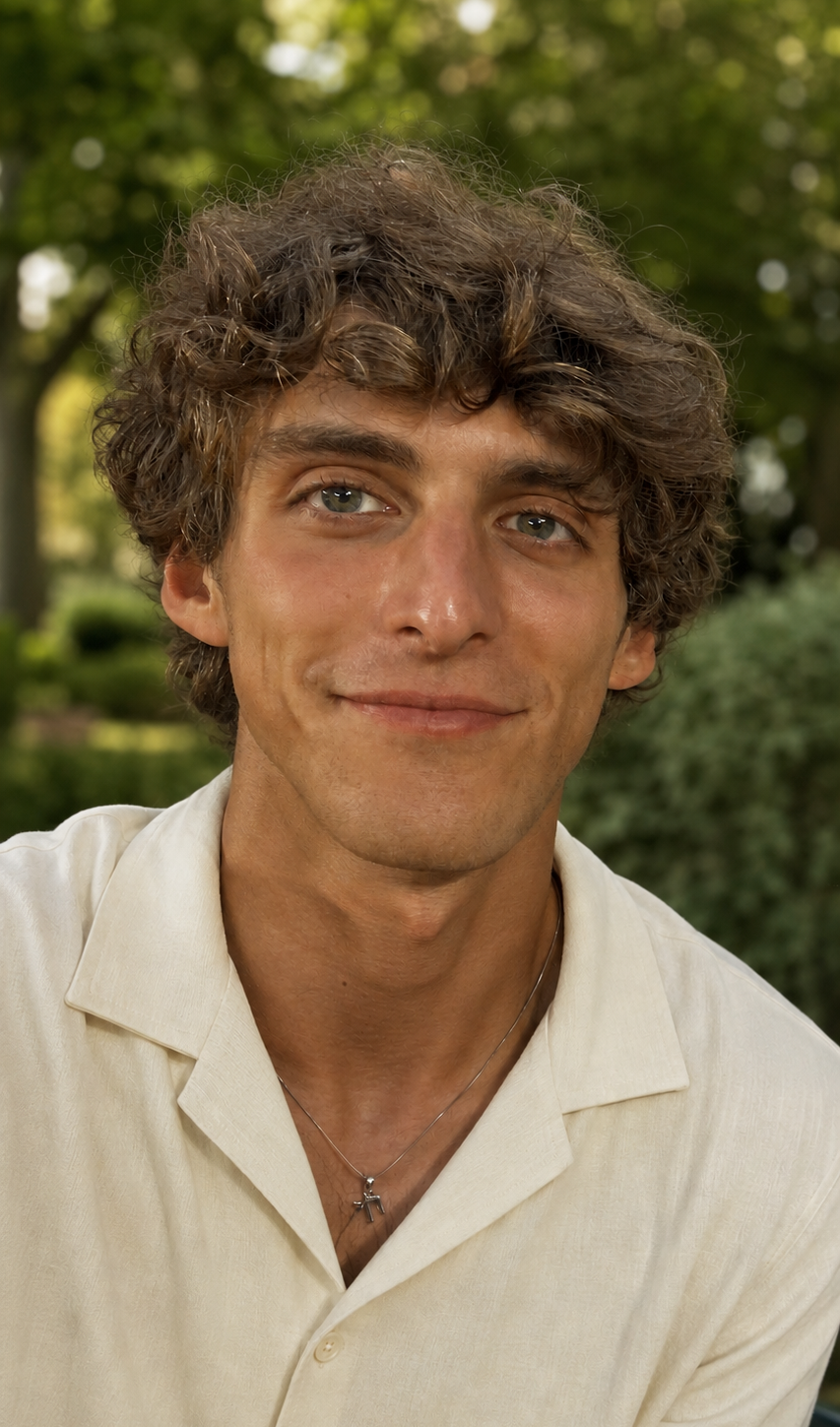
“I found that place: It was UMD,” said the junior, who is working toward bachelor’s degrees in biological sciences and music (piano performance) at the University of Maryland. “It was the one school that made it clear they wanted me for both programs—offering me scholarships for both—without expecting me to put one ahead of the other.”
Goldman has a unique perspective on his two fields of study. While most people might describe playing piano as a creative endeavor and doing science as a logical and precise act, he sees it the other way around.
“There’s definitely overlap in how I use my brain, but piano music is in many ways more scripted, even if you add your own style,” he said. “Brahms wrote certain notes that you must play exactly as he intended, and music theory is entirely math and pattern recognition, whereas science requires so much creativity and risk-taking.”
Regardless of which side is activated, Goldman’s brain—and hands—are rarely idle. In addition to playing music, he also recently wrote several chapters' worth of textbook material for BSCI207: “Organismal Biology”—the course he says made him love evolutionary biology. Karen Carleton, the biology professor who teaches the course, said she was thrilled when Goldman proposed the project and was extremely pleased with the result.
“He gave me three beautiful chapters on neurons, the senses and the brain written with grace and style to get other students excited about how different organisms are,” she said. “Jacob is a marvel at finding ways to sharpen his skills and pursue his passions.”
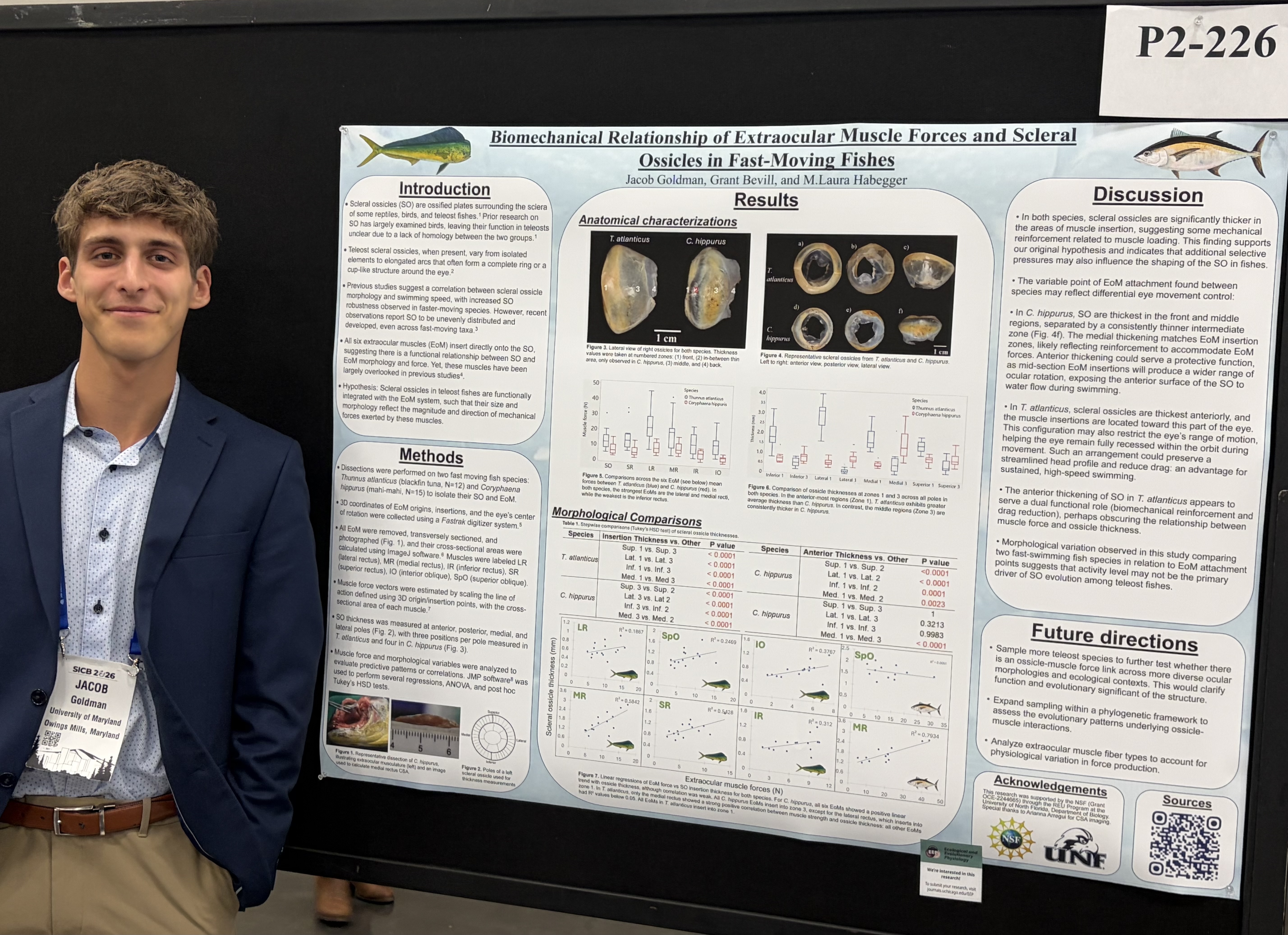
Last summer, for example, Goldman spent 10 weeks at the University of North Florida investigating the biomechanics of scleral ossicles—bones surrounding the eye—in fish. The internship, part of a National Science Foundation-funded Research Experience for Undergraduates, resulted in a poster presentation for Goldman at the Society of Integrative Comparative Biology (SICB) annual meeting this past January and an upcoming paper on which he is the first author.
This year, Goldman began interning as a student journalist for SICB, where he writes science-rich blog posts for the society’s website. With all the writing he’s doing, Goldman joked he might as well go for an English degree, too.
“To be honest, it’s not the writing itself that I most enjoy,” he said. “It’s communicating, sharing ideas with others whether through science or music, that I love to do.”
For Goldman, while his pursuit of science has pushed him into new spaces, music has remained a comforting constant. He practices piano up to four hours a day when preparing for semesterly student recitals (and at least one or two hours at other times). In 2024, he won the prestigious American Virtuoso International Music Competition, which earned him a solo performance in a 2025 recital at Carnegie Hall.
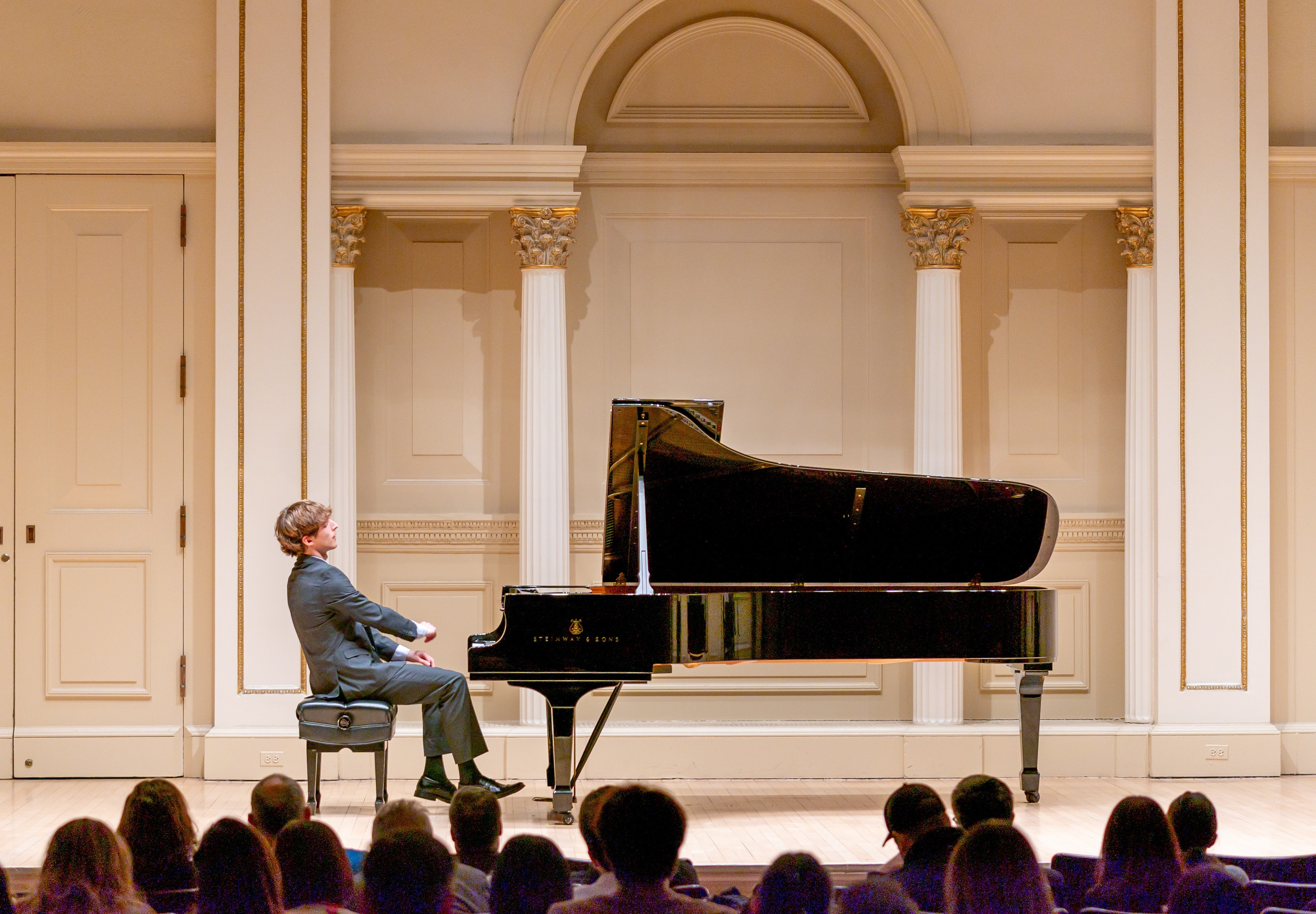
“I was the kid who gravitated toward the piano and loved to tinker around, not one who was forced to take lessons and practice by his parents,” he said. “Now I see piano performance as just another way of communicating with an audience, like standing in front of a classroom talking about evolution."
In that way, he said, "music has helped prepare me to communicate science effectively through writing and teaching.”
Which is exactly where he hopes he’s headed next.
“Ultimately, I want to work towards a Ph.D. and teach evolutionary biology at a university, while continuing to play piano on my own time,” he said. “That’s what all of this is about.”