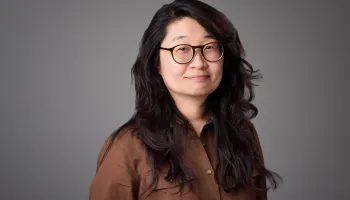
Junior physics major Mary Keen’s summer internship at the Nuclear Regulatory Commission is a stepping stone toward a career in nuclear energy.
A glimpse at Mary Keen’s resume might suggest that she always wanted to work in nuclear energy—but that’s far from the case.
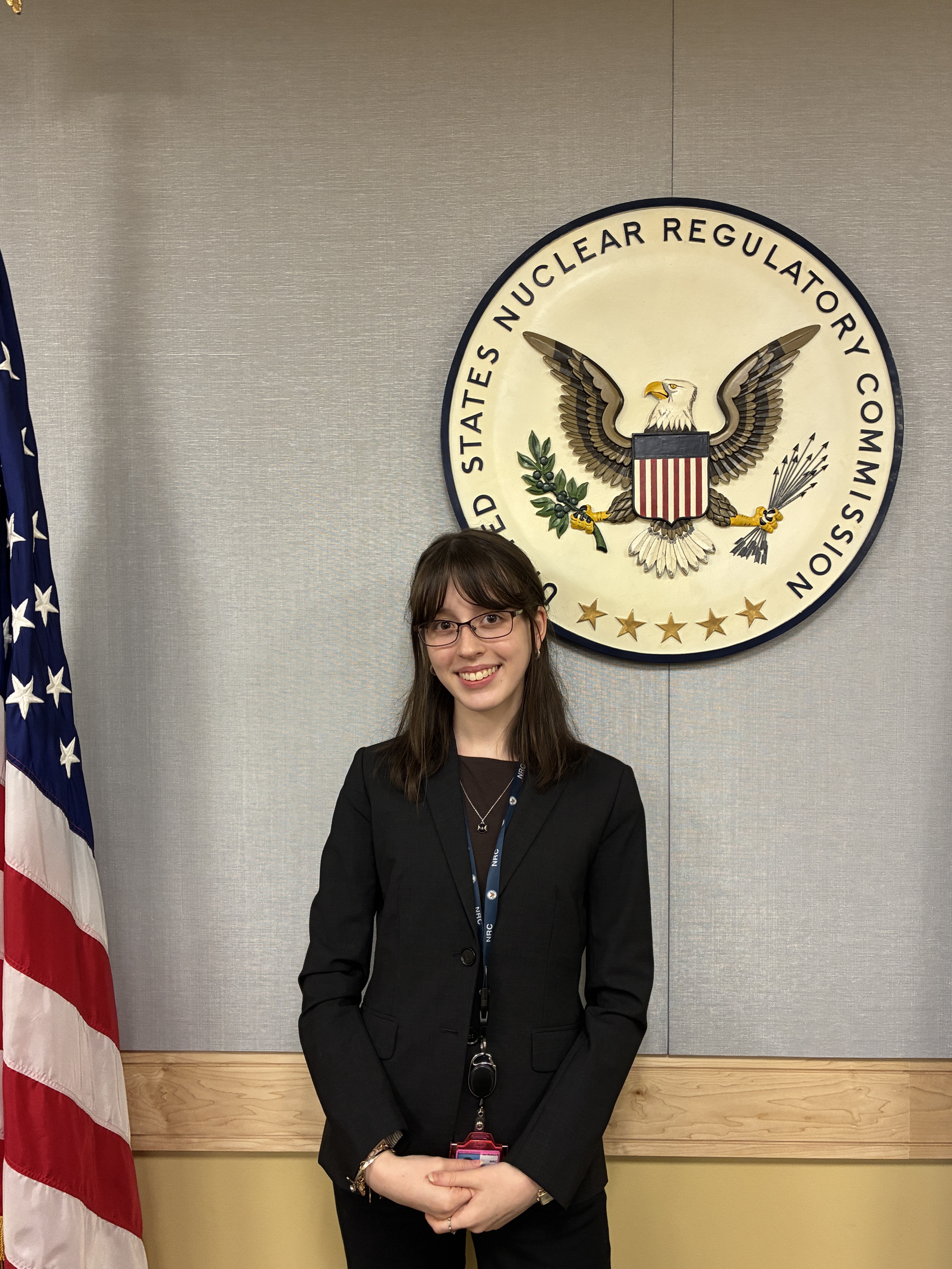
The junior physics major is president of the University of Maryland’s chapter of the American Nuclear Society and took a course designed to train students to operate UMD’s nuclear reactor. This summer as an intern at the U.S. Nuclear Regulatory Commission (NRC) headquarters in Rockville, Maryland, she’s working on licensing for nuclear waste storage and transportation.
But Keen wasn’t always on this path. When she first came to UMD, she was unsure of her career trajectory. She chose to major in physics—despite having never taken a physics class in high school—because it offered a wide range of career possibilities. But it didn’t take long for her to find her way.
“I've become so passionate about nuclear energy,” Keen said. “Going into college with an open mind and being okay with whatever comes your way has been so fun.”
Keen’s path to a career in nuclear energy started when she joined UMD’s chapter of the American Nuclear Society during her first week as a freshman. Vaguely familiar with nuclear science from her high school chemistry class, she joined the club in an effort to make friends. Unexpectedly, she fell in love with the topic and joined the group’s executive board.
As part of the club’s leadership team, Keen connected with the director of UMD’s nuclear reactor and enrolled in the introductory course for the reactor's operator training program. Located in the Chemical and Nuclear Engineering Building, the reactor is used for coursework, radiation experiments and neutron imaging. For Keen, the reactor provides a training ground to learn how to safely operate nuclear machinery.
“Even though my parents, Ann Keen (B.S. '00, microbiology) and Edward Keen (B.S. '00, microbiology; B.A. '00, history), and grandparents went to UMD, none of us knew there was a reactor on campus,” she said. “For our reactor, there is a checklist with over 100 steps to make sure that all of the systems are functioning correctly.”
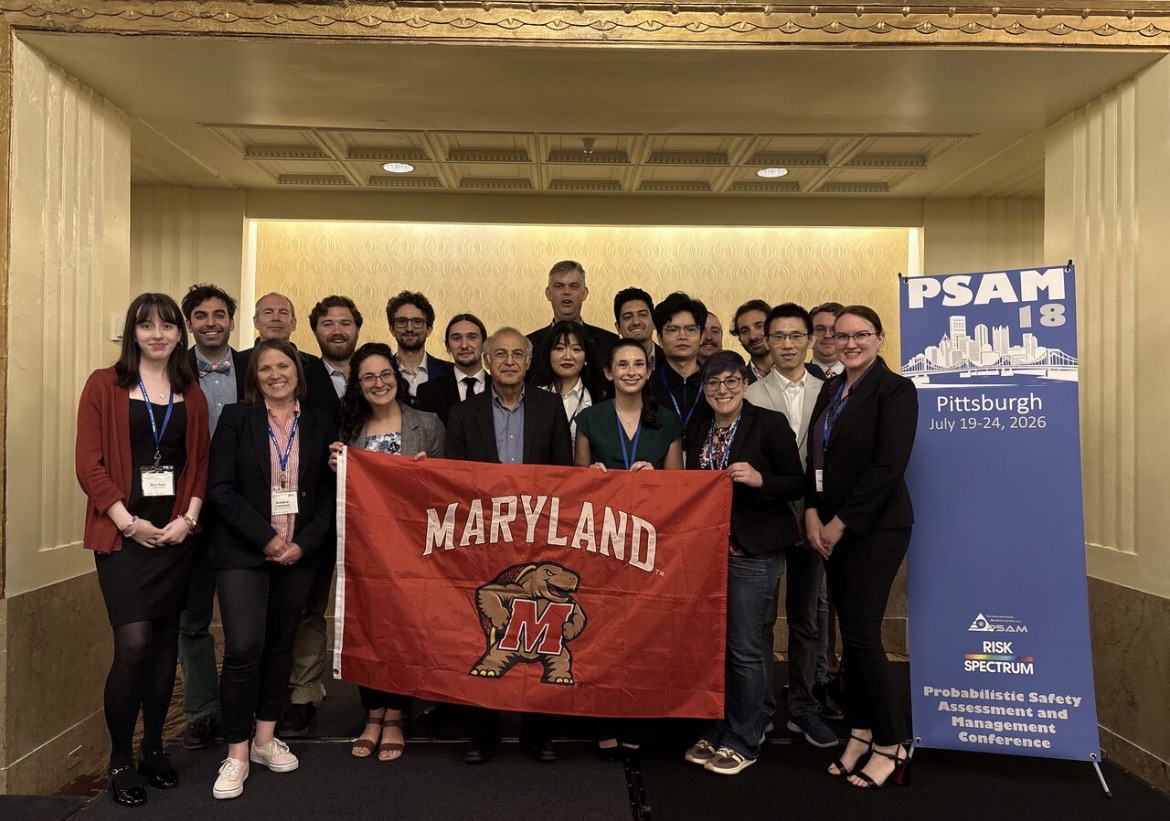
Keen also conducts nuclear safety research with Civil and Environmental Engineering Associate Professor Michelle Bensi, who previously worked for the NRC and contributed to the agency's response to the 2011 Fukushima Daiichi reactor accidents. Working with Bensi and UMD Radiation Facilities Director Amber Johnson, Keen studies safety culture at research reactors, where she identifies errors that operators may be at risk for. She develops training modules that help reactor staff recognize risks before they become problems.
Keen presented this work at the International Association for Probabilistic Safety Assessment and Management’s conference in Pittsburgh this summer, and her findings will be published in the conference proceedings.
Now, as an intern at the NRC, Keen works in a licensing branch focused on the storage and transportation of spent nuclear fuel. Surprisingly, she said, her favorite part of the job doesn’t require getting close and personal with nuclear reactors at all.
"I've absolutely fallen in love with making handbooks," Keen said, describing the internal guides she writes to help colleagues navigate agency databases and systems. "I remember I was about to go to sleep, and my coworker messaged me and said, 'Hey, I'm having a lot of trouble finding a document. Can you tell me how to use our search database?' So when I got to work the next morning, I whipped up a handbook and sent it to him."
Keen is still deciding whether she wants to work in regulation, research or industry in the future. But, whichever path she chooses, she’s moving forward with an open mind—just as she did at UMD.
“Stepping out of your comfort zone is what is going to prepare you for anything in the future, and it’s not so scary once you learn that people are there for you,” Keen said. “I’ve had such wonderful people behind me at UMD. I’ve grown so much, and I don’t think I would trade that for anything.”