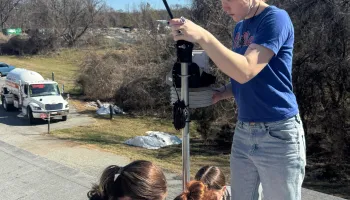
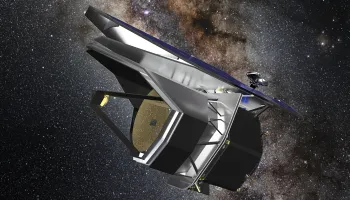
The newly christened asteroids are the third and fourth to be named by students enrolled in ASTR 315: “Astronomy in Practice” since 2024.
The Old Line State is leaving its signature in outer space, as University of Maryland undergraduates named two asteroids: Maryland and Assateague.
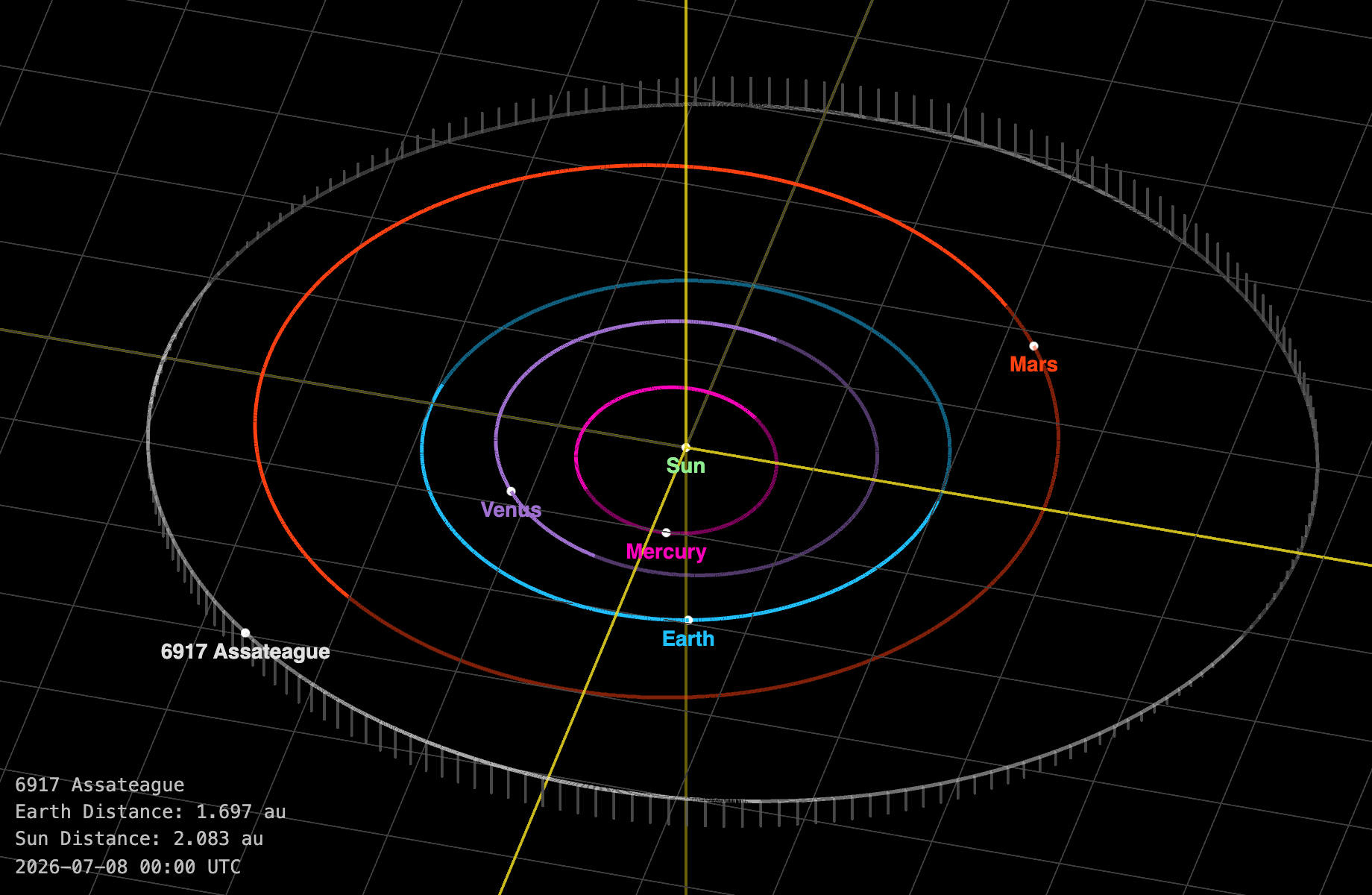
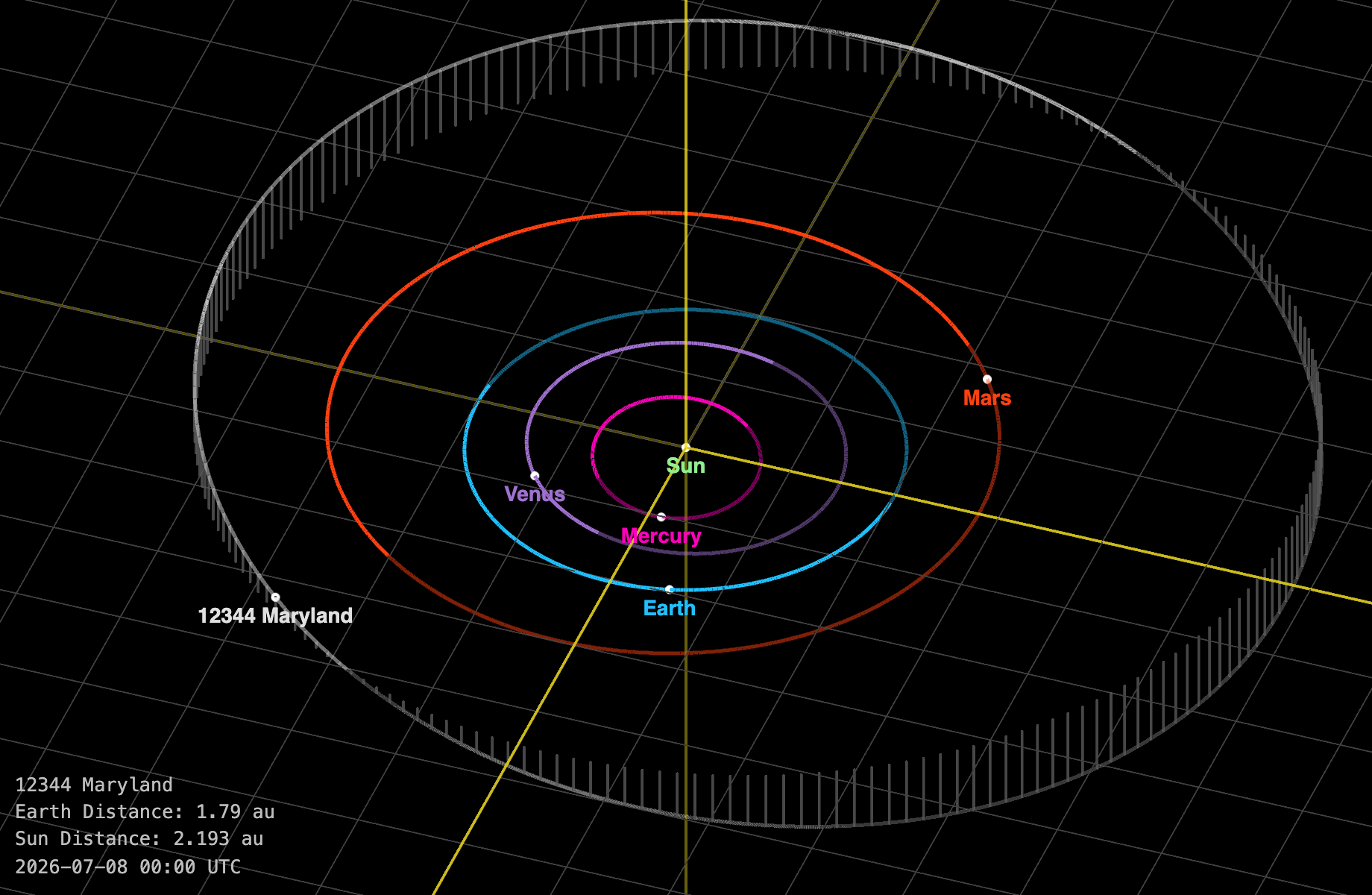
Students in UMD’s ASTR 315: “Astronomy in Practice” course led the naming process during the spring 2026 semester. After spending many late nights measuring each asteroid’s brightness, the students petitioned the International Astronomical Union (IAU) to name the two objects. They chose Maryland, referring to the state and UMD, and Assateague, a nod to the 37-mile national seashore off the coast. The IAU approved both names in June—marking the third and fourth asteroids to be named by ASTR 315 students, joining Testudo from spring 2024 and Diamondback from spring 2025.
“I was really excited that I got to do this,” said Ruth Whitehouse (B.A. ’26, economics), who was on the team of students that named Assateague. “Space is so permanent that this is one of the best ways to leave my mark in the world.”
Maryland and Assateague were among four asteroids that ASTR 315 students researched over the course of the semester. These two were eligible for naming because they were discovered more than 10 years ago and remained unnamed, said course instructor and Astronomy Principal Lecturer Melissa Hayes-Gehrke, who has taught the non-major class for more than a decade.
The students studied Maryland and Assateague using a telescope in Utah that they controlled remotely from their laptops. They captured images of the asteroids over many nights and used specialized software to measure their brightness, then plotted those measurements over time in a light curve, which allowed them to calculate how quickly the asteroids rotate. They wrote up their findings in scientific manuscripts and submitted them for publication in the journal Minor Planet Bulletin.
“The idea is for students to learn the real practice of doing astronomy—not just to read about it, but to actually do it,” Hayes-Gehrke said. “At the most basic level, astronomy is looking at things in the sky, making measurements and turning that into scientific results.”
For the students—none of whom are astronomy majors—the course demonstrates that science is harder than they expect, Hayes-Gehrke said.
“I would be awake at 3 a.m. taking photos of the asteroid from my laptop. It was difficult because there are a lot of things that can ruin data points, like if it's too cloudy or if it's raining or if the telescope has a malfunction,” Whitehouse said. “Anything can go wrong. We had a lot of late nights where we were trying to get data points, and things wouldn't work out.”
But the obstacles made the breakthroughs sweeter, Hayes-Gehrke said. She recalls seeing students light up when they saw their asteroids move between images and when they plotted their light curves for the first time. She also said many students came into the course eager to author scientific papers and name asteroids.
The course has certainly left its mark on Whitehouse. Although she is a lifelong space enthusiast, she doesn’t plan to pursue a career as a scientist. She hopes an economics degree and a minor in astronomy will land her an opportunity to work on the business or management side of the space industry. Still, even if she never steps foot in a research lab again, naming an asteroid and authoring research on it will stick with her forever.
“If you know where to look, you could probably see Assateague a lot of the time,” Whitehouse said. ‘I'd probably need a better telescope—but I’m sure in the future I will try to look at it now and again.”