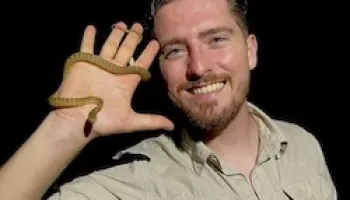
This summer, three UMD researchers played important roles in the prestigious Marine Biological Laboratory’s summer neurobiology course.
Every summer for the past 18 years, University of Maryland Biology Professor Ricardo Araneda has packed his bags for a one-month trip to Woods Hole, a small village located near Martha’s Vineyard in Massachusetts.

But unlike most travelers who visit Cape Cod, Araneda is not a vacationing tourist. Instead, he’s an instructor at the Marine Biological Lab’s (MBL) six-week summer neurobiology course, one of the most competitive neuroscience training programs in the world. For Araneda, it all began when he was a first-year Ph.D. student.
“I took the course as a young graduate student in 1990,” recalled Araneda, who added that it was a formative experience that changed the trajectory of his career. “My doctoral advisor at Albert Einstein College of Medicine, the late Michael V.L. Bennett, sent me to Woods Hole to learn a single technique. It turned out to be something that I would go on to use for my dissertation and much of my work since.”
Bennett was one of the course’s creators back in the 1970s when few universities offered graduate training in neuroscience, which was then a completely new field of academic study. Following Bennett’s advice, Araneda learned electrophysiology, the study of electrical properties of living cells and tissues. Decades later, Araneda was invited back to teach and was then asked to head the course’s electrophysiology section. Four years ago, Araneda experienced a full-circle moment when he was named co-director of the course.
“I’ve been involved with the program at every level, from student to faculty to leadership,” Araneda said. “And every experience has been fulfilling and enriching to me on a personal and academic level.”
Passing on a scientific legacy
The MBL has been a renowned science hub since the late 1800s, and much of the foundational work in modern neuroscience originated there. In the 1930s and 1940s, using squid-based techniques and ideas developed at MBL, British scientists Alan Hodgkin and Andrew Huxley developed a model for how nerve signals travel, an achievement that earned them the 1963 Nobel Prize in physiology or medicine.
Now in its sixth decade, MBL’s neurobiology course admits about 18 students each summer, most of them Ph.D. students, postdocs and early-career researchers. They work alongside eight or nine faculty members, each with a teaching assistant, for six weeks at the facility.
Students aren’t simply handed experiments to repeat; each faculty member sets up a ‘rig,’ or a special workstation equipped with specific tools for conducting various experiments. After three days of rotating through every rig, students propose a project of their own design, run it with a supervising faculty member and present their results.

“The pace is really intense,” said Nicholas Scrocca, a senior neuroscience major at UMD. “Lectures start at 9 a.m. and run until 11:30 a.m. We have a lunch break, and then we move on to lab work that begins at 1:30 p.m. and continues until midnight. This happens pretty much six days a week.”
This summer, Scrocca was the youngest participant in the program. And as the first UMD undergraduate to hold the role of course assistant, he worked to support both the program’s students and faculty members.
“I got to Woods Hole a few days early to receive shipments and stock shelves for arriving faculty,” Scrocca recalled. “I washed glassware, managed inventory, ordered chemicals, made coffee and got snacks for everyone every morning. I made sure the researchers got what they needed.”
Many of Scrocca’s assignments were logistical or administrative, but he also had the unique chance to observe researchers’ work. He encountered students from all over the world who approached scientific problems and communicated their research in different ways. In one lab, Scrocca watched a scientist dissect a squid and hold up the same giant nerve fiber he’d seen on a lecture slide at UMD the semester before, the same work that led to Hodgkin and Huxley’s Nobel Prize-winning research.
“I spent hours in the rigs watching them, which isn’t something most undergrads get the chance to do,” Scrocca said. “I worked with a visiting investigator studying olfactory circuits and got to patch onto my first cell, a neuron in the anterior olfactory nucleus. The lab used my data in their final presentation—something I never thought could happen.”
During the program, Scrocca also learned techniques that allowed him to run electrophysiology experiments in Araneda’s lab when he returned to College Park, investigating how two types of cells in the brain’s smell center keep each other in check. Scrocca hopes the work will result in a published paper and a conference presentation before he graduates.
“Before [this course], the science and the researchers seemed so distant to me, but now it all seems much more attainable and concrete,” Scrocca said. “It’s made me love science a lot more than I did before.”
A multigeneration connection to UMD
Assistant Professor of Biology Juan Angueyra feels the same way about his time in Woods Hole. This year, he taught in the program. But years ago, he was one of Araneda’s students there.
“Woods Hole was the first place I landed in the United States after I finished medical school in Colombia in 2006,” Angueyra said. “I worked as a research fellow, recording photoreceptors in scallop eyes and lancelets. That work resulted in four papers and created my path into an American doctoral program. I also took the neurobiology course—which included Ricardo as part of the faculty team—got a teaching assistantship the next summer and returned frequently.”

As a student in the course, Angueyra worked with physicist Eric Betzig while Betzig was still building the microscopes that would earn him the 2014 Nobel Prize in chemistry. He also met Roderick MacKinnon, another Nobel laureate, who got stranded in a storm while kayaking the night before his lecture at the MBL.
“You get incredibly star-struck by these highly respected researchers, but you also learn that they are still humans,” Angueyra said. “You realize that science is a team effort. To make progress, you have to all work together.”
Angueyra’s progression from student to faculty member in the MBL’s neurobiology course echoes Araneda’s own experience, something Araneda sees as a mark of success for the course.
“Juan was my student,” Araneda reflected. “And now he has his own lab, his own research, his own goals. For both of us, Woods Hole has profoundly influenced who we are as scientists in our field.”
Next summer will be Araneda’s last as co-director, but he sees many more adventures in neuroscience in his future.
“There are many ways to promote UMD and what we believe in,” Araneda said. “I do it by mentoring and training the next generation of neuroscientists. I hope to continue doing so at UMD and beyond.”
###
Other UMD faculty involved with the MBL’s summer course programs include Assistant Professor of Biology Melissa Caras, Distinguished University Professor of Biology Catherine Carr and Distinguished University Professor Emeritus of Biology William Jeffery.