Ria Bansal dreams of being a doctor. Although the rising senior biological sciences major and sociology minor at the University of Maryland leans toward dermatology, an internship at the Center for Brain & Neuro Care in Fulton, Maryland—which she began in December—piqued her interest in neurology as well.
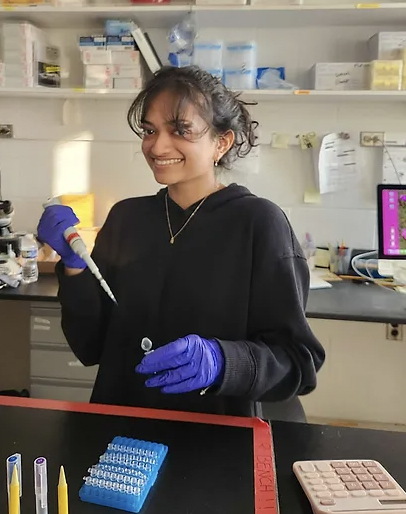
“Trying new things helps me find something I may be interested in while also providing a unique experience I might not normally have,” Bansal said, emphasizing her pursuit of self-exploration.
But medicine isn’t the only topic that interests Bansal. At UMD, Bansal is also exploring ecological relationships at the molecular level. Biology Assistant Professor Emily Bruns' BSCI 160 course on ecology and evolution spurred Bansal’s interest in the topic and she joined Bruns' lab during her sophomore year as an undergraduate researcher.
“I enjoy learning all of the different lab techniques while also applying what I’ve learned in my courses so far at UMD,” she said.
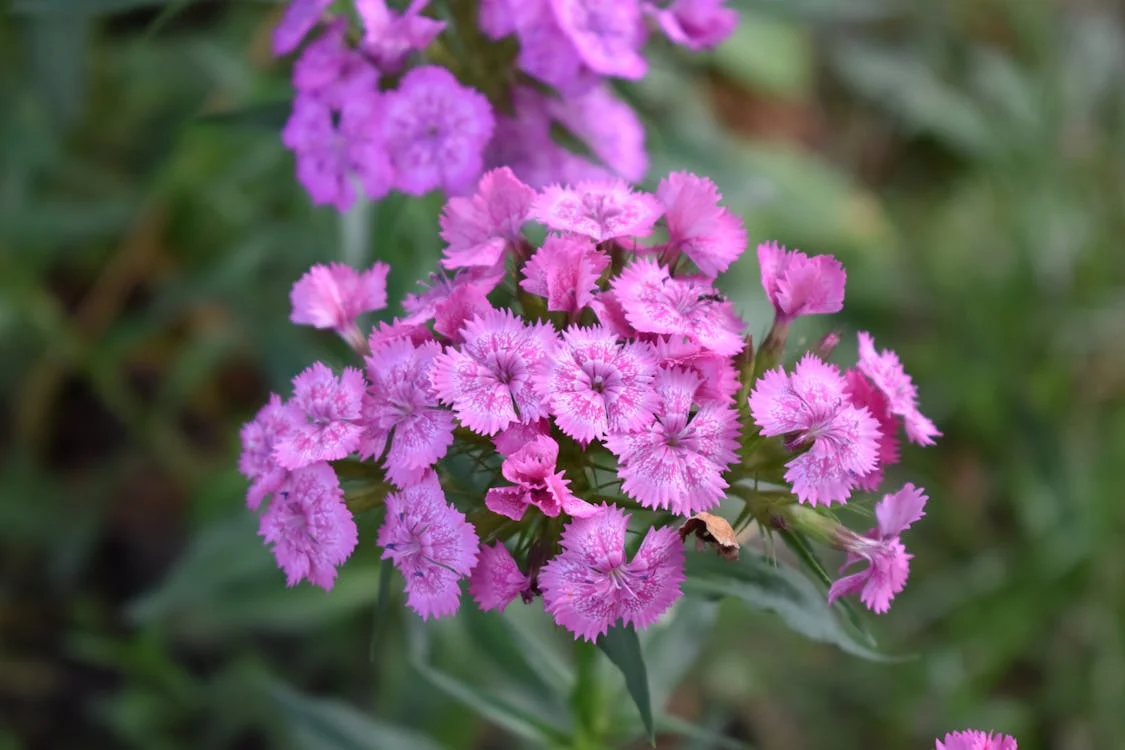
Bansal initially assisted the lab by routinely recording the number of diseased plants in the campus greenhouse. Last fall, she began working with biological sciences Ph.D. student Yanelyn Perez to study anther smut disease in wild carnations. Anther smut is a fungus that sterilizes but does not kill the host plant. By teasing out relationship dynamics between the fungus and its host, the lab’s findings may apply to disease-host relationships in other organisms such as agriculturally important crops and even humans.
Bansal is developing PCR-based methods to distinguish between two closely related Microbotryum fungal species that frequently parasitize the wild carnation genus Dianthus and then mapping the species’ distribution using Google Earth.
“I especially enjoy experimenting to determine which primers best amplify the two fungal species for analysis,” she said. “It’s really exciting to uncover the most effective primer combination.”
Bansal will analyze nearly a hundred samples of anther smut spores collected from Dianthus in the western Italian Alps. Each sample, labeled with the geographical coordinates of an individual plant, contains lineage 1 and/or lineage 2 of the Microbotryum species. Lineage 1 is a specialist, meaning it only infects the species Dianthus pavonius. Lineage 2 is a generalist, meaning it infects multiple host species, including Dianthus pavonius and Dianthus furcatus. Using PCR to amplify DNA, Bansal will distinguish between the lineages. When she plots lineage distribution on a map, she can help answer questions like how the proximity between neighboring plant species affects pathogenic abundance.
By uncovering the dynamics of disease spread in wild plants, Bansal's work contributes to broader ecological understanding, impacting efforts from conservation to agricultural resilience. Knowledge of pathogen behavior also provides insights into similar processes in human epidemiology. And, on a personal level, Bansal feels her research experience in the Bruns lab contributes to her dream of becoming a doctor.
“I see this research being beneficial to me and my future,” Bansal said. “It provides me with critical thinking skills while also improving my writing. This will be extremely important in my pursuit of a medical career.”
Written by Maya Hand