The chemistry major brings lessons and expertise from the lab and classroom to his work evaluating promising new companies.
Students often come to college to major in a subject that aligns with their childhood passions—but not junior chemistry major Deven Battish.
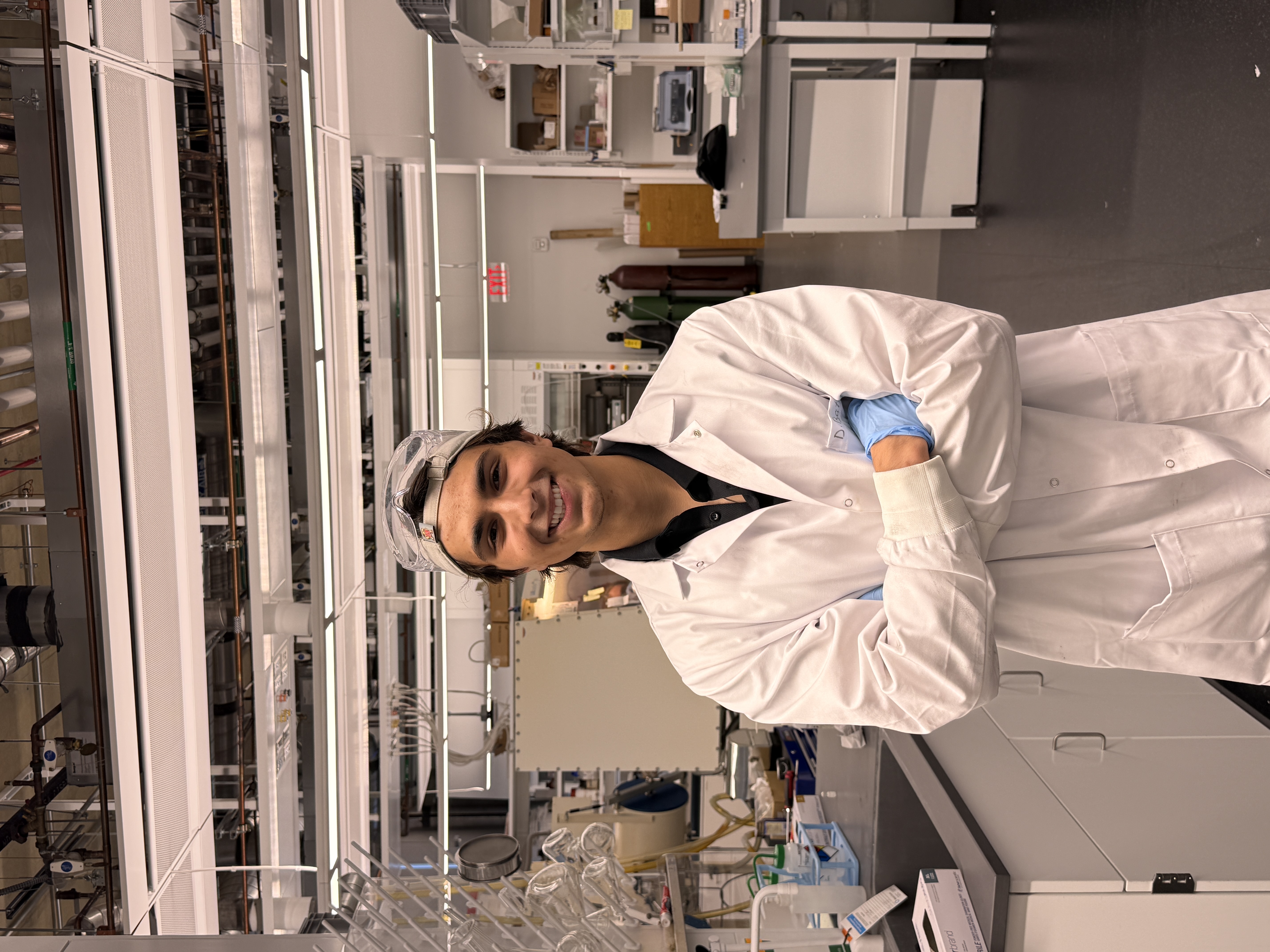
“Funnily enough, until high school, I hated science,” the University of Maryland junior said.
Battish was always drawn to business and entrepreneurship. Growing up, he wanted to be an investment banker. He didn’t develop an interest in chemistry until his junior year of high school, when his science teacher showed him how interesting the subject could be. After that initial spark, he felt an “intuitive pull” guiding him toward chemistry.
Now, as an undergrad, Battish is melding his two passions. He conducts research in a chemistry lab, works with student startups on campus and interned off-campus to explore careers in entrepreneurship.
“Being able to explore both the business and chemistry sides of campus has taught me to appreciate and learn from both communities,” Battish said. “I’ve been a sponge in each of those pockets at UMD. It’s helped me build a broader worldview, learn from new people and become a well-rounded person.”
Battish’s dual interests are unified by a passion for creating—whether it’s a new material in the lab or a budding startup. For him, that interest started as an elementary schooler playing Minecraft. Growing up, he spent countless hours building worlds from virtual blocks. He became so immersed in the game that during his freshman year of high school, he turned it into a business called TGW Design, which was like an architectural firm for Minecraft. Battish and his business team created virtual worlds for their customers—grandparents who wanted to buy builds for kids, hobbyists and other creators.
“We went through the learning hurdles of entrepreneurship there. It was a simple business concept, but it taught me the principles of how to market, build and grow a company,” Battish said. “Now, we’re actually selling that business. It’s been so exciting to see this through end to end.”
Soon after he got to UMD, Battish took advantage of the resources for students interested in entrepreneurship. During his freshman year, he joined Startup Shell—a student coworking space and incubator—and became its director of finance last semester.
During his sophomore year, he co-founded Dingman Venture Capital Group (DVCG) at UMD—a student-led venture capital fund backed by the Dingman-Lamone Center for Entrepreneurship. The organization, which has 26 members, evaluates student startups, issues investment recommendations and provides the companies grant funding. During its pilot semester in Spring 2026, DVCG helped award $50,000 in grants to student startups, with an additional $90,000 allocated to support UMD startups through upcoming funding cycles.
One standout company Battish works with at DVCG is SenseGuard, co-founded by senior computer science majors Edward “Teddy” Marine and Viswanath “Visu” Vasa. The student founders wanted to build a platform to monitor vacant buildings for leaks, power outages, temperature changes and other risks. Without staff on site, these facilities management issues could damage property before anyone notices. So, SenseGuard deploys environmental sensors in unoccupied buildings. Leveraging proprietary software and hardware networks, the company’s networks transmit data over long distances using very little power. The platform also incorporates artificial intelligence and machine learning models to help customers monitor buildings remotely.
“They're a really exciting team of strong, hardware-minded people who know how to use AI and machine learning,” Battish said. “Those are formidable founders and people we want to back.”
Battish is also starting an independent investment fund focused on backing companies founded by UMD alumni. The fund would invest in exchange for equity, extending his work supporting founders beyond campus.
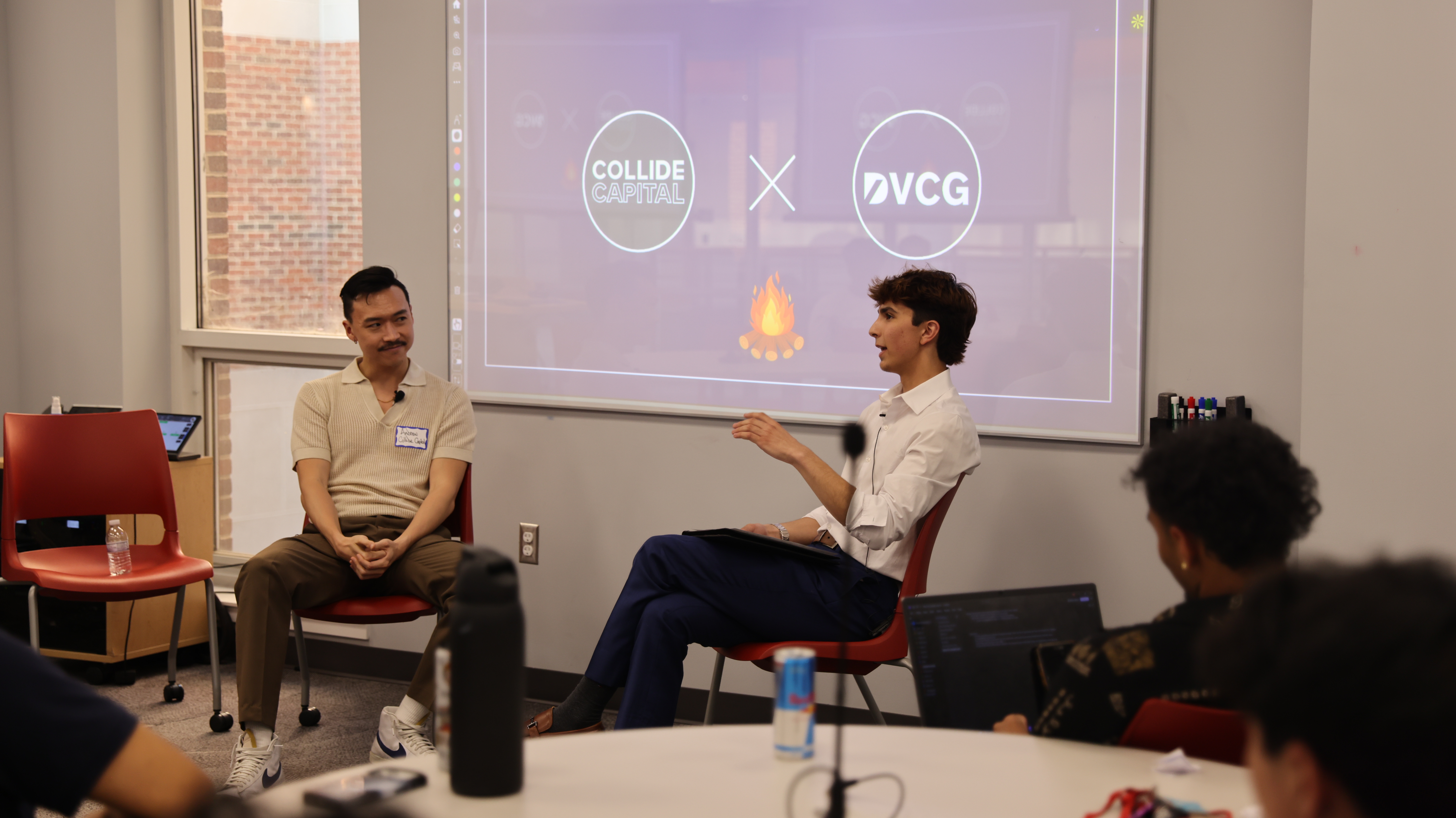
“It’s still in the early stages, but I’ve been working hard on developing it as a vehicle to back UMD founders, no matter where they go,” Battish said.
All the while, Battish has doubled down on his chemistry studies. The coursework was extremely challenging at first.
“Freshman year, I was bad at it,” he said. “I was like, ‘This is hard, and it’s not fun.’”
But he soon realized that he struggled because he didn’t understand the field’s foundations. Things finally clicked after he took Organic Chemistry II.
“It all comes down to how electrons move. Once I was able to rationalize that, it became more exciting to discover new things because I actually understood them,” Battish said. “One concept built on another, like roots of a tree. I just wanted to discover and understand all that I could about chemistry.”
That thirst for discovery naturally translated into research. Battish joined Chemistry and Biochemistry Professor Efrain Rodriguez’s lab, where he works with chemistry Ph.D. student Christopher Stephen, researching synthesis for materials that could improve semiconductors. He’s enjoyed research so much that next summer, he wants to participate in a National Science Foundation Research Experience for Undergraduates program where he can do it full time.
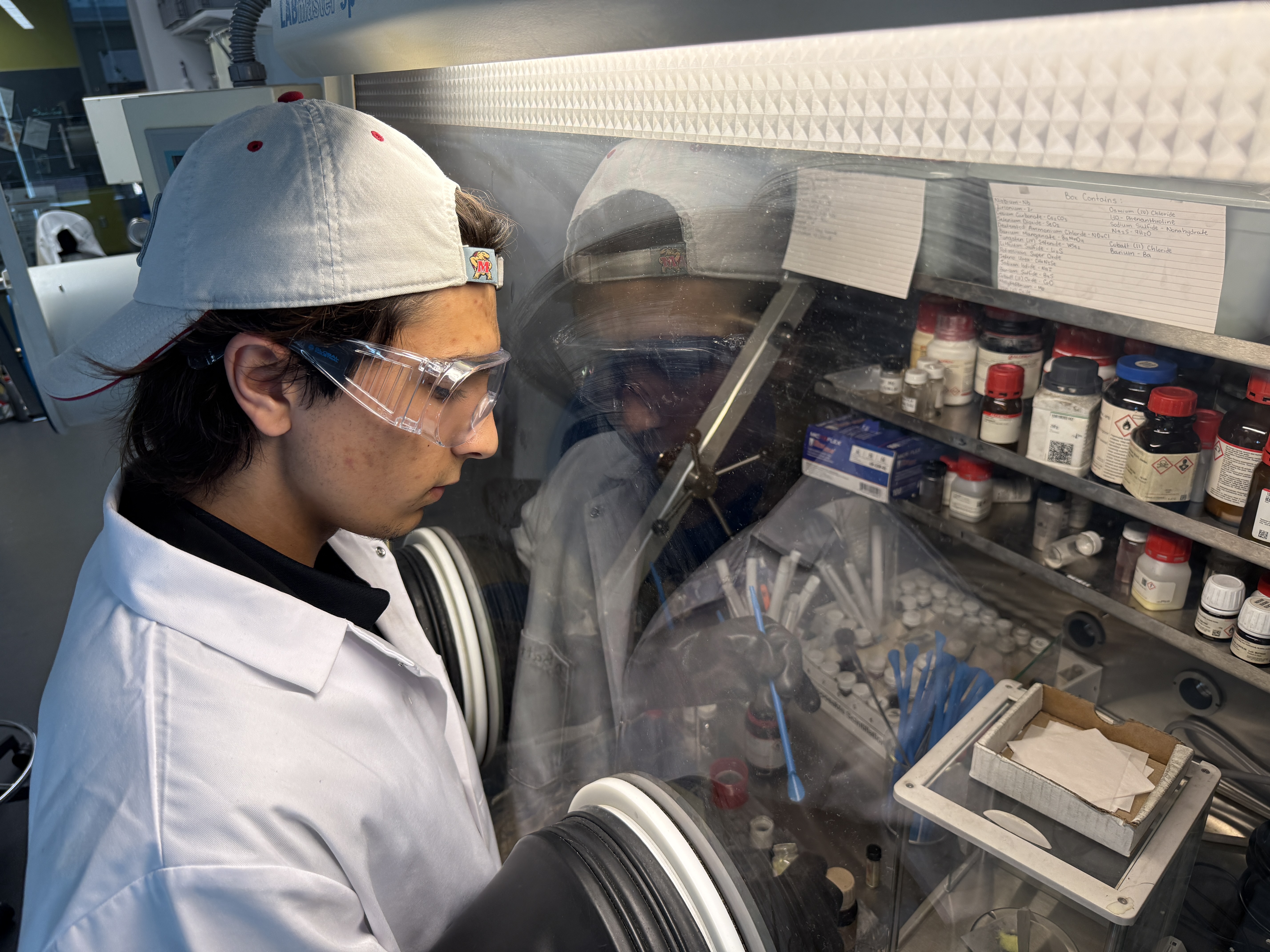
For Battish, chemistry has helped with venture capital and entrepreneurship. His education helps him evaluate science- and technology-focused businesses. It also trained him in critical modes of thinking that he uses when evaluating new companies. He assesses startups like hypotheses: objectively, holistically and without bias. And, as he would when developing a new hypothesis, he learned to embrace ambiguity. That was ingrained in him during his research experience and during his internship last summer at global investment firm Knollwood Investment Advisory.
“I was always told at my internship to be an oracle—to think about what the future will look like in three to five years, and how this company will benefit from or contribute to that,” Battish said.
Looking ahead, Battish hopes to earn a Ph.D. in chemistry or materials science. Long term, he sees himself working in venture capital to invest in companies developing chemistry-based products or building a company like that himself. He said UMD has been the perfect place to explore both of those interests.
“UMD’s biggest strength is how interdisciplinary it is,” Battish said. “My time exploring new things here has allowed me to build a personal identity that is unique to me.”