A new study reveals that viruses exhibit substantial differences in how they shape the fate of host cells, with implications for ecology, evolution and biotechnology.
An international team of researchers developed a new way to uncover hidden differences in how viruses infect and destroy individual microbial cells—solving a biological puzzle that has persisted for more than 80 years.
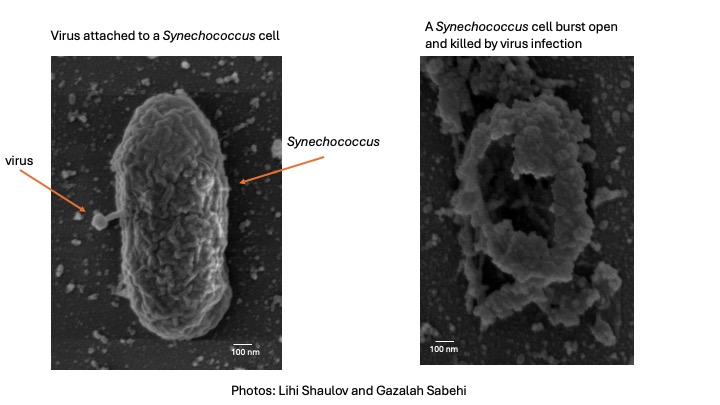
For decades, researchers have focused on answering a key question: What happens inside a single infected cell before that cell bursts open to release a new generation of viruses? To answer the question, they typically measure two traits—how long the virus takes to rupture the cell and how many new viruses are released—which are estimated as population averages, masking potentially important differences from one infected cell to the next.
In a new University of Maryland-led study published July 15, 2026 in the journal Science Advances, researchers showed for the first time that they could accurately predict hidden cell-to-cell variation in infection outcomes using population-level cell measurements.
“Individual infections do not unfold the same way,” said the paper’s senior author Joshua Weitz, a professor of biology at UMD with a joint appointment in the University of Maryland Institute for Health Computing. “Successfully quantifying that variation at the level of a single cell opens the door to developing predictive models of how viruses can be used therapeutically to confront drug-resistant pathogens and how viruses transform environmental health.”
A precise prediction model
The researchers used a mathematical modeling framework developed over the past decade by Weitz’s group to analyze how viral populations accumulate over multiple rounds of infection. Leveraging subtle signals in large-scale patterns, the model inferred what was happening inside individual cells—including variation in the timing of the cell rupture when new viruses are released.
To test those predictions, collaborators in the lab of Debbie Lindell, a professor of biology at the Technion-Israel Institute of Technology, developed a single-cell experimental assay that directly measured infection outcomes in individual cells.
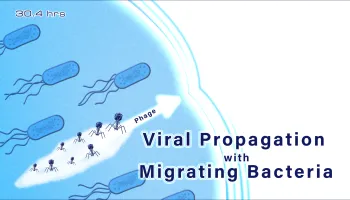
The experiments used bacteriophages, also known as phages, which are viruses that infect bacteria. Though invisible to the naked eye, phages are among the most abundant biological entities on Earth and play a crucial role in shaping microbial populations, nutrient cycling and ecosystem health. Phages are also increasingly evaluated and used therapeutically to target and clear infections caused by antibiotic-resistant bacteria.
The researchers focused on a marine phage-bacteria pair: a specific type of phage that infects abundant open ocean bacteria that fix carbon via photosynthesis. Viral infections of these cyanobacteria impact carbon cycling at global scales, making them ecologically important.
The results showed that the mathematical model’s predictions were strikingly accurate. The researchers found that the timing of cell rupture varied substantially from one infected cell to another in this phage-bacteria pair.
“Our findings contribute to solving an 80-year-old mystery on the sources of phenotypic variability in bacteriophages and advance the understanding of a core principle of the biology of viruses,” said the paper’s first author Marian Dominguez-Mirazo, who recently earned her Ph.D. in quantitative biosciences from the Georgia Institute of Technology.
Timing is (almost) everything
The researchers also uncovered a surprising new relationship between how long a virus remains inside a cell and how many offspring it produces.
Though earlier studies of synthetically controlled viral infections proposed that virus production would quickly level off as infections progressed, Weitz noted that his team didn’t see that happen.
“That’s not what we found,” said Weitz, who also holds the Clark Leadership Chair in Data Analytics at UMD. “Instead, we saw a piecewise linear relationship. Viruses generally kept producing offspring in proportion to the duration of infection, suggesting that viruses burst cells at different moments, often long before they run out of usable resources.”
That finding helps explain another mystery first identified by Nobel laureate Max Delbrück in his pioneering work on bacteriophage biology in the 1940s: Why does the number of viruses released from infected cells vary so dramatically?
The new work shows that much of that variation can be explained by differences in how long a virus takes to rupture the cell, which suggests that viral timing, both its average and its variability, may itself be shaped by evolution.
The study bridges microbiology, ecology, evolutionary biology and mathematical modeling, Weitz said, “offering a new way to understand not just average viral behavior, but the hidden diversity of infection outcomes occurring one cell at a time.”
Beyond advancing principles of virology, these findings provide an important new quantitative tool for studying and predicting the spread of viral infections in systems where direct single-cell measurements are difficult or impossible.
“Because viruses that infect microbes influence everything from ocean ecosystems to bacterial disease dynamics, understanding the hidden variation of viral traits could improve predictive models in environmental science, microbiology and emerging therapeutic applications,” Weitz said.
***
The paper, “Inferring single-cell heterogeneity of bacteriophage lysis-associated life-history traits from population-scale dynamics,” by Marian Dominguez-Mirazo, Ran Tahan, Shay Kirzner, Debbie Lindell, and Joshua Weitz, was published in Science Advances on July 15, 2026.
This research was supported by the Simons Foundation Life Sciences Program (Award Nos. 735081, 529554 and 722153). This article does not necessarily reflect the views of this organization.