Quantum Computing - Master of Science
The Master of Science in Quantum Computing is a 30-credit, 10-course, non-thesis program that provides students with foundational, practical, and theoretical knowledge of quantum computing. Students explore state-of-the-art quantum computing technologies and applications and examine the field's origins, evolution, and future. Experiential learning is at the core of the program, and courses give students opportunities to apply concepts on current commercial quantum computing hardware.
The curriculum prepares students to apply quantum computing principles and techniques to solve problems in optimization, cryptography and cybersecurity, materials and molecular simulation, and other emerging applications. Students develop quantum computing code and run it on quantum computing platforms. Students learn to assess when quantum approaches are (and are not) appropriate, differentiate the many technologies currently used to implement quantum computation, and compare their intrinsic strengths and limitations. No prior knowledge in quantum physics or quantum computing is necessary. Many students are career changers from other STEM fields.
This 30-credit graduate program can be completed in less than two years. The program features mostly in-person instruction. University faculty and industry experts provide instruction. Classes are held in the evenings and can be completed either part-time or full-time.
After completing the program, students are prepared for industry roles as well as Ph.D. programs. Job titles may include: quantum software engineer, quantum applications engineer, quantum algorithm developer, quantum computing engineer, quantum systems engineer, and scientific computing or research software engineer. Graduates may also pursue Ph.D. programs and research-oriented careers in quantum information science.
Admission Requirements
Any student applying for admission to a graduate program at the University of Maryland must meet the following minimum admission criteria as established by the Graduate School.
- Earned a four-year baccalaureate degree from a regionally accredited U.S. institution, or an equivalent degree from a non-U.S. institution.
- Earned a 3.0 GPA (on a 4.0 scale) in all prior undergraduate and graduate coursework.
General Requirements:
- Statement of Purpose
- Transcript(s)
- TOEFL/IELTS/PTE (international graduate students)
Program-Specific Requirements:
- Two letters of recommendation
- Resume/Curriculum vitae
- Description of research/work experience in engineering, mathematics, and natural sciences
- Prior coursework establishing quantitative ability (linear algebra and calculus required)
- Proficiency in programming languages, Python preferred, demonstrated either through prior programming coursework or substantial software development experience
No prior knowledge in quantum physics or quantum computing is necessary.
Plan of Study & Courses
The MS in Quantum Computing is 30 credits and consists of 6 core courses and 4 electives. Special topics include quantum networks, quantum thermodynamics, quantum machine learning, quantum Monte Carlo, quantum information theory, and quantum computing hardware.
Sample Plan of Study (Part-time, 5 semesters)
Semester 1 (fall)
MSQC601 Mathematics and Methods of Quantum Computing (core)
MSQC602 Physics of Quantum Devices (core)
Semester 2 (spring)
MSQC604 Quantum Computing Architectures and Algorithms (core)
MSQC606 NISQ Algorithms (core)
Semester 3 (fall)
MSQC605 Advanced Quantum Computing and Applications (core)
MSQC607 Advanced Topics in Quantum Computing (core)
Semester 4 (spring)
MSQC Elective
MSQC Elective
Semester 5 (fall)
MSQC Elective
MSQC Elective
Sample Plan of Study (Full-time)
Semester 1 (fall)
MSQC601 Mathematics and Methods of Quantum Computing (core)
MSQC602 Physics of Quantum Devices (core)
MSQC Elective
Semester 2 (spring)
MSQC604 Quantum Computing Architectures and Algorithms (core)
MSQC606 NISQ Algorithms (core)
MSQC Elective
Semester 3 (fall)
MSQC605 Advanced Quantum Computing and Applications (core)
MSQC607 Advanced Topics in Quantum Computing (core)
MSQC Elective
Semester 4 (spring)
MSQC Elective
Possible electives include but are not limited to:
MSQC603: Principles of Machine Learning
MSQC614: Quantum Information Theory
MSQC615: Quantum Thermodynamics
MSQC699: Independent Research in Quantum Computing
Tuition & Fees
Up-to-date tuition and fee information for the MS in Quantum Computing.
Program Directors & Instructors
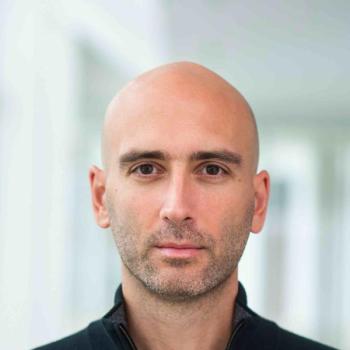 Anil Zenginoglu
Faculty Director, Quantum Computing M.S. and Graduate Certificate Programs
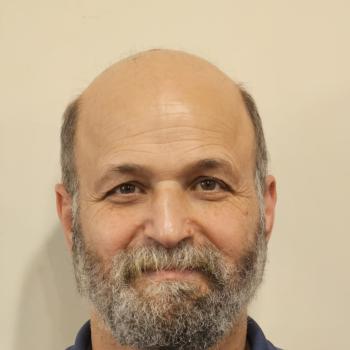 Babak Azimi-Sadjadi
Lecturer
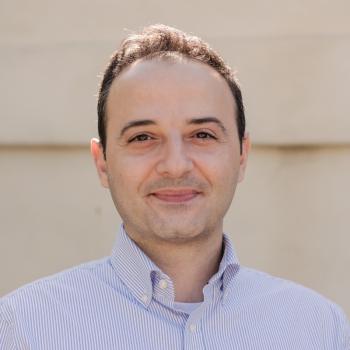 Kemal Davaslioglu
Lecturer
 Stefan Doboszczak
Senior Lecturer, Mathematics
Erik Gustafson
Associate Scientist, Universities Space Research Association
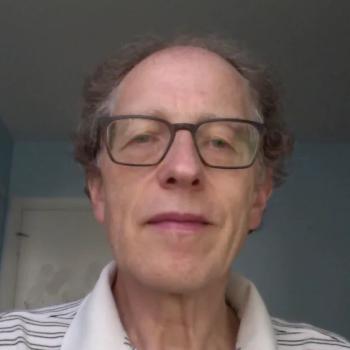 Franz Klein
Chief Quantum Technologist/Scientist, QLab
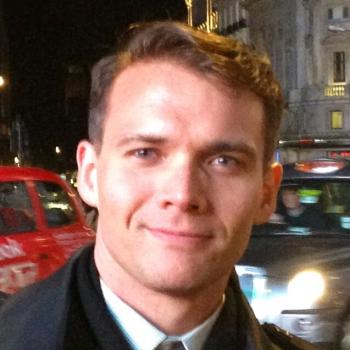 Aaron Lott
Senior Principal Technical Product & Program Manager at Hewlett Packard Enterprise
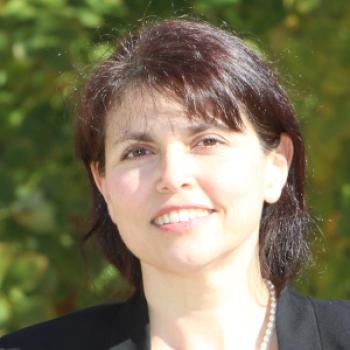 Alejandra Mercado
Associate Director, Master's in Telecommunications Program, Electrical and Computer Engineering
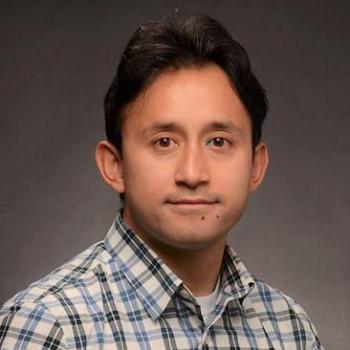 Maicol Ochoa
Assistant Research Scientist, UMD and NIST
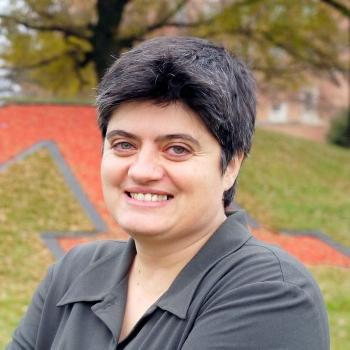 Konstantina Trivisa
Professor, Mathematics & IPST