Once (or twice) bitten, biological sciences Ph.D. student Jory van Thiel pieces together the genetics of one of nature’s deadliest concoctions.
Venom is built from a snake's own molecular toolkit, but its genetic origins are not fully understood. Now, University of Maryland researchers have discovered a striking mechanism in the genomes of two highly venomous Australian species: Genes involved in ordinary blood clotting—and even existing venom neurotoxins—were repurposed to create toxins that can trigger lethal blood clots.
Long fascinated by venomous snakes, UMD biological sciences Ph.D. student Jory van Thiel is working to reconstruct how that transformation happened, one genetic change at a time.
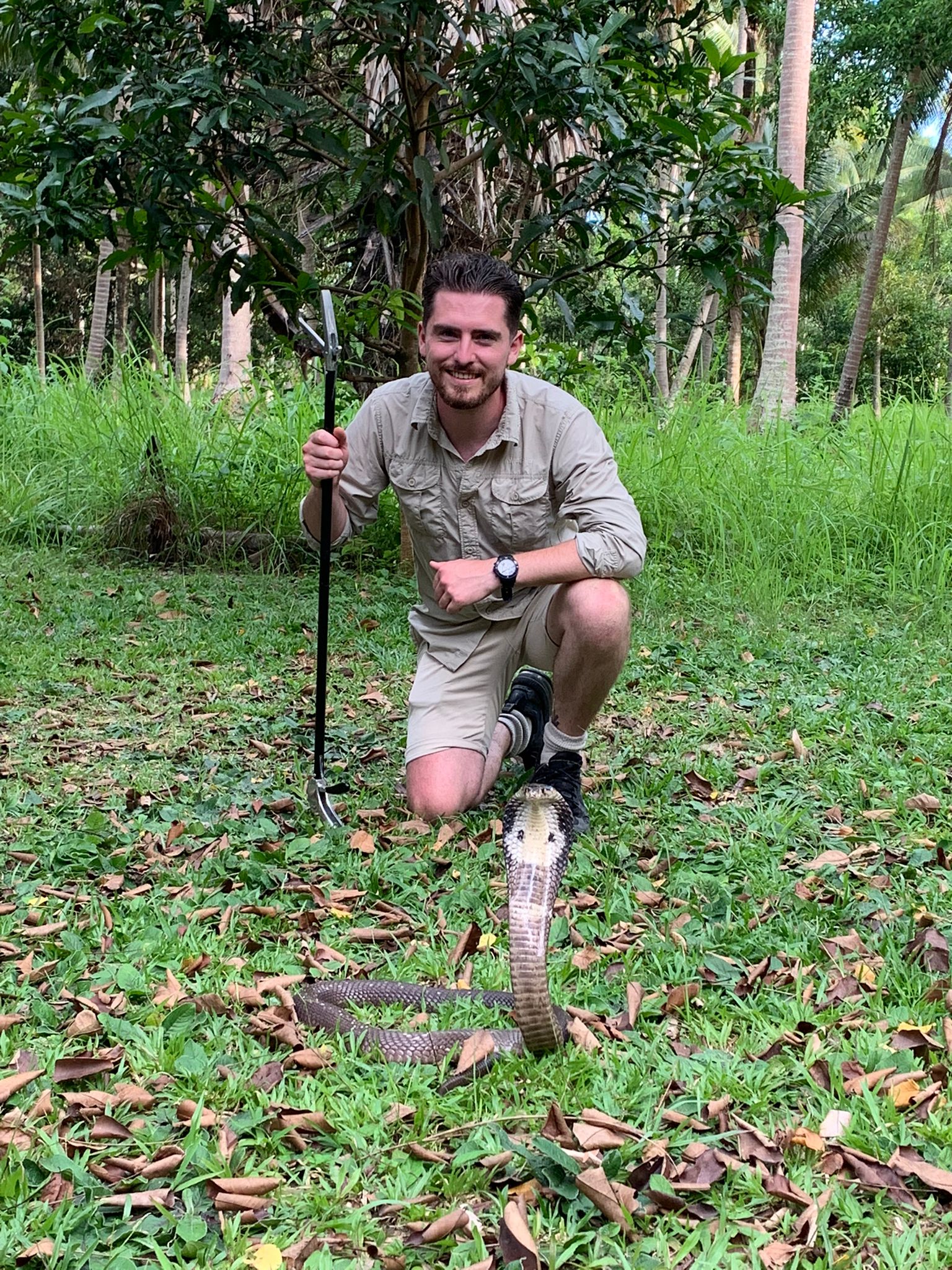
“I’m most interested in what genes are involved in venom, what changes have occurred in those genes and in what order, and ultimately, why has evolution taken a particular genetic path,” van Thiel said. “Understanding the path to novelty—the key changes that result in a new trait emerging—is a central question in evolutionary biology.”
Snake venoms are complex mixtures of proteins and peptides that have evolved in part through the co-option, duplication and modification of venom proteins—often recruited from snakes’ other biological systems. The resulting toxins can target a bite victim’s nervous or circulatory system; some toxins also damage muscle and tissue.
“By focusing on the world’s most venomous snakes, I’m aiming to discover how ‘ordinary’ physiological proteins are transformed into these biochemical weapons,” van Thiel said.
He’s making good progress. In a recent paper published in the Proceedings of the National Academy of Sciences, van Thiel, his advisor Distinguished University Professor of Biology Sean B. Carroll and Biology Assistant Research Professor Noah Dowell sequenced the genomes of an Australian brown snake and inland taipan, looking for clues to how they evolved a new kind of venom relatively recently in their evolutionary history.
The new venom doesn’t just cause paralysis; it also triggers blood clotting. In their analysis, the team found genetic evidence of two distinct evolutionary steps that contributed to the venom’s development and evidence of a previously unknown venom toxin.
“First, the snakes co-opted and modified several of their own clotting genes for use in the venom,” van Thiel explained. “And second, they tweaked two of their own venom neurotoxins to have pro-coagulant properties.”
These findings fill gaps in the complex genetic story behind Australian snakes’ unmatched arsenal, which enables them to prey heavily on mammals.
“Explaining the rise of one highly specialized venom can help us understand venomous snake evolution more broadly,” van Thiel said.
For example, this type of evolutionary change can be a fundamental part of adaptive radiation—the rapid diversification of ancestral species into new forms that can take advantage of untapped resources and niches in the environment.
“For me, it’s exciting to discover the hidden mechanisms that may let these animals expand in new directions, and that set them apart from most other snakes in the world,” he said.
First bitten
Van Thiel’s fascination with wild animals—and especially snakes—began long before he started studying their genomes.
“My parents tell me that I was a sleepy baby, but when I was nine months old, I ‘woke up’ on a trip to the zoo,” he said. “It was the first time they’d seen me so excited and engaged for a whole day. They were sure I’d end up working with animals, and snakes—especially king cobras—became a clear favorite.”
Born and college educated in the Netherlands, van Thiel came to UMD specifically to work with Carroll, who also holds the Andrew and Mary Balo and Nicholas and Susan Simon Endowed Chair.
“Jory loves these creatures in a way that generates boundless curiosity and enthusiasm, which he shares with everyone,” Carroll said. “Also, high energy is essential for sustaining this research over the long-term, and Jory has that times 10.”
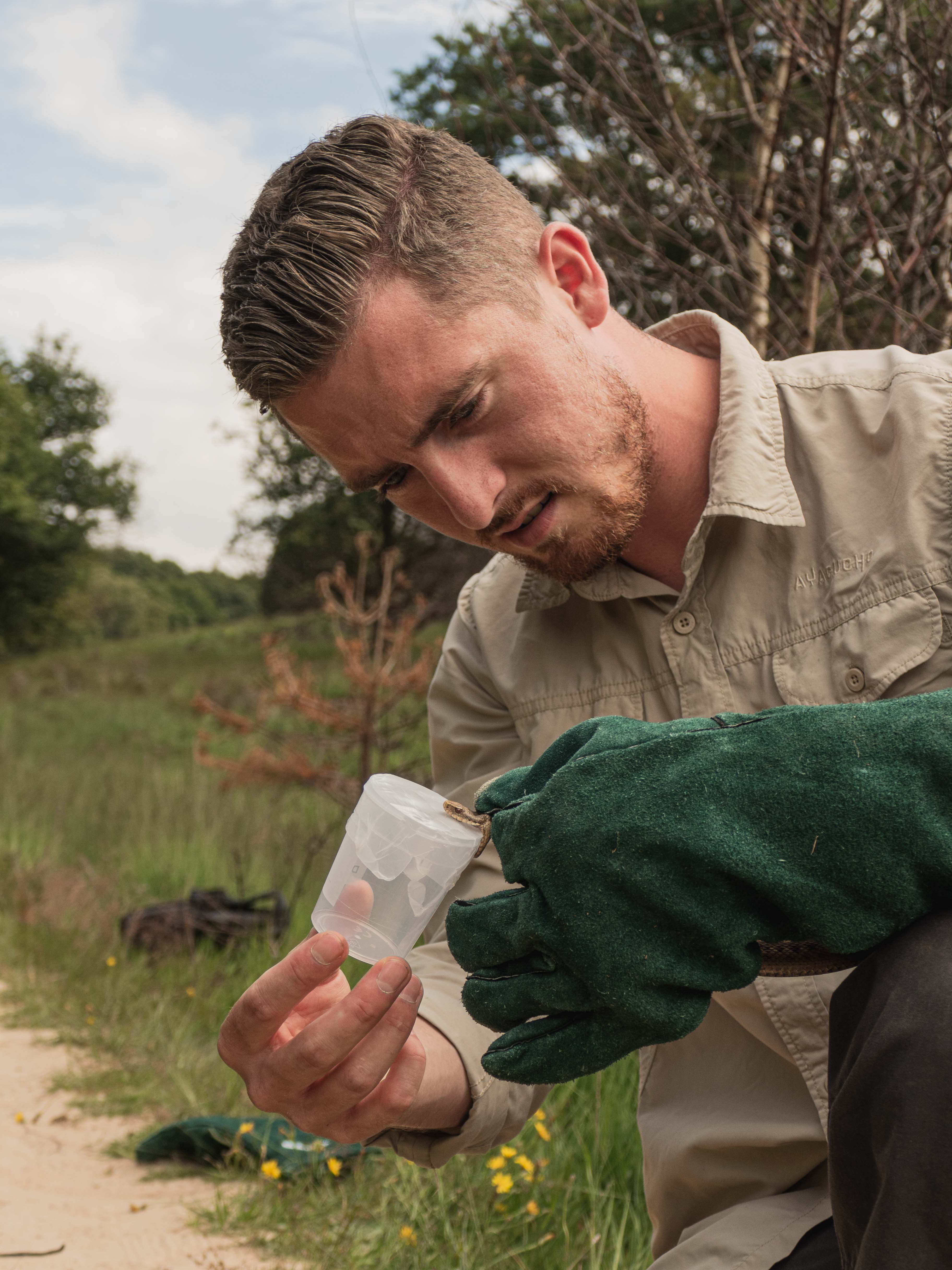
Between his research and the recent birth of his son, van Thiel spends less time than he’d like “herping”—searching in nature for reptiles and amphibians—but his love for the outdoors tugs at him until he finds the time.
“I do occasionally still get out there to poke around and turn over rocks,” he said. “It’s exciting because there are more venomous species here, including rattlesnakes and copperheads, than where I grew up overseas. I love looking into their eyes and wondering what they’re thinking—they’re fascinating creatures.”
Has he been bitten?
“Yes. More than once,” he said. “But thankfully not by anything venomous.”