Graduate Certificate in Quantum Computing
The Graduate Certificate in Quantum Computing provides working professionals with training and advanced knowledge in quantum computing and offers the opportunity to apply learning through hands-on exercises and experiential opportunities. Quantum computing has the potential to enhance secure communications through novel encryption key distribution methods and explore solutions to problems previously deemed too hard to tackle for classical computing. Quantum computing can also revolutionize well established disciplines such as data science and machine learning making it a critical area of study in today’s market.
Participants in the program explore machine learning and identify areas where quantum computing can impact the discipline. Students also explore applications of quantum computing to optimization, encryption, information theory, and communication. Be able to explain the principles behind quantum computing, implement and execute applications on quantum computers or their simulators, and be ready to differentiate between the physical implementations of quantum computers and how this affects capabilities and performance. Graduates of the program will also be able to make appropriate and successful business decisions when quantum technologies reach maturity. No prior knowledge in quantum physics or quantum computing is necessary.
The Graduate Certificate in Quantum Computing is a 12-credit graduate program that can be completed in less than one year. Courses are primarily offered in the evening and may be in person, online or blended, depending on the course. In-person courses meet in UMD College Park campus classrooms, offering a focused, distraction-free learning environment. The program is offered through the Science Academy in the College of Computer, Mathematical, and Natural Sciences. Instruction is provided by university faculty and experts in the field. The program uses the semester academic calendar with classes held in fall and spring semester (16 weeks each).
Admission Requirements
Any student applying for admission to a graduate program at the University of Maryland must meet the following minimum admission criteria as established by the Graduate School.
- Earned a four-year baccalaureate degree from a regionally accredited U.S. institution, or an equivalent degree from a non-U.S. institution.
- Earned a 3.0 GPA (on a 4.0 scale) in all prior undergraduate and graduate coursework.
General Requirements:
- Statement of Purpose
- Transcript(s)
- TOEFL/IELTS/PTE (international graduate students)
Program-Specific Requirements:
- Two letters of recommendation
- Resume/Curriculum vitae
- Description of research/work experience in engineering, mathematics, and natural sciences
- Prior coursework establishing quantitative ability (linear algebra required)
- Proficiency in programming languages, Python preferred, demonstrated either through prior programming coursework or substantial software development experience
Plan of Study & Courses
The Graduate Certificate in Quantum Computing is a 12-credit, 4-course, graduate program. The program provides education in quantum computing, training to enhance secure communications, and an opportunity to find solutions to problems previously deemed, “too hard to tackle.”
Sample Plan of Study (Part-time, two 3-credit courses per semester)
Semester 1: MSQC601 Mathematics and Methods of Quantum Computing (Core) & MSQC602 Physics of Quantum Devices (Core)
Semester 2: MSQC603 Principles of Machine Learning (Core) & MSQC604 Quantum Computing Architectures and Algorithms (Core)
Tuition & Fees
Up-to-date tuition and fee information for the Graduate Certificate in Quantum Computing.
Program Directors & Instructors
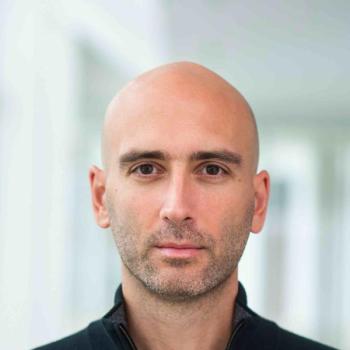 Anil Zenginoglu
Faculty Director, Quantum Computing M.S. and Graduate Certificate Programs
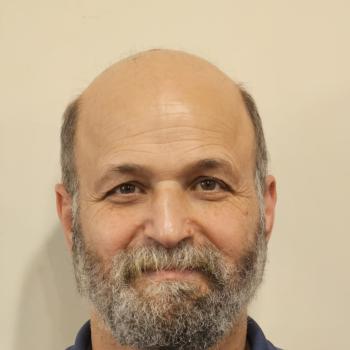 Babak Azimi-Sadjadi
Lecturer
 Kemal Davaslioglu
Lecturer
 Stefan Doboszczak
Senior Lecturer, Mathematics
Erik Gustafson
Associate Scientist, Universities Space Research Association
 Franz Klein
Chief Quantum Technologist/Scientist, QLab
 Aaron Lott
Senior Principal Technical Product & Program Manager at Hewlett Packard Enterprise
 Alejandra Mercado
Associate Director, Master's in Telecommunications Program, Electrical and Computer Engineering
 Maicol Ochoa
Assistant Research Scientist, UMD and NIST
 Konstantina Trivisa
Professor, Mathematics & IPST