
News
News
Filter by
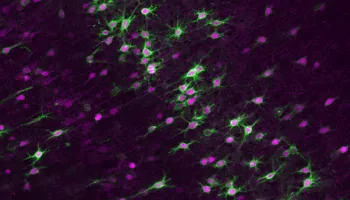
Scientists Discover a Brain Cycle That May Explain Why Learning Eventually Stalls
UMD scientists found that a matrix surrounding brain cells loosens and rebuilds during learning—and gradually stops recurring once a skill is learned, offering new clues to why progress can grind to a halt.

Rare Supernova Observation Reveals New Ways That Stars Can Die
UMD astronomers glimpsed a massive star’s death from the first explosive moment, reporting their findings in a new study.

Chasing Neutrinos at the ‘End of the World’
Working on a giant subatomic particle detector at the South Pole helped UMD physics Ph.D. student Rachel Procter-Murphy discover a new side of herself.

Quantum World Congress Announces the University of Maryland as 2026 Lead Academic Partner
The partnership reflects both UMD’s longstanding leadership in quantum science and technology and Quantum World Congress’ move into the heart of Maryland’s rapidly expanding quantum ecosystem.

Researchers Explore How Quantum Computers—and Their Errors—May Enhance AI
Joint Quantum Institute Fellows Alaina Green, Norbert Linke, Victor Galitski and their colleagues recently reported on new experiments exploring how quantum computing influences—and might improve—machine learning.

New Tool Reveals Hidden Security Risks in AI Systems
A new study found that critical security vulnerabilities often lie not within AI models themselves, but in the complex software infrastructure that serves them to millions of users.

Scientists Use Moonquakes to Locate Lunar Ice
By studying how seismic waves travel through frozen soil on Earth, UMD geophysicist Nicholas Schmerr helped develop a better way to detect water ice on the moon—a critical resource for future astronauts and extended lunar missions.

Playing Both Sides of His Brain
For UMD junior Jacob Goldman, science and music are in educational harmony.

Ask an Advisor: Your Questions, Answered
Wendy Loughlin, assistant dean and director of the Health Professions Advising Office at the University of Maryland, sat down with the Association of American Medical Colleges to answer questions collected from applicants at events throughout the year.

$3.25M from the State of Maryland Matches $4M Gift for Two Eugenia Brin Endowed Chairs
The new endowed chairs at UMD will conduct research in Parkinson's disease and data assimilation.
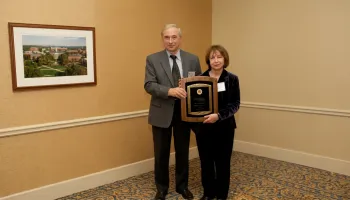
$8.16M Gift Honors Longtime Supporter of UMD Science and Arts
The Brin family’s commitment was matched by a $3.25M award from the state for 2 endowed chairs.

Scientists Discover an Antidote to Lethal Snake Bites that Comes Straight from the Source
A new UMD-led study provides a blueprint for the next generation of antivenoms—using snakes’ natural molecular defenses against their own deadly venom.