Applying Analytical Chemistry to Biological Systems
UMD chemistry Ph.D. student Laura Garcia Rodriguez aims to know everything she can about proteins ‘because they are everywhere and do almost everything in the body.’
Laura Garcia Rodriguez admits it: She is obsessed with proteins. The University of Maryland chemistry Ph.D. student recently investigated how synaptic proteins in the brain react to methamphetamine exposure, which was part of an ongoing effort to uncover the molecular mechanisms underlying addiction. Her first-author paper was published in the journal ACS Chemical Neuroscience in December and featured on its cover.
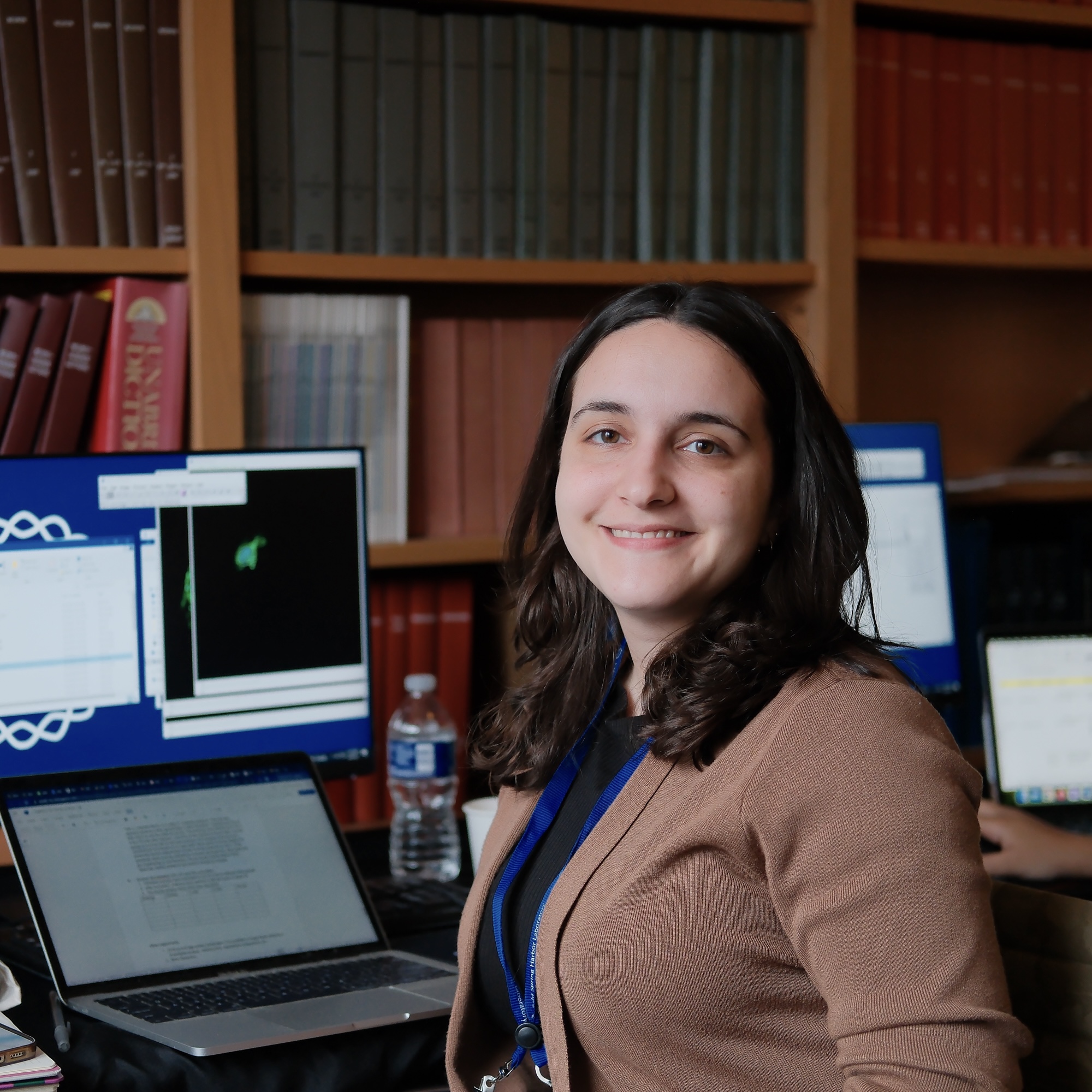
“Proteins are the main actors in biology,” said Rodriguez, who came to Maryland from Cuba in 2022 to pursue a Ph.D. with her advisor, Chemistry and Biochemistry Professor Peter Nemes. Now in her fourth year, Rodriguez doesn’t intend to rush the experience just to get her degree.
“There’s so much going on in my areas of interest,” she said. “I am happy to take extra time to finish what I’ve started.”
In this interview with UMD’s College of Computer, Mathematical, and Natural Sciences, Rodriguez talks about her fascination with proteins and her appreciation for the opportunities available to her at UMD.
This interview has been edited for length and clarity.
When did you first become interested in science?
Science was always part of my life. Both of my parents are medical doctors, so I grew up listening to scientific conversations. My mom worked in genetic counseling, and I remember talking with her, even in elementary school, about how genes shape who we are. Very early in life, I became fascinated by the fact that things we can’t even see with the naked eye can shape our entire world. In a way, that’s still what I study now.
What was your path into research?
I’m originally from Cuba and attended the University of Havana, where I majored in chemistry. I liked analytical chemistry very much. I liked the theory behind it and the idea that it can be used to answer so many kinds of questions.
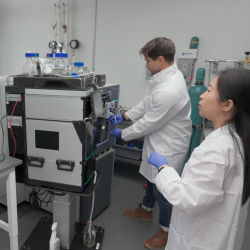
I was also fascinated by biology and biochemistry. While still in undergraduate, I joined the Analytical Chemistry Lab in the R&D Department at the Center of Molecular Immunology in Havana, which focused on developing monoclonal antibodies to treat immunological diseases and cancer. In that lab, I learned analytical chemistry techniques and applied them to protein characterization [determining a protein's structure, physical properties and biological function]. That was really the turning point for me. I still loved chemistry and analytical chemistry, but I realized I wanted to use them to answer biological questions.
Why did you choose UMD?
Honestly, what drew me to Maryland was Dr. Peter Nemes’ research. I wanted to continue building my expertise in analytical chemistry but apply it to biological systems in a much deeper way. His lab was studying mechanisms of cell and neurodevelopmental biology, proteomics, neurodegenerative diseases and related subjects that made it a perfect match.
UMD’s location was another draw. Being close to NIH, FDA, and other national labs creates incredible opportunities for collaboration and exposure to cutting-edge biomedical research.
How do you describe your research?
Broadly, I study proteins and how proteins shape life. Proteins are really the main actors in biology—they are everywhere and do almost everything. When proteins function properly, systems work the way they should. But when even one protein is altered, that can be the beginning of disease. That’s such a powerful idea, and I love working to understand something so fundamental.
When I first came to UMD, I worked on embryonic development, analyzing differences at the protein level between the left and right sides of embryos to understand how body plans are established.
That question still fascinates me because there is still so much we don’t know about this process. Externally, humans look symmetrical, but internally our organs are arranged asymmetrically. When that developmental process is disrupted, the consequences can be devastating. There are many congenital diseases that are difficult or impossible to treat after birth because the damage occurs so early. If we can better understand what goes wrong, then maybe we can intervene before that damage is done.
How did your work expand into addiction research?
That work grew naturally out of my training with Dr. Nemes. Our lab developed a collaboration with researchers at the National Institute on Drug Abuse, along with colleagues in biology and psychology here at UMD. The project focused on how the brain and neural connections are reshaped by addiction. In addition to scientific discovery, that experience showed me what a great interdisciplinary collaboration looks like, and I appreciate the chance to engage with scientists outside of the university.
What did you learn during that research project?
The idea of it was we wanted a broader systems-level view—to understand how multiple biological pathways were changing together in the drug-addicted brain.
In brains affected by methamphetamine, we saw signs that the dopamine system was in overdrive in an animal model. Not only were brain cells making more dopamine-related proteins, but they also seemed to have proteins packaging and releasing dopamine more actively, almost like the brain was stepping harder on the gas.
At the same time, we found increases in proteins linked to the cell’s energy supply system, the mitochondria. That suggests the neurons were working overtime and needed extra fuel to keep up with the heightened activity.
That kind of discovery-based analysis lets us see how multiple systems are working together like instruments in an orchestra. It also allows us to see what proteins change in disease scenarios; basically, showing us the instruments out of tune in the composition.
How could this work eventually help patients?
If we can identify proteins that contribute to addiction or withdrawal symptoms, for example, then maybe we can target those proteins with therapeutics. Perhaps we could inhibit some of them and reduce suffering or make recovery easier for patients.
What’s your biggest takeaway so far from graduate school?
One thing grad school really makes clear is how much you don’t know, and that can be overwhelming. I think imposter syndrome—that experience of doubting your skills or accomplishments and fear of being exposed as a ‘fraud’—is very common in science, especially among women and minorities.
But at some point, while feeling that way, I realized that not knowing something doesn’t prevent me from doing the work in front of me. It just means there is more to learn, and that’s part of what makes science, and my own graduate program, so exciting.
What do you enjoy doing outside of the lab?
One of my favorite things about College Park is how close it is to Washington, D.C. I love walking around the National Mall early in the morning, and then I’ll sit in a coffee shop sipping and writing. I love writing fiction, but mostly I like the thinking process that goes with it.
What’s next for you?
I want to stay connected to important scientific questions, especially in biomedical research. If I could focus on any subject, I would probably return to embryonic and neurodevelopmental studies. I’m especially interested in congenital diseases, perhaps because I saw how devastating they can be to families through my mom’s work as a genetic counselor. I’d like to know what causes them, how we might fix them, and better yet, how we can prevent them. To advance our knowledge in that area would be incredibly meaningful.