
A U.S. National Science Foundation workshop hosted by the University of Maryland began charting a roadmap for developing chemistry-specific artificial intelligence tools to advance scientific research and discovery.


Mesoterps operate nine stations across campus with sensors collecting data on temperature, humidity, wind speed and direction, rainfall, and barometric pressure.

UMD lightning researcher and former National Weather Service forecaster Joseph Patton breaks down hazardous weather alerts and what they mean.

Once (or twice) bitten, biological sciences Ph.D. student Jory van Thiel pieces together the genetics of one of nature’s deadliest concoctions.

The PRobe far-Infrared Mission for Astrophysics (PRIMA) will peer through cosmic gas and dust to achieve a remarkably clear view of the universe.
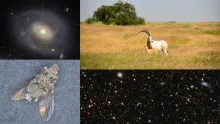
Postdocs bring valuable expertise, national prestige and additional research funding to UMD.
Postdocs bring valuable expertise, national prestige and additional research funding to UMD.
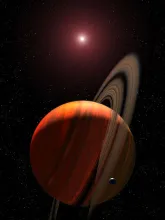
A UMD-led team found water, methane and a rare ammonia signal in the atmosphere of HATS-6 b, a large planet orbiting a tiny star—raising new questions about how giant planets form.
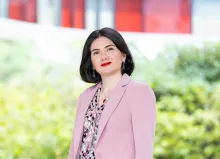
Davoudi will receive up to $2.5 million to explore how the universe works using cutting-edge tools such as quantum computing and sensing.

The program ranks in the Top 10 among public institutions overall and for the specialties of artificial intelligence and cybersecurity, according to U.S. News & World Report.
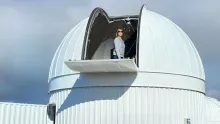
Kelly Fast (M.S. ’93, Ph.D. ’05, astronomy) is NASA’s acting planetary defense officer, overseeing U.S. efforts and global coordination to survey the sky, calculate orbits, study physical properties and identify possible impact risks of near-Earth objects.